

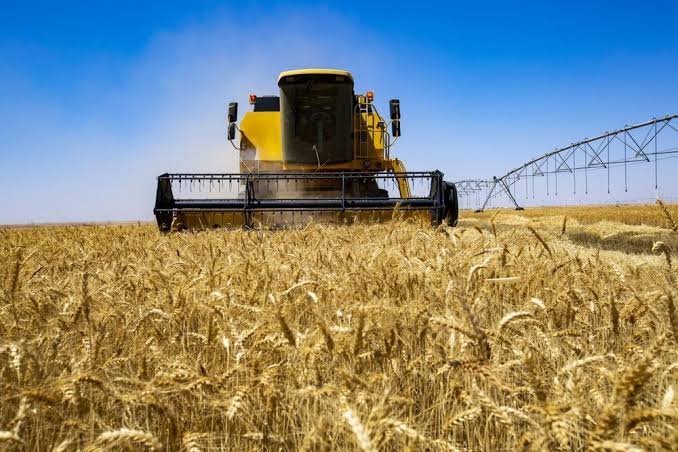
Iraq’s wheat sector continues to show resilience as the government expands purchases from local farmers. Strong Iraq wheat production remains a central pillar of the country’s food security strategy. Officials say procurement efforts have already surpassed 3.19 million tons during the current harvest season, while collection operations continue in several provinces.
The Ministry of Trade announced that grain purchasing activities have concluded across much of the country. Authorities completed procurement in Baghdad and several southern provinces after receiving large quantities from local farmers. Government agencies continue to receive wheat shipments from other regions where harvesting remains underway.
Haider al-Karaawi, head of the General Company for Grain Trade, stated that collection centers remain active in northern and western provinces. He explained that operations in Diyala and Salah al-Din are expected to finish within days. Officials expect total purchases to rise further as remaining harvests reach government storage facilities.
The government continues to support farmers through subsidized purchasing prices. Authorities offer rates above international market levels to encourage cultivation and strengthen domestic supply. This policy has helped maintain stable agricultural output despite environmental and economic challenges.
According to trade officials, Iraq consumes roughly 4.2 million tons of wheat each year. Current purchases have already exceeded 3.1 million tons, bringing the country closer to meeting a large share of domestic demand through local production. Officials believe the final harvest figures could further narrow any supply gap.
Earlier this year, al-Karaawi said the current season would contribute to strengthening Iraq’s strategic grain reserves. The government aims to build sufficient stocks to support national needs well into 2027. Strong reserve levels remain important as regional and global food markets continue to face uncertainty.
Recent years have demonstrated the importance of Iraq wheat production. Farmers supplied around 6.3 million tons in 2024, compared with 5.19 million tons in 2023. These figures reflected significant agricultural output and helped reduce dependence on imports.
The Ministry of Agriculture reported in 2025 that Iraq achieved wheat self-sufficiency for the third consecutive year. Before global market disruptions linked to the Ukraine crisis, Iraq had already recorded several strong harvests. Production reached approximately 4.7 million tons in 2019, climbed to 6.2 million tons in 2020, and remained near 4.2 million tons in 2021.
Despite those achievements, water scarcity and expanding desertification have placed increasing pressure on the agricultural sector. Lower rainfall and shrinking water resources have affected cultivation in several regions. As a result, authorities occasionally turned to imports to cover shortages and stabilize supplies.
Even so, Iraq wheat production remains a priority for policymakers. Continued government support, strategic planning, and farmer participation are expected to play a crucial role in maintaining food security and reducing reliance on foreign grain supplies in the years ahead.