

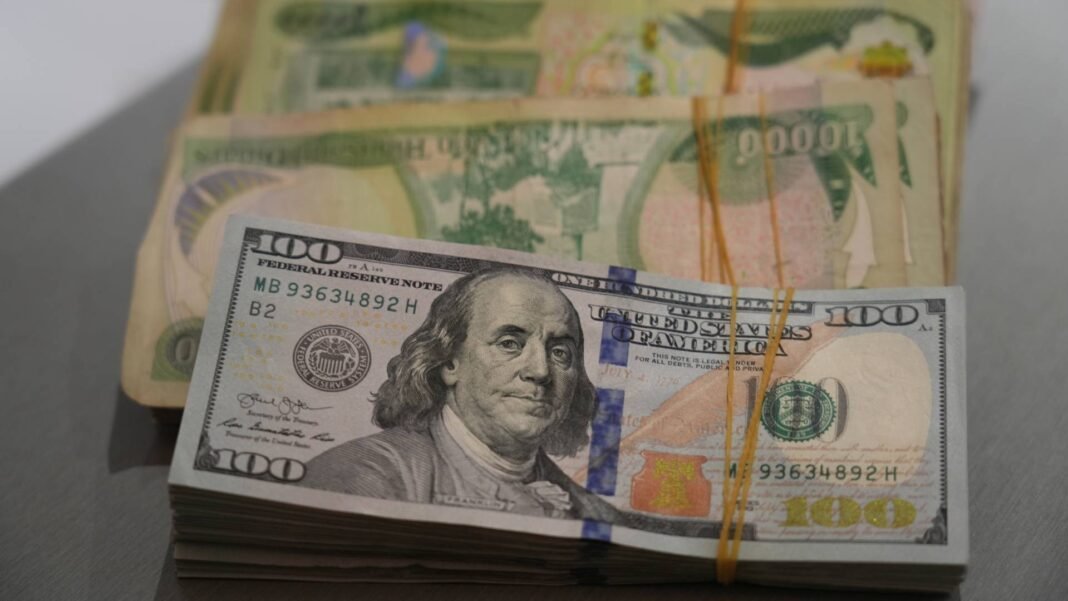
The US dollar rose against the Iraqi dinar on Monday, reaching around 156,000 dinars per $100 in local markets. Dollar prices in Baghdad and Erbil increased as traders responded to growing uncertainty in Iraq’s banking sector.
In Baghdad, the dollar traded at 155,600 dinars per $100 at the Al-Kifah and Al-Harithiya exchanges. The rate increased from 154,900 dinars during the previous trading session. Exchange shops sold $100 for 156,000 dinars and bought it for 155,000 dinars.
Erbil also recorded elevated exchange rates during Monday’s trading. Currency dealers in the Kurdistan Region sold $100 for 155,500 dinars. They bought the same amount for 155,400 dinars, keeping the gap between buying and selling rates relatively narrow.
The latest movement comes after the Central Bank of Iraq placed Al-Taif Islamic Bank under receivership last week. The central bank described the decision as a supervisory measure designed to protect depositors. Officials stressed that the action did not represent a declaration of bankruptcy or liquidation.
The decision followed restrictions affecting the bank’s access to US dollars. The United States Treasury introduced the restrictions as part of broader measures involving several Iraqi banks. The developments have increased concerns among some market participants about access to foreign currency.
Mahmoud Dagher, a former Central Bank of Iraq director general, linked the recent dollar increase to uncertainty surrounding the banking sector. He said instability and declining confidence contributed to pressure on the Iraqi dinar over the past two days.
Currency traders closely monitor developments in Iraq’s banking system because the dollar plays a major role in local commercial activity. Businesses use foreign currency for imports, international payments, and several other transactions. Therefore, sudden changes in the exchange rate can affect prices across different sectors.
The gap between official and parallel-market rates also remains an important issue for Iraq’s economy. Market movements can influence consumer prices when importers adjust their costs. However, daily exchange rates can change quickly depending on supply, demand, and market sentiment.
Dollar prices in Baghdad and Erbil will likely remain under close observation as authorities address concerns within the banking sector. Traders may also react to any new measures from the Central Bank of Iraq or international authorities.
For consumers and businesses, the latest increase adds another layer of uncertainty to the currency market. Continued banking-sector developments could influence demand for dollars in the coming days. Meanwhile, exchange shops in Baghdad and Erbil will continue adjusting their rates according to market conditions.
The latest figures show that dollar prices in Baghdad and Erbil remain above the previous session’s levels. Further movements will depend on confidence in the banking system, dollar availability, and broader market conditions.