

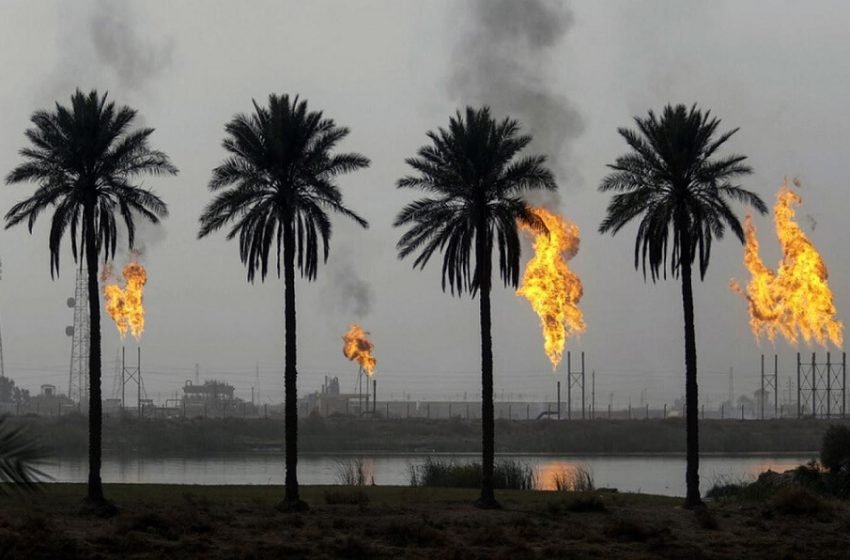
Iraq is advancing four major projects to capture associated gas recovery in Iraq, with a combined capacity of 1.4 billion cubic feet per day. The initiative aims to reduce gas flaring and strengthen the country’s domestic energy supply.
The Iraqi Ministry of Oil plans to end routine gas flaring by the end of 2029. Oil Ministry spokesperson Salim al-Rikabi said officials are focusing on several projects to make better use of associated gas. The plan also seeks to reduce environmental damage linked to burning gas at oil fields.
The four projects cover several important oil-producing areas across Iraq. The Artawi project will recover up to 600 million cubic feet of gas per day. Meanwhile, the Bin Omar project will add another 300 million cubic feet daily.
The Nasiriyah project has a planned capacity of 200 million cubic feet per day. The Halfaya project will contribute an additional 300 million cubic feet each day. Together, these projects could recover 1.4 billion cubic feet of associated gas daily once they reach their planned capacities.
The government views the projects as an important step toward improving Iraq’s energy security. Capturing associated gas would allow Iraq to use a resource that currently goes to waste through flaring. It could also provide additional fuel for power plants and industrial facilities.
Iraq is also working to develop gas resources at the Akkas and Mansouriya fields. Officials see these fields as part of a broader strategy to increase domestic gas production. The additional output could help reduce pressure on the country’s electricity sector.
The need for more domestic gas remains urgent because Iraq still relies on imports. Iranian gas currently supplies a significant share of the fuel used by Iraqi power plants. Iraq imports about 50 million cubic feet of Iranian gas, according to the figures cited in the report.
Iranian gas reportedly accounts for more than 40 percent of Iraq’s fuel consumption. It also contributes around one-third of the country’s electricity generation. This dependence has encouraged Baghdad to accelerate projects that can increase domestic gas supplies.
Iraq faces particularly strong pressure during the summer months. Electricity demand can rise above 50,000 megawatts and reach 55,000 megawatts during peak periods. However, current generation remains between 27,000 and 28,000 megawatts.
The gap between supply and demand highlights the importance of developing domestic energy resources. Associated gas recovery in Iraq could provide additional fuel for electricity production while reducing reliance on imports. It could also support industrial activity and improve the overall efficiency of Iraq’s oil sector.
The government’s 2029 target represents a major challenge because several projects require infrastructure, investment, and technical development. However, completing the projects could bring significant economic and environmental benefits. Iraq could capture more value from its oil fields while cutting emissions from gas flaring.
Associated gas recovery in Iraq therefore forms an important part of Baghdad’s wider energy strategy. If the projects reach their planned capacities, they could significantly increase domestic gas availability. They may also help Iraq move closer to greater energy independence in the coming years.