

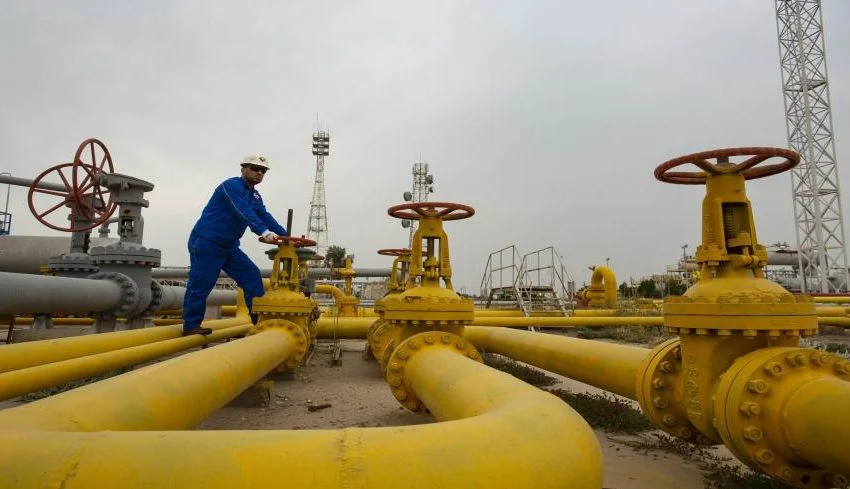
Iraq strengthens gas production expansion as the Ibn Omar gas project prepares for launch by the end of April. The initiative aims to improve energy efficiency and reduce gas flaring. As a result, Iraq increases its domestic gas supply. Therefore, the project supports both power generation and fuel security.
First, the project operates at the Nahr Bin Omar field under Iraq’s Ministry of Oil. It focuses on processing associated gas that previously went to waste. Consequently, Iraq strengthens gas production expansion to capture more energy value.
Moreover, the facility will process up to 70 million standard cubic feet per day of raw gas. This capacity supports multiple energy outputs. In addition, the project will supply dry gas for electricity generation. Iraq strengthens gas production expansion through improved infrastructure.
Furthermore, expected daily production includes 80 million cubic feet of dry gas. It will also produce 500 to 600 tonnes of liquefied petroleum gas. In addition, it will generate more than 1,800 barrels of condensate. These outputs support both households and industry.
At the same time, several Iraqi energy companies cooperate on the project. These include the South Gas Company, the State Company for Oil Projects, and the Basra Gas Company. As a result, coordination improves project efficiency and delivery.
In addition, officials confirm that the project reduces gas flaring across the region. This step improves environmental performance and energy utilization. Therefore, Iraq gains more value from its existing oil fields. Iraq strengthens gas production expansion while cutting waste.
Moreover, the project increases domestic LPG availability. This helps reduce imports and supports household energy needs. At the same time, extra gas supports national electricity generation. Consequently, Iraq improves power stability.
Furthermore, officials highlight the project as part of a wider national strategy. Iraq aims to expand gas investment and strengthen energy independence. As a result, the country reduces its reliance on external supply sources.
Previously, Iraq wasted large volumes of associated gas during oil production. However, new projects now focus on capturing and using it effectively. Therefore, energy efficiency continues to improve.
In conclusion, the Gas project marks a key step in Iraq’s energy development. It boosts supply, reduces waste, and strengthens electricity generation.