

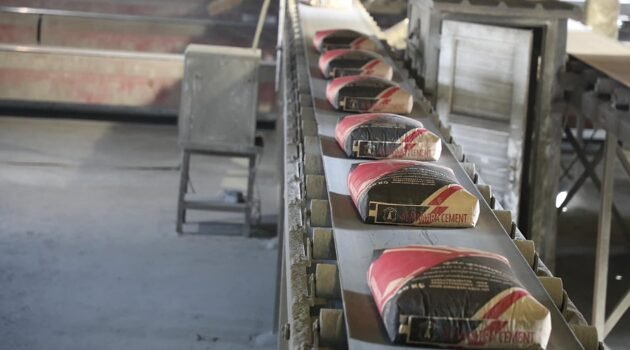
Iraq Cement production growth strengthens Iraq’s industrial sector as demand rises across construction projects. Cement production growth boosts supply stability in local markets.
Iraq recorded a strong rise in cement output, reaching 676,000 tons in February. The Iraqi General Cement Company confirmed this increase across multiple factories. Officials described this performance as a solid start for the industrial sector.
Moreover, production stability improved across national cement plants. Continuous operations helped factories maintain consistent output levels. As a result, supply met rising domestic construction demand effectively.
In addition, sales performance matched production growth closely. Company officials reported cement sales exceeding 664,000 tons during the same period. This balance supported market stability and reduced supply gaps.
Cement production growth also aligned with major infrastructure expansion. Large projects such as the Development Road project increased material demand significantly. Furthermore, the construction of industrial facilities and logistics hubs added extra pressure on supply chains.
Meanwhile, several plants recorded notable performance improvements. The Kubaisa Cement Plant achieved a 37% increase in output. This growth reflected upgraded efficiency and stronger operational management.
At the same time, the Al-Qaim Cement Plant increased production by 17%. The Sinjar Cement Plant also posted a 14% rise in output. These gains strengthened overall national production capacity.
Additionally, industry leaders emphasized the importance of consistent production. They highlighted that a stable supply plays a key role in supporting national development. Therefore, factories continue to focus on efficiency and modernization.
Cement production growth also reflects improving industrial coordination. Better distribution systems helped connect factories with construction markets. Consequently, supply reached project sites faster and more reliably.
Furthermore, rising demand from housing and infrastructure projects continues to drive production. Contractors require large volumes of cement for ongoing developments. This demand encourages factories to maintain high output levels.
In conclusion, cement production growth demonstrates strong progress in Iraq’s industrial sector. Higher output and improved sales support national development goals. The country continues to expand its construction and infrastructure capacity.