

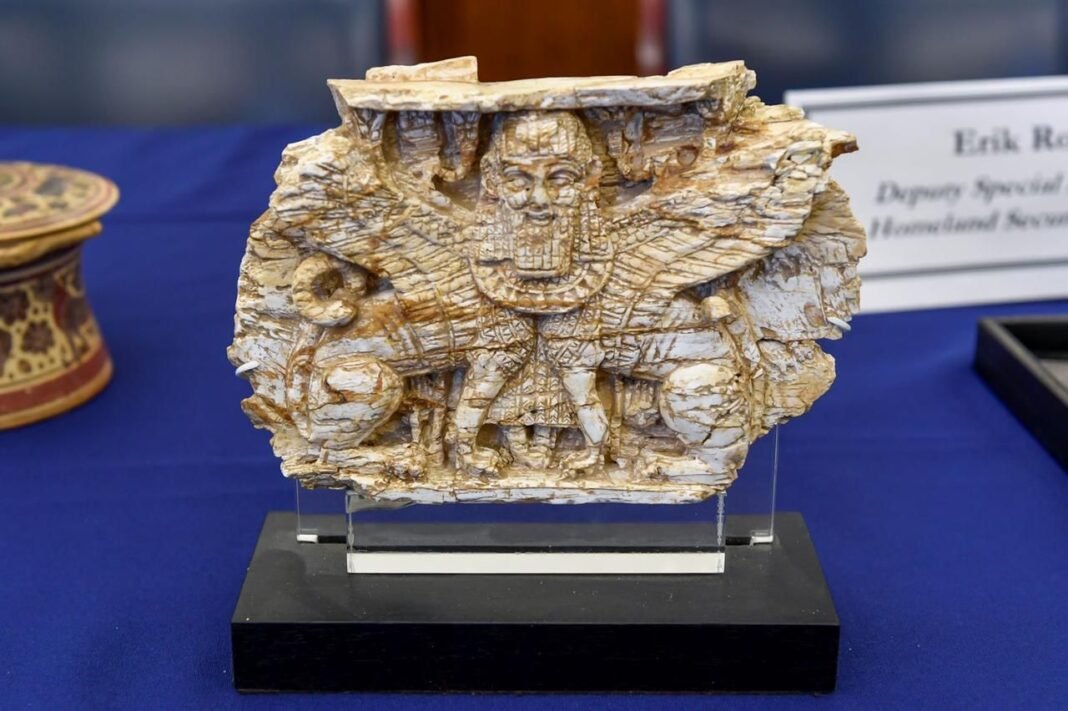
Iraq has launched a nationwide effort to recover more than 100,000 artifacts taken abroad through illegal excavation and smuggling. The Iraq artifact recovery plan combines diplomatic efforts, security monitoring, and international legal action. Officials say the campaign aims to protect Iraq’s ancient heritage and return stolen treasures.
The Ministry of Culture, Tourism, and Antiquities has placed heritage recovery among its key priorities. Officials are focusing on artifacts that authorities can identify through existing museum records. Many of these registered items disappeared during the instability that followed the 2003 US-led invasion.
However, Iraq faces a more complicated challenge with artifacts that authorities never officially recorded. Illegal excavations uncovered many ancient objects without proper documentation. Their lack of museum records can make identification, ownership claims, and legal recovery much more difficult.
Under the Iraq artifact recovery plan, several government institutions will work together to locate and recover stolen heritage. The Ministry of Foreign Affairs will coordinate diplomatic efforts with other state agencies. The Ministry of Interior, National Intelligence Service, and National Security Service will also support the campaign.
Iraqi security agencies will cooperate with the country’s diplomatic missions abroad. Their work will include monitoring international auctions where suspected Iraqi artifacts may appear. Officials can then investigate the objects and pursue their return through diplomatic or legal channels.
The government also intends to strengthen international legal action against individuals and companies holding Iraqi artifacts. Authorities can use documentation and ownership records to support claims involving identifiable objects. These efforts could help Iraq challenge the illegal possession or sale of its cultural property abroad.
Several countries have already helped Iraq recover thousands of artifacts. The United States and United Kingdom have played an important role in returning stolen Iraqi heritage. Iraqi officials, however, say some countries have delayed the return of certain objects.
The issue carries particular importance because Iraq contains some of the world’s most significant archaeological sites. Ancient Mesopotamian civilizations developed in the region over thousands of years. Their artifacts provide important evidence about early cities, writing, government, religion, and trade.
The scale of the recovery effort also reflects the damage caused by decades of conflict and illegal trafficking. Smugglers have targeted archaeological sites and moved valuable objects through international networks. Recovering these items requires cooperation between Iraqi authorities, foreign governments, museums, auction houses, and law enforcement agencies.
The Iraq artifact recovery plan could therefore become a long-term campaign rather than a single operation. Authorities must identify missing objects, establish their Iraqi origin, locate them abroad, and secure their legal return. Each case may require different diplomatic and judicial procedures.
Officials also hope the campaign will support Iraq’s wider tourism strategy. Preserving and recovering cultural heritage can strengthen museums and archaeological tourism. It can also help Iraq present its ancient history to international visitors.
The Iraq artifact recovery plan now places greater emphasis on coordinated action inside and outside the country. Success will depend on accurate records, international cooperation, and effective legal enforcement. Returning thousands of stolen objects could ultimately help Iraq preserve a crucial part of its national and human heritage.