

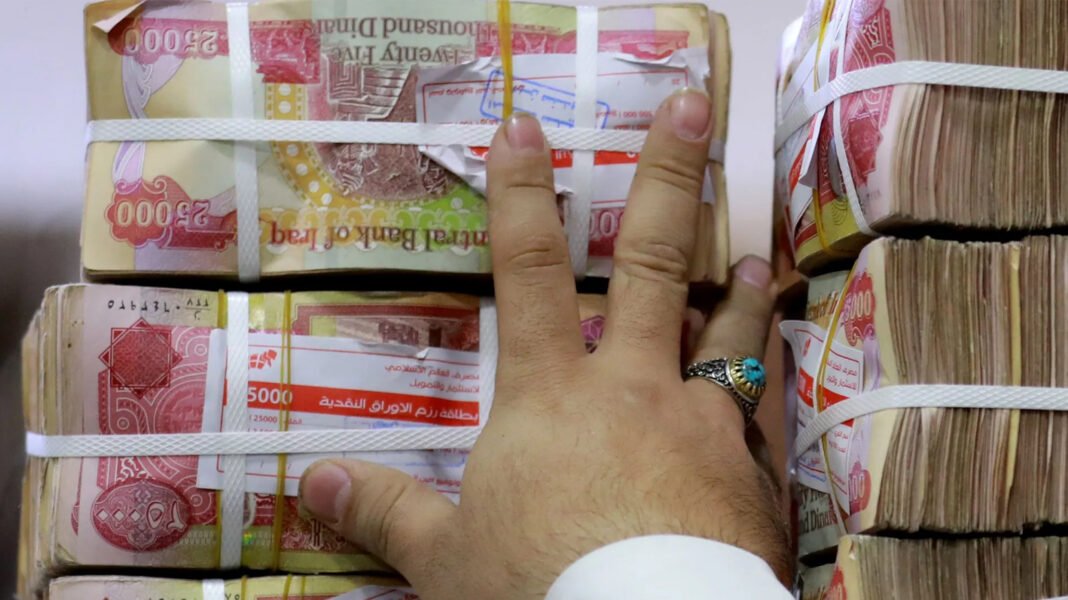
Iraq spent an average of 7.438 trillion Iraqi dinars each month on salaries and welfare during the first half of 2026. The Iraq salary and welfare spending reached 44.627 trillion dinars between January and June. The figures highlight the significant pressure that recurring government payments place on the federal budget.
Civil service salaries accounted for the largest portion of this spending during the six-month period. Government records show employee compensation reached 30.769 trillion dinars. That figure represents about 68.9 percent of the combined spending on salaries and social assistance.
Social welfare payments accounted for the remaining 13.858 trillion dinars. These funds supported cash transfers, disability allowances, and other assistance for vulnerable households. Welfare spending averaged around 2.310 trillion dinars per month during the first half of the year.
Combined salary and welfare payments averaged 7.438 trillion dinars monthly. However, actual payments can vary from one month to another. Factors such as available liquidity, payment schedules, and additional allowances can affect monthly disbursements.
The figures show how heavily Iraq’s budget depends on recurring operational expenditure. Salary payments form a major obligation because the government must continue paying public employees regardless of changes in revenue. Welfare programs also require regular funding to support households that depend on state assistance.
The scale of Iraq salary and welfare spending also limits the government’s flexibility in allocating money toward development projects. When a large share of available revenue goes toward operational commitments, fewer resources remain for infrastructure and long-term investment. This challenge becomes more significant when oil revenues face fluctuations.
Iraq continues to rely heavily on crude oil exports to finance government operations. Changes in international oil prices can therefore affect the funds available for salaries, welfare, and other public expenditures. Export disruptions and regional transportation challenges can add further pressure to government finances.
The spending pattern also connects to Iraq’s wider debt challenges. Domestic public debt exceeded 106 trillion dinars in June 2026, according to the cited government expenditure data. High recurring commitments can increase the need for borrowing when available revenues cannot fully cover operational requirements.
The government has also considered temporary external financing arrangements to maintain cash liquidity. Such measures could help authorities meet essential payment obligations during periods of financial pressure. However, policymakers must balance short-term financing needs with long-term debt sustainability.
The first-half figures provide a clear picture of the government’s recurring financial burden. Salaries alone consumed more than 30 trillion dinars during six months. Meanwhile, welfare programs required nearly 14 trillion dinars over the same period.
The Iraq salary and welfare spending figures underline the importance of stronger fiscal planning. Expanding non-oil revenues could provide the government with additional resources beyond crude exports. At the same time, controlling unnecessary operational costs could create more room for infrastructure and investment.
For now, the government faces the challenge of maintaining essential payments while preserving fiscal space. The Iraq salary and welfare spending total shows why balancing operational obligations with development priorities remains a major issue for Iraq’s economy.