

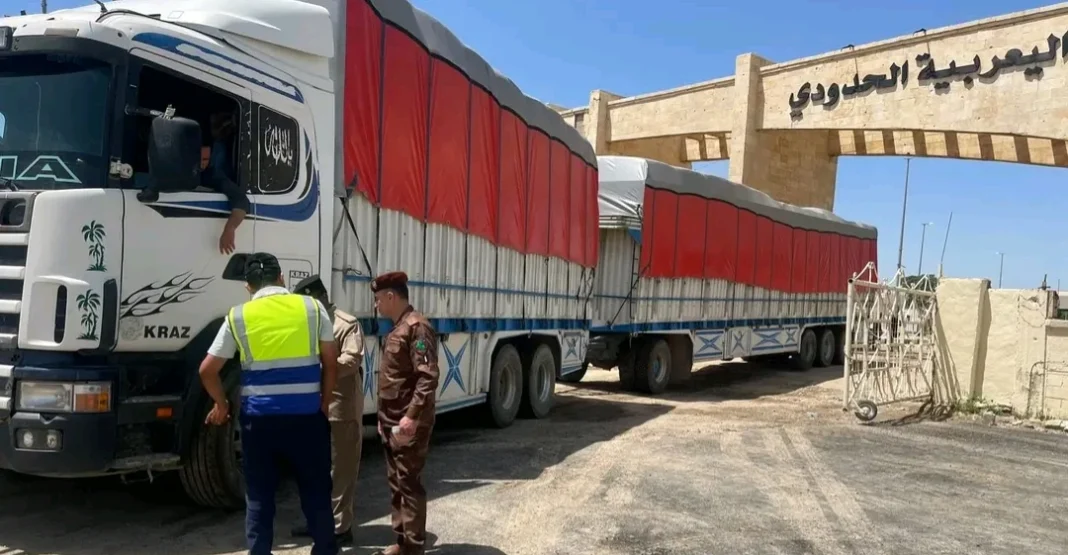
Iraq and Syria are working to strengthen economic relations and increase trade between their markets. The Iraq-Syria trade expansion effort focuses on reducing border obstacles and improving the movement of goods. Officials also discussed new agreements that could create wider opportunities for businesses and investors.
The discussions took place in Damascus between Amer Khalaf Alawi, president of the Iraqi Federation of Chambers of Commerce, and Maher Khalil al-Hassan, Syria’s deputy economy and industry minister for internal trade. Both sides reviewed current commercial relations and explored ways to increase trade flows. They also examined practical measures to simplify cross-border procedures.
Several memorandums of understanding could follow the recent discussions. The agreements would aim to strengthen economic cooperation and open additional channels for bilateral commerce. Officials believe stronger institutional coordination could help businesses operate more efficiently in both countries.
During the meeting, representatives discussed the movement of goods and products between Iraq and Syria. They also examined obstacles that continue to affect cross-border trade. Removing unnecessary procedures could reduce delays and make transportation between the two markets more efficient.
The two sides also called for closer cooperation between Iraqi and Syrian business communities. Chambers of commerce could play a larger role in connecting companies and identifying investment opportunities. Such coordination could help expand markets and encourage private-sector activity.
The Iraq-Syria trade expansion plans come as Syria seeks to increase exports of higher-value products. Syrian officials have identified Iraq as one of the country’s important markets alongside Jordan and Gulf states. This approach could create new opportunities for Syrian manufacturers and exporters.
Iraq also has growing economic links with Syria through energy and transportation. On May 1, Iraq began its first crude oil export operation through the Rabia border crossing toward Syria. The initial shipment involved 70 tanker trucks carrying crude to regional markets.
The reopening of the border has added another dimension to economic relations between the neighboring countries. The Iraq-Syria crossing resumed trade and passenger traffic on April 22 after 13 years of closure. Security challenges during the fight against ISIS contributed significantly to the long closure.
The border reopening could support broader commercial activity between the two countries. Improved crossings can help transport companies move products more efficiently and reduce logistical challenges. They can also provide businesses with additional routes to reach regional markets.
For Iraq, stronger trade with Syria could expand commercial links with the wider Levant. For Syria, the Iraqi market could provide an important destination for locally produced goods. Both countries could benefit from greater private-sector cooperation and easier border procedures.
However, expanding bilateral trade will require continued coordination between government agencies and business organizations. Customs procedures, transportation arrangements, border security, and payment systems all affect commercial activity. Addressing these issues could determine how quickly trade volumes increase.
The Iraq-Syria trade expansion initiative therefore represents a broader effort to deepen economic ties between the neighboring countries. New memorandums could provide a framework for future cooperation. If authorities remove key barriers, businesses on both sides could gain greater access to regional markets.