

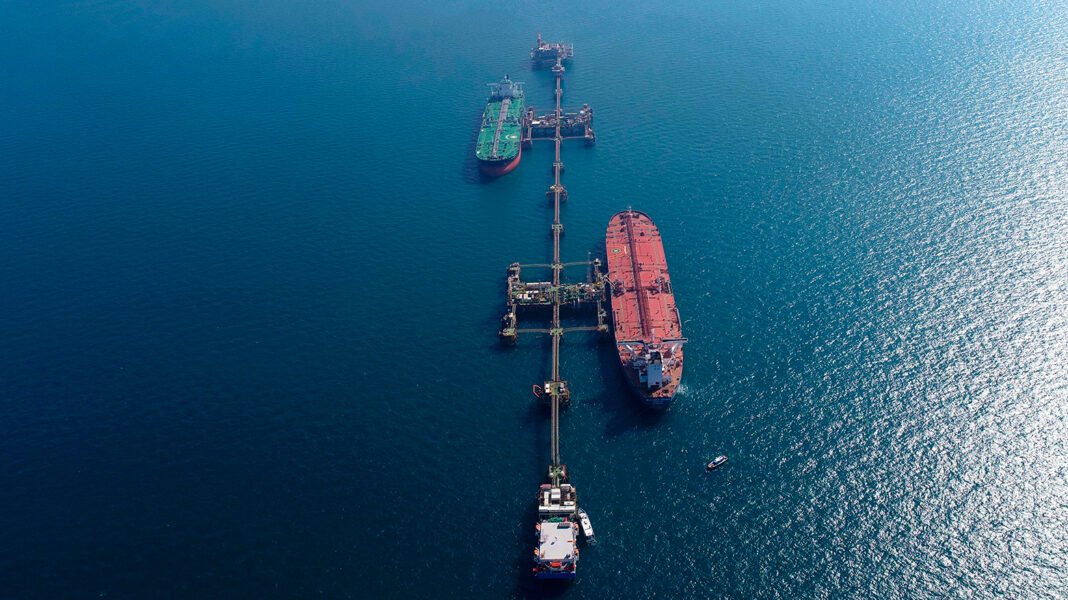
Iraq is exploring a new way to ship Basrah crude without relying on the Strait of Hormuz. Basrah crude exports now face continued pressure from disruptions affecting traffic through the strategic waterway. The State Oil Marketing Organization (SOMO) has offered cargoes that buyers can collect through ship-to-ship transfers near Oman.
The latest tender gives international buyers another option for receiving Iraqi crude. Tankers can transfer the cargo off the Omani coast, outside the Strait of Hormuz. This arrangement could reduce the need for buyers to send vessels through the narrow maritime passage. SOMO set August 28 as the deadline for submitting offers.
The tender marks SOMO’s second crude sale this week. Its earlier offer followed a more traditional loading arrangement at Iraq’s Basra export terminal. That tender required buyers to route their tankers through Hormuz. The latest offer changes that requirement and creates greater flexibility for traders.
Iraq depends heavily on southern terminals for its major crude exports. Recent disruptions have therefore created significant challenges for the country’s oil industry. July shipments averaged around 1.4 million barrels per day, according to figures cited by Reuters. That level remained far below the more than 3.3 million barrels previously exported from Basrah.
Exports have improved from the lowest levels recorded during the disruption. Shipments averaged about 500,000 barrels per day in June and only 100,000 barrels in May. However, the recovery has not restored Iraq’s southern exports to normal levels. The continuing constraints have encouraged Baghdad to consider alternatives.
The new tender shows how Basrah crude exports are adapting to difficult shipping conditions. Ship-to-ship transfers could help buyers access Iraqi supplies while avoiding the most exposed section of the route. The approach also gives SOMO another mechanism for maintaining sales during periods of maritime uncertainty.
Baghdad is also examining longer-term options beyond the latest tender. Officials have considered routes through Turkiye, Syria and Jordan as alternatives to the Gulf shipping corridor. Such routes could reduce Iraq’s dependence on maritime traffic through Hormuz. However, each option faces major financial, logistical and political challenges.
One proposal involves building a pipeline toward Syria’s Baniyas port on the Mediterranean. The project could take around four years to complete, according to the report. Initial estimates put its cost at no less than $15 billion. That timeline means the project cannot provide an immediate solution to current export restrictions.
For now, SOMO appears focused on practical measures that can support sales sooner. The Omani transfer option offers traders a way to handle Iraqi crude without directly navigating the Strait. Its success will depend on buyer interest, tanker availability and broader shipping conditions.
The latest move highlights the growing importance of flexible export strategies for Iraq. Basrah crude exports remain a crucial source of national revenue, making uninterrupted access to international markets essential. SOMO’s latest tender suggests Baghdad will continue testing alternative arrangements while pursuing larger infrastructure projects.