

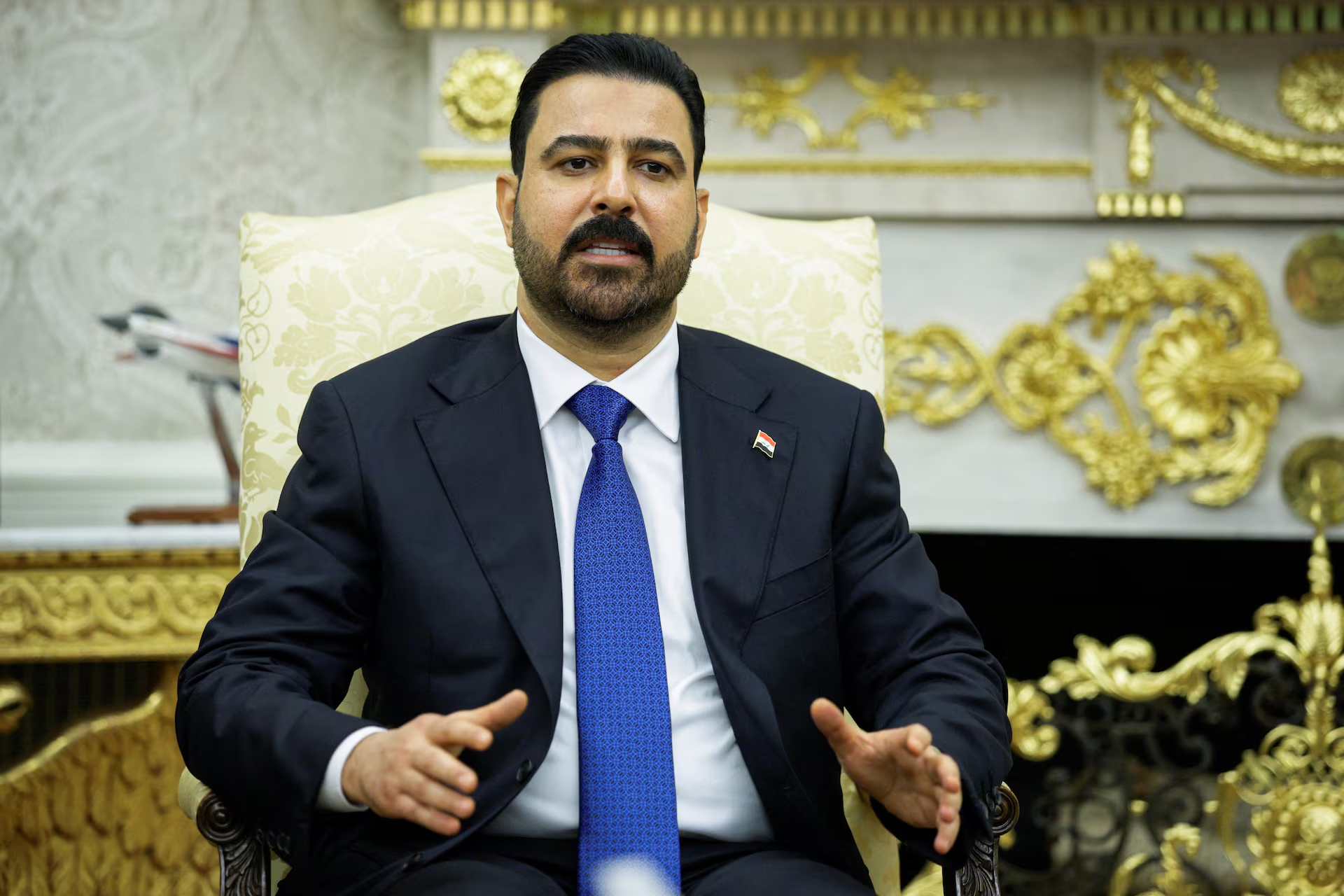
Prime Minister Ali al-Zaidi will head to Tehran later this week for talks on bilateral cooperation. Iraq’s Foreign Ministry says he plans to sign several Iraq Iran cooperation agreements during the visit. The trip gives Baghdad an early opportunity to define the new government’s diplomatic priorities. It also follows al-Zaidi’s first official foreign mission since becoming prime minister. Officials have not disclosed the full list of documents expected for signature.
The Foreign Ministry announced the visit after senior Iraqi and Iranian diplomats met in Baghdad. Mohammed Bahr al-Uloom, Iraq’s deputy minister for multilateral and legal affairs, joined the discussions. Iranian Ambassador Mohammad al-Sadegh represented Tehran at the meeting, according to the ministry. They reviewed existing relations and examined the proposed agenda for al-Zaidi’s Tehran talks. The Iraqi News Agency said preparations also covered potential cooperation across several fields.
Details remain limited, but officials described the planned measures as mutually beneficial. The Iraq Iran cooperation agreements could provide broad political frameworks rather than immediate policy changes. Such documents often establish shared goals before ministries negotiate implementation, funding, and timelines. Their practical effect will depend on follow-up decisions from officials in both capitals. For Iraq, the visit provides another venue for discussing regional and economic interests.
The Tehran trip comes after al-Zaidi visited Washington on his first foreign tour. There, he met US President Donald Trump and signed 48 commercial agreements with American companies. The sequence illustrates Baghdad’s effort to keep diplomatic and commercial contacts open across rival partnerships. Iraq maintains deep ties with Iran while also seeking investment and cooperation from Western partners. That balancing act shapes many of the government’s most important foreign-policy decisions.
After Tehran, al-Zaidi plans to visit Turkey, Saudi Arabia, and Syria as part of regional outreach. The Iraq Iran cooperation agreements may set the tone for meetings that follow elsewhere. Each stop presents separate questions involving trade, security, energy, and cross-border coordination. The planned tour places Iraq at the center of a region facing complex political pressures. Its outcomes will become clearer once governments announce specific commitments from each visit.