

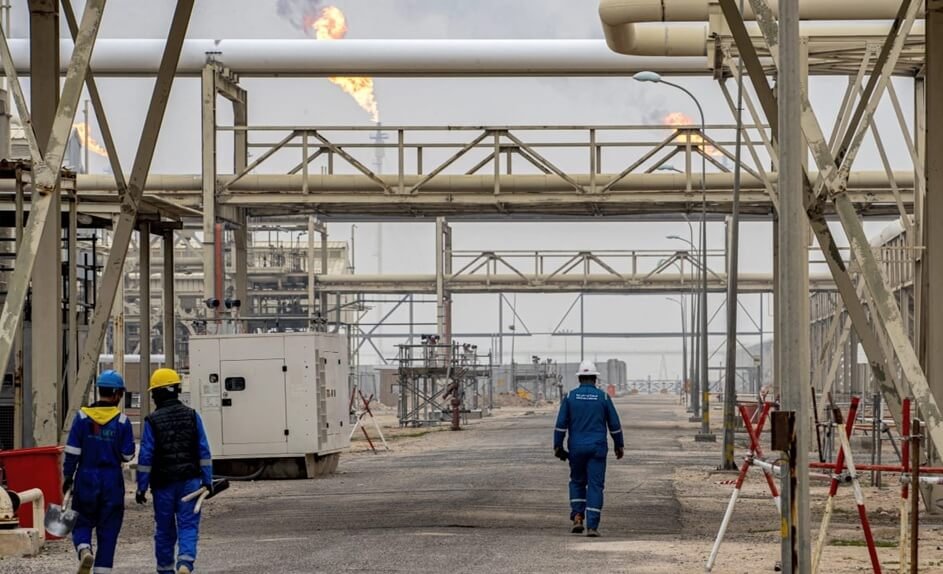
Iraq has opened a new central gas processing plant at the Faihaa oil field in Basra. The facility marks another step in Baghdad’s efforts to strengthen domestic gas production. It also supports plans to reduce gas flaring and improve fuel supplies for power plants.
Oil Minister Basim Khudair inaugurated the facility during a ceremony at the southern oil field. The project will process associated gas produced during oil operations. Authorities hope the facility will turn previously wasted gas into useful energy for Iraq’s electricity sector.
Iraq gas processing capacity will increase with the new facility at Faihaa. The plant can process up to 130 million standard cubic feet of gas each day. It is expected to increase Iraq’s usable gas output by around 92 million standard cubic feet daily.
The facility will also produce significant quantities of liquefied petroleum gas. Its production capacity will reach about 9,800 barrels of LPG each day. That volume equals approximately 840 tons and could support domestic energy needs.
The project focuses on capturing associated gas that operators previously burned through flaring. Gas flaring wastes valuable resources and contributes to environmental pollution. Processing the gas instead can provide additional fuel for electricity generation and other domestic uses.
Iraq continues to face major challenges in supplying fuel to its power plants. Gas shortages have forced the country to rely heavily on imports to support electricity production. Increasing domestic gas processing could therefore reduce pressure on the national power system.
The Faihaa oil field lies around 20 kilometers north of Basra. The field sits near Iraq’s border with Iran in one of the country’s most important oil-producing regions. Kuwait Energy Basra operates the field through United Energy Group, which trades on the Hong Kong stock market.
Iraq gas processing represents an important part of the government’s wider energy strategy. Baghdad wants to capture more associated gas from oil fields instead of allowing it to burn. The additional supply could also help reduce Iraq’s dependence on imported natural gas.
The new facility could provide benefits beyond gas production. More reliable domestic fuel supplies could support power generation and reduce fuel import costs. At the same time, stronger gas processing could help Iraq make better use of its existing oil resources.
Iraq has set an ambitious target to eliminate gas flaring nationwide by 2029. Achieving that goal will require new processing facilities across several major oil fields. It will also require continued investment in gathering networks, processing infrastructure, and gas utilization projects.
Iraq gas processing could become increasingly important as Baghdad seeks greater energy independence. Domestic production can help reduce exposure to foreign supply disruptions. It can also support the electricity sector while creating additional products for local markets.
The Faihaa project adds new capacity to Iraq’s efforts to develop its gas resources. However, further investment will remain necessary to capture gas from other oil fields. Expanding processing infrastructure could help Iraq move closer to energy self-sufficiency and reduce waste.