

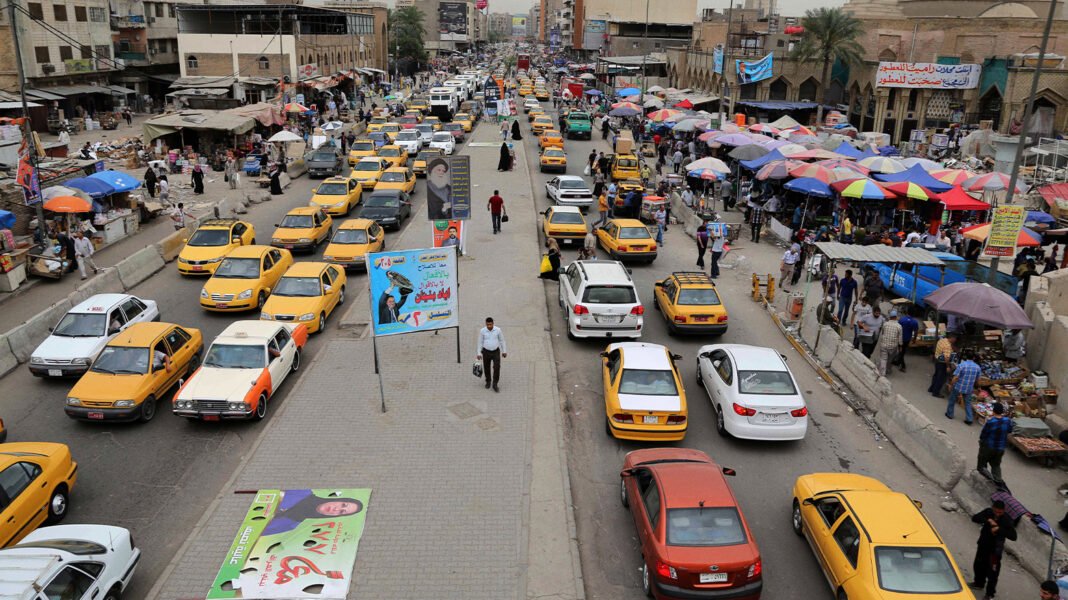
Iraq’s non-oil economic slowdown is raising concerns despite a nearly 10% increase in money supply. Inflation has remained close to 3% since the beginning of the year. Economists say the unusual combination may point to weaker business activity or increased cash hoarding.
Economist Manar Al-Obaidi said the growing money supply should normally create stronger price pressures. However, inflation has remained relatively stable despite the additional liquidity. He said this could indicate that money is moving more slowly through Iraq’s economy.
One possible explanation involves weaker non-oil economic growth. If businesses and consumers reduce spending, additional money may have a limited impact on prices. This could also signal weaker demand and fewer opportunities for private-sector employment.
The situation could create challenges for Iraq’s trade sector. Trade represents a major part of economic activity outside the oil industry and government spending. However, businesses have faced higher tariffs, customs changes, and transportation difficulties.
The introduction of the ASYCUDA customs system has also added pressure to some commercial activities. Higher costs could make imports more expensive for businesses and consumers. Meanwhile, shipping and transport challenges continue to affect companies operating across Iraq.
Al-Obaidi pointed to another indicator of weaker economic activity. Central Bank of Iraq dollar sales have reportedly fallen by 41% compared with the same period last year. However, detailed data on company activity and labor demand remain limited.
The second possible explanation involves increased cash hoarding. Businesses and individuals may be holding more cash because of concerns about government liquidity. Consequently, more money could remain outside active economic circulation.
This situation creates a difficult challenge for policymakers. Iraq needs to preserve price stability while encouraging private-sector growth. Authorities also need to ensure that businesses can access financing and maintain employment.
Al-Obaidi called for stronger support for commercial and industrial sectors. He recommended simpler business procedures and targeted tax and customs exemptions. Such measures could encourage investment without creating excessive inflation.
The wider financial situation adds another layer of pressure. Iraq faces a liquidity shortage as government revenues struggle to meet monthly spending requirements. The government plans to borrow more than 3 trillion Iraqi dinars from local private banks.
Government spokesman Haidar Al-Aboudi said monthly state spending needs reach about 10.8 trillion dinars. Meanwhile, monthly oil revenues stand at roughly 2.5 trillion dinars. The large gap highlights Iraq’s dependence on borrowing when oil income weakens.
Economist Ahmed Eid warned that increased government borrowing could affect private businesses. Banks lending more money to the state may have less funding available for companies. That could restrict private-sector credit and further weaken economic activity.
The growing money supply therefore does not necessarily signal stronger economic growth. Instead, the non-oil economic slowdown may show that liquidity is not reaching productive sectors. Businesses need stronger demand, easier financing, and fewer administrative obstacles to expand.
Iraq’s economy remains heavily dependent on oil revenues and government spending. That structure leaves non-oil sectors vulnerable when public finances come under pressure. Strengthening trade, industry, and private investment could help reduce that vulnerability.
For now, stable inflation offers some room for policymakers to act. However, weak commercial activity could become a larger concern if current pressures continue. Iraq may need targeted economic measures to turn available liquidity into stronger production and employment.
The non-oil economic slowdown highlights a broader challenge facing Iraq. More money in circulation does not automatically create stronger economic activity. Policymakers must focus on improving investment, business confidence, and private-sector growth.