

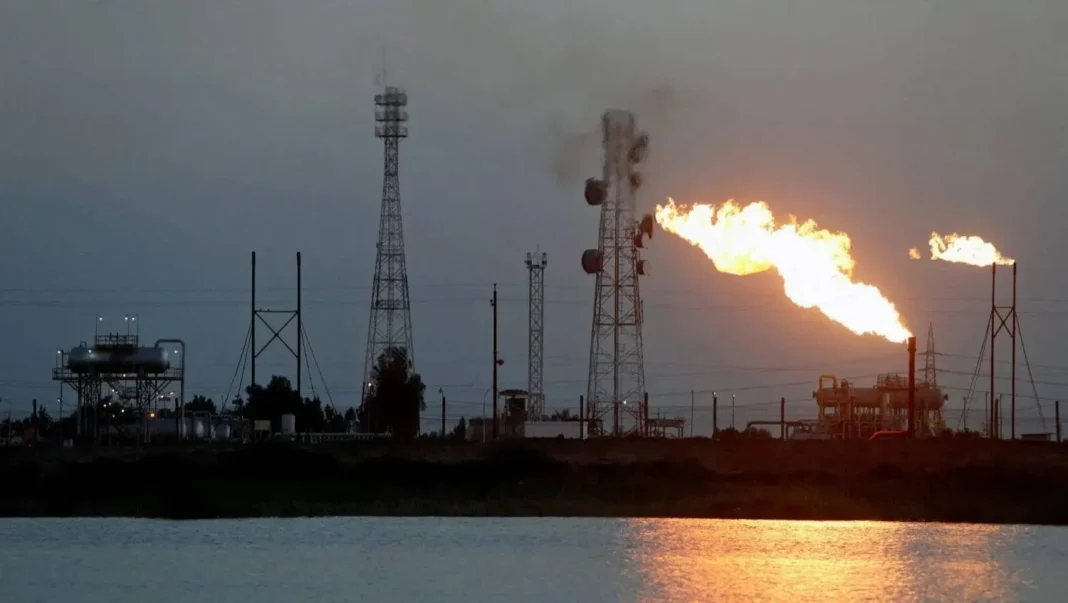
Basrah crude prices moved sharply higher on Wednesday as international energy markets continued to react to rising geopolitical tensions in the Middle East. Strong gains across global benchmark contracts lifted Iraq’s key export grades, reflecting growing concerns about possible disruptions to oil supplies. Investors closely monitored developments after military exchanges between the United States and Iran increased uncertainty across the region.
Iraq’s southern crude blends posted notable advances during the latest trading session. Basrah Heavy climbed by $2.54, reaching $57.43 per barrel after recording a gain of more than four percent. Basrah Medium also strengthened, adding 4.44% to settle at $59.73 per barrel. The positive movement highlighted the close relationship between Iraqi crude exports and wider international market sentiment.
Global oil benchmarks also traded higher as traders responded to escalating political risks. Brent crude rose by $1 to reach $92.01 per barrel. Meanwhile, US West Texas Intermediate gained 82 cents and settled at $85.16 per barrel. These increases reflected investor expectations that any further instability could tighten global crude supplies and influence future production and transportation.
Oil markets often react quickly when tensions rise in major producing regions. Traders evaluate every political development for its potential impact on supply chains, export routes, and production capacity. As uncertainty grows, many buyers increase purchases to secure future deliveries, which can push prices higher in a short period.
The latest market rally extended beyond Iraq’s export grades. Several leading Arab crude benchmarks also recorded solid gains during Wednesday’s trading. Kuwait Export crude delivered the strongest performance among regional grades. It climbed by $5.14 to reach $87.39 per barrel. Saudi Arabian Light also advanced by $3, ending the session at $77.61 per barrel. In addition, the United Arab Emirates’ Das crude increased to $80.94 per barrel, reinforcing the broader upward trend across Gulf producers.
Analysts continue to watch developments in the Middle East with caution. Regional events frequently influence investor confidence because the area remains one of the world’s largest energy-producing hubs. Even small changes in security conditions can reshape market expectations and affect crude prices worldwide.
For Iraq, higher oil prices could support government revenues if the upward trend continues. Oil exports remain the country’s primary source of income and play a central role in financing public spending and economic development. However, market experts also note that price rallies driven by geopolitical tensions can reverse quickly if diplomatic efforts reduce uncertainty.
Market participants will likely focus on upcoming political statements, production data, and inventory reports during the coming days. These factors could determine whether current gains continue or give way to renewed volatility. Investors will also monitor OPEC-related developments and demand forecasts from major economies to assess the next direction of energy markets.
As global markets remain sensitive to regional events, Basrah crude prices will continue to attract attention from traders, policymakers, and energy companies. Future price movements will depend on both geopolitical developments and broader economic conditions. For now, Basrah crude prices remain on an upward path alongside stronger international oil benchmarks.