

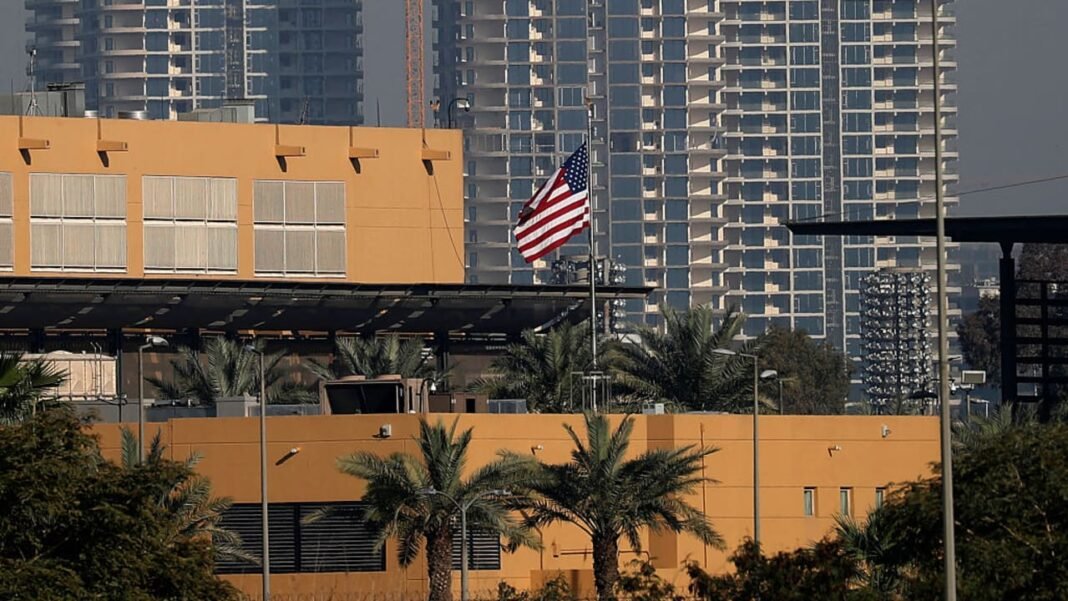
The United States is preparing to return evacuated diplomats to several missions across Iraq and the Middle East. The U.S. diplomatic return reflects Washington’s assessment that regional tensions have eased from their recent peak. However, American officials still plan to maintain strict security measures at several missions.
The planned return follows months of emergency evacuations across the region. According to a U.S. State Department operational plan, Washington will restore diplomatic staffing in phases. The plan sets different staffing levels based on security conditions at each mission.
In Iraq, Kuwait, and Bahrain, the United States plans to restore diplomatic personnel to about 75% of normal staffing. The UAE, Saudi Arabia, Qatar, and Lebanon could receive up to 85% of their previous staffing levels. Lebanon is expected to receive some of the first returning personnel.
Meanwhile, the United States plans to authorize a full return of diplomatic personnel to Israel, Jordan, and Oman. The different staffing targets show that Washington continues to assess security conditions separately across the region. Officials also plan to keep restrictions on family travel at several locations.
The restrictions will affect Lebanon and the six Gulf Cooperation Council states. Washington will continue limiting travel for accompanying family members at those missions. This approach allows diplomats to resume work while reducing the number of civilians exposed to potential security risks.
The U.S. diplomatic return follows emergency measures that began during escalating regional tensions earlier this year. In late February, American officials offered voluntary departures to non-essential personnel and family members at the U.S. mission in Jerusalem. The move came shortly before joint military operations in the region.
Washington later ordered a broader drawdown across regional diplomatic posts in early March. The measures included non-emergency personnel in Baghdad. The decision came before drone and rocket attacks targeted the U.S. Embassy compound in the Iraqi capital.
The latest staffing plan suggests that American officials see a gradual reduction in the risk of a wider regional conflict. Direct negotiations between Washington and Tehran have remained stalled, while disagreements and threats of further economic sanctions continue. Despite those challenges, U.S. officials appear ready to restore part of their diplomatic presence.
A 60-day ceasefire also expired without finalized terms for a formal extension. Even so, U.S. security assessments support a limited return of personnel. The approach seeks to balance diplomatic operations with continued protection for American staff.
Former U.S. diplomatic and defense officials have described the move as a sign of reduced wartime conditions. However, emergency response measures remain available if regional security deteriorates again. Washington therefore appears to be reopening its diplomatic network while maintaining a cautious security posture.
The U.S. diplomatic return could strengthen American engagement with governments across Iraq and the wider Middle East. It may also allow diplomatic missions to resume more regular political and administrative operations. Still, the phased staffing system shows that Washington continues to view the region as a high-risk environment.