

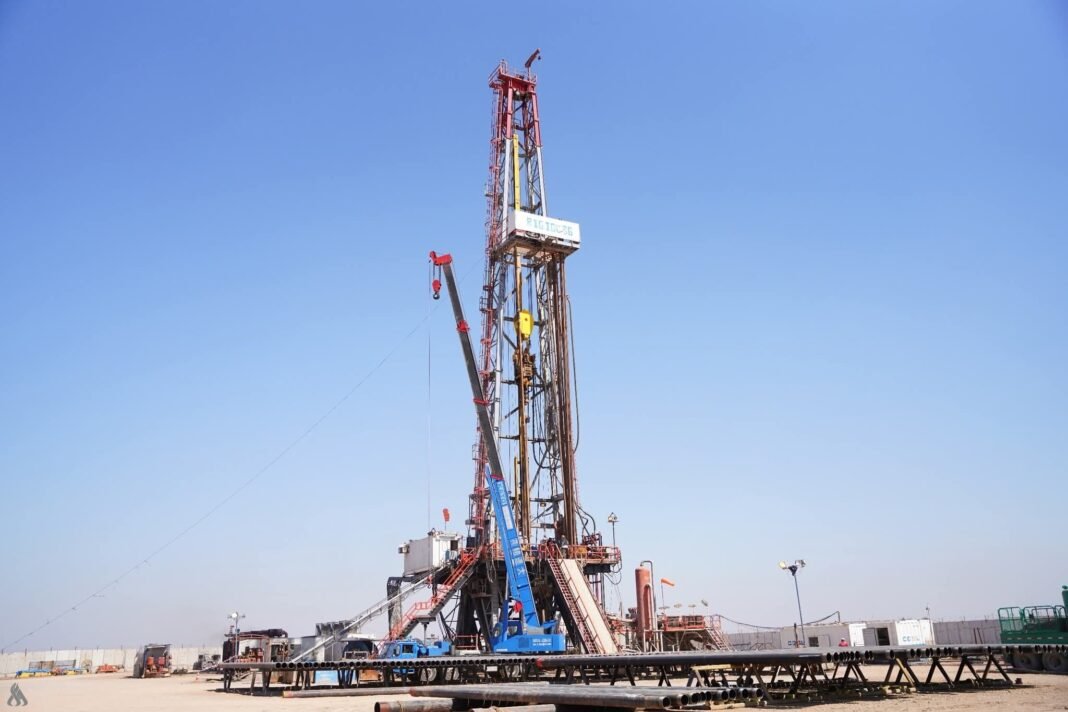
Iraq’s drilling operations are expanding as the Iraqi Drilling Company relocates the IDC-51 rig from Zubair. The East Baghdad drilling project aims to support higher oil production in central Iraq. The move also strengthens development efforts at one of the country’s major oil fields.
The Iraqi Drilling Company will transfer the rig from the Zubair oil field in Basra province. Workers will transport the equipment to the East Baghdad South field near Baghdad. The project comes under the supervision of the state-owned Midland Oil Company.
The drilling campaign follows an agreement with EBS Petroleum, an Iraqi-registered company linked to Chinese state-owned ZhenHua Oil. Under the agreement, the companies will drill 17 horizontal wells. These wells should help increase production capacity across the central region.
Moving the rig requires several technical stages before drilling can begin. Crews will first dismantle the equipment at Zubair and prepare its components for transport. They will then rebuild the rig at East Baghdad South and complete safety checks before operations start.
The new campaign builds on earlier drilling work at the same field. Previous development programs included campaigns involving 27 and 18 horizontal wells. Those projects helped establish additional drilling experience and supported the field’s wider development plans.
East Baghdad South forms the southern section of the larger East Baghdad oil field. The field stretches for about 60 kilometers and reaches roughly 12 kilometers in width. Its location makes it particularly important because it lies beneath densely populated areas around the Iraqi capital.
Despite its challenging location, the field contains significant petroleum resources. Appraisal drilling has raised its estimated proven reserves to around 15 billion barrels. The field contains substantial volumes of both medium and light crude oil.
The East Baghdad drilling project could therefore play an important role in Iraq’s efforts to increase domestic oil output. Horizontal drilling can provide access to wider sections of underground reservoirs. This approach may also improve recovery from complex formations when engineers apply suitable drilling techniques.
Meanwhile, the relocation of IDC-51 highlights the growing role of Iraq’s domestic drilling capabilities. Moving an existing rig between major fields can support faster project deployment. It also allows operators to use established equipment for new development campaigns.
As the rig completes transportation, assembly, and safety procedures, attention will turn to the first new wells. The results could provide valuable information about production potential in the southern section of the field. The East Baghdad drilling project remains an important part of Iraq’s broader plans to develop its oil resources.