

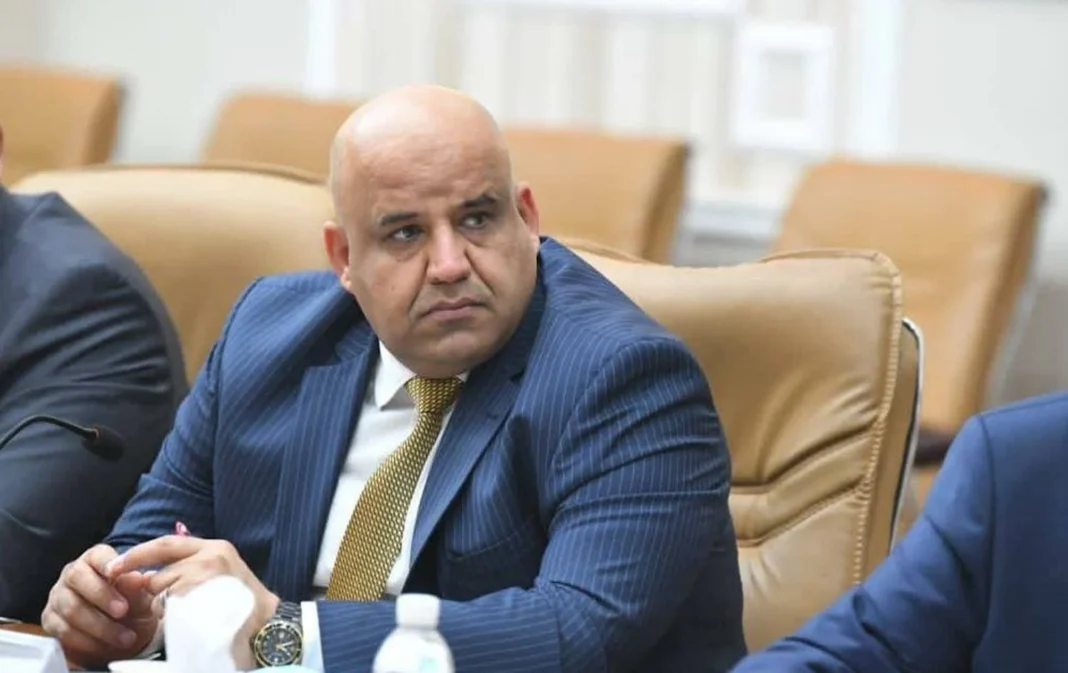
Iraq’s Central Anti-Corruption Criminal Court has sentenced a former Salah Al-Din governor to seven years in prison. The court issued the sentence in absentia after authorities investigated his financial affairs. Officials also imposed a fine worth more than 1.7 billion Iraqi dinars.
The Federal Integrity Commission announced the ruling on Sunday. The case involved former Salah Al-Din Governor Ammar Jabr Khalil Abdul-Hamid. Investigators found substantial wealth and assets that the former official could not adequately explain.
Salah Al-Din corruption case led to several financial and legal measures against the former governor. The court ordered him to pay 1,728,074,000 Iraqi dinars. That amount represents the value of the wealth that authorities identified as illicitly acquired.
The court based its decision on provisions of Iraq’s Integrity Commission Law. Financial audits formed an important part of the investigation. Authorities examined the former official’s assets and financial records before the case reached the court.
The seven-year prison sentence came with additional financial conditions. The court ruled that authorities should not release the convicted official after his prison term. He must first return the illicitly acquired funds and pay the equivalent financial penalty.
The court also ordered the seizure of the former governor’s movable and immovable property. The measure applies to property registered in his name and his wife’s name. Authorities also placed a precautionary freeze on assets belonging to his son.
The judiciary issued an arrest warrant for Abdul-Hamid following the verdict. Because the court issued the sentence in absentia, authorities will enforce the ruling if they arrest him. The Integrity Commission can also seek compensation for damages after the judgment becomes final.
Salah Al-Din corruption case highlights Iraq’s growing focus on recovering money linked to alleged illicit enrichment. Authorities are increasingly combining prison sentences with financial recovery measures. Asset seizures and freezes can help prevent suspected proceeds from moving beyond the reach of investigators.
The case also reflects broader efforts to strengthen accountability among senior officials. Provincial governors manage significant public resources and oversee major government programs. Investigations into unexplained wealth can therefore play an important role in protecting public funds.
The court’s decision sends a strong message about financial accountability in public office. Officials who cannot explain significant wealth may face both criminal and financial consequences. The government also seeks to recover money that investigators link to unlawful enrichment.
Iraq has increased its focus on anti-corruption enforcement in recent months. Several investigations have targeted officials and public employees over alleged misuse of state resources. Courts have also pursued cases involving financial crimes and unexplained assets.
Salah Al-Din corruption case demonstrates how judicial action can combine punishment with financial recovery. The former governor now faces a seven-year sentence, a substantial fine, and the seizure of assets. The final outcome will depend on enforcement of the court’s ruling and the completion of the legal process.