

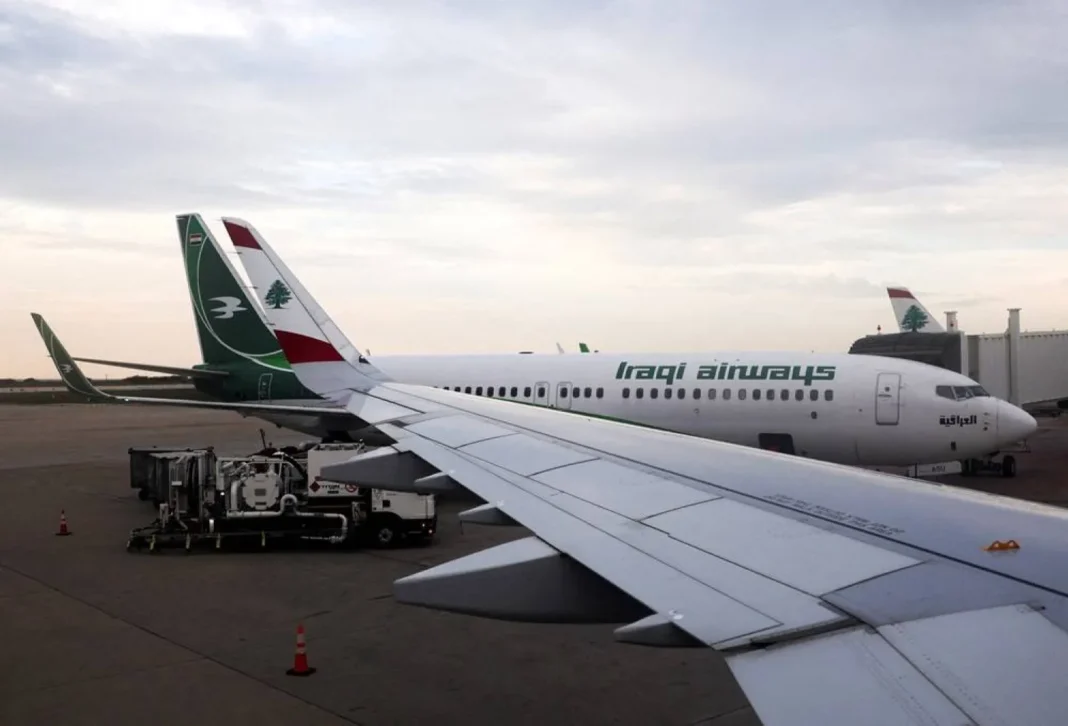
Air travel returns as the Regional airlines resume Iraq flights amid a security uncertainty trend signals partial recovery in aviation. Airlines restart operations despite ongoing regional risks and fragile stability. The Regional airlines’ resumption of Iraq flights amid security uncertainty reflects cautious confidence in Iraq’s airspace reopening.
Authorities confirmed that several carriers resumed operations to Iraqi airports. Iraqi Airways restarted key regional routes to major destinations. Therefore, connectivity between Iraq and neighboring countries is beginning to improve again.
First, airlines resumed flights after Iraq reopened its airspace. The closure happened during an earlier regional military escalation. As a result, aviation activity stopped for several weeks.
Next, the reopening followed a temporary ceasefire agreement between major regional actors. Although the agreement reduced immediate risks, uncertainty remains. Therefore, airlines continue to operate with caution.
Moreover, multiple regional carriers re-entered Iraqi routes. Airlines such as Royal Jordanian, Flydubai, and others restarted services. Consequently, passenger movement across the region begins to recover.
In addition, Iraqi airports in Baghdad and Erbil regained international connections. These airports play a central role in national travel and trade. Therefore, their reopening supports both business and tourism activity.
However, security concerns continue to affect aviation decisions. Some warnings still advise caution for air travel in Iraq. As a result, airlines closely monitor regional developments before expanding services.
Furthermore, previous conflicts damaged aviation confidence. Airports experienced disruptions and security incidents during escalation periods. Therefore, rebuilding trust remains an important challenge.
At the same time, coordination between airlines and authorities continues. Transport officials work with carriers to expand routes gradually. This approach aims to balance safety and economic recovery.
In addition, regional diplomacy influences aviation stability. Ongoing talks between the involved parties may reduce future risks. Therefore, political progress directly supports airline expansion.
Meanwhile, passenger demand shows early signs of recovery. Travelers begin booking regional flights again. Consequently, airlines consider adding more routes in the near future.
In conclusion, the Regional airlines’ resumption of Iraq flights amid the trend of security uncertainty highlights a fragile but positive shift. The Regional airlines resume Iraq flights amid a security uncertainty situation shows recovery in progress, but risks remain present.