

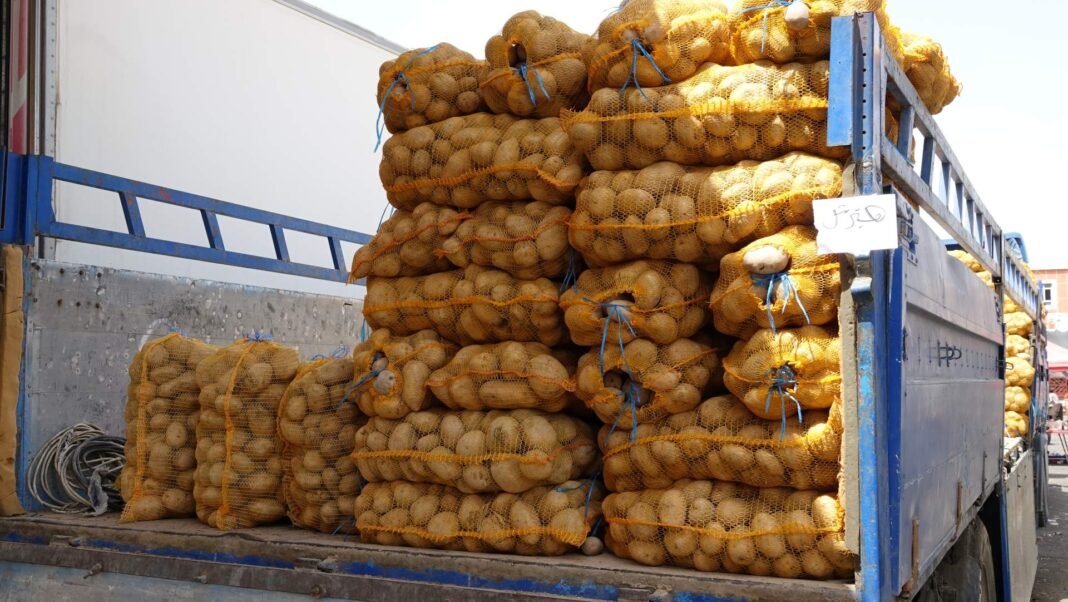
Iraq spent about $52.4 million importing potatoes during 2025, according to agricultural trade data. Iraq potato imports reached approximately 90,000 tonnes during the year. The figures highlight continued weaknesses in domestic production and agricultural supply chains.
Agricultural market data from IndexBox shows the scale of Iraq’s dependence on imported potatoes. Regional suppliers account for most of the country’s potato imports. Iran, Egypt, and Turkey remain among the main sources for Iraqi buyers.
Economic researcher Ali Karim Idheeb said the figures reveal wider challenges in Iraq’s agricultural sector. He noted that vegetable markets remain exposed to seasonal changes and regional price movements. Supply disruptions can also quickly affect availability and consumer prices.
Transport costs represent another important factor in the final price of imported vegetables. Changes in freight expenses can directly affect wholesale prices in Iraqi markets. Climate conditions in supplier countries can also influence production and export prices.
Idheeb said Iraq could retain a significant share of the $52.4 million spent on potato imports. However, achieving that goal requires investment beyond simply restricting imports. Better storage, improved farming methods, and stronger seed production could increase domestic output.
Cold storage represents one of the most important areas for investment. Farmers often face large harvests during peak production periods. Without adequate refrigerated storage, much of the produce can lose value before reaching consumers.
Expanded storage capacity could help distribute locally produced potatoes throughout the year. Farmers could then avoid selling large quantities immediately after harvest. This approach could also reduce shortages during periods when domestic production declines.
Improving agricultural productivity represents another opportunity for Iraq. Modern irrigation systems could help farmers use water more efficiently. Certified seeds could also improve crop yields and reduce production costs.
These improvements could make local potatoes more competitive with imported products. Higher yields would allow farmers to produce more from the same areas of farmland. Lower production costs could also strengthen their position in domestic markets.
Idheeb pointed to Iraq’s tomato market as another example of changing agricultural import patterns. Fresh tomato imports reached around 350,000 tonnes in 2021. Iraq ranked among the major global importers during that period.
However, fresh tomato imports fell sharply by 2023. Imports dropped to roughly 13,000 tonnes, representing a decline of about 94.9%. A strong seasonal harvest and temporary import restrictions contributed to the major change.
The tomato example shows how quickly agricultural trade can change. Domestic production can significantly reduce import needs during strong harvest seasons. At the same time, sudden restrictions can create different effects when local supply cannot meet demand.
Idheeb therefore argued that border restrictions alone cannot provide a long-term solution. Farmers need greater certainty before making major investments in agricultural production. Predictable trade policies could give producers clearer expectations about future market conditions.
A stable policy framework could also help prevent sudden price increases for consumers. Authorities could establish clearer schedules for agricultural imports based on domestic production. Such a system could protect farmers while maintaining sufficient supplies for consumers.
The distinction between fresh and processed products also remains important. Iraq continues to import significant quantities of processed tomato products, including pastes and sauces. Domestic agricultural policies therefore need to consider different segments of the food supply chain.
The Iraq potato imports figure also points to a broader issue in national food security. Stronger domestic production could reduce exposure to external supply disruptions. It could also keep more agricultural spending inside the Iraqi economy.
Iraq’s agricultural sector has significant potential to reduce dependence on imported food. Yet achieving that goal requires coordinated investment in farms, storage, irrigation, seeds, and distribution. The Iraq potato imports data provides another indication of why supply chain reforms remain important.