

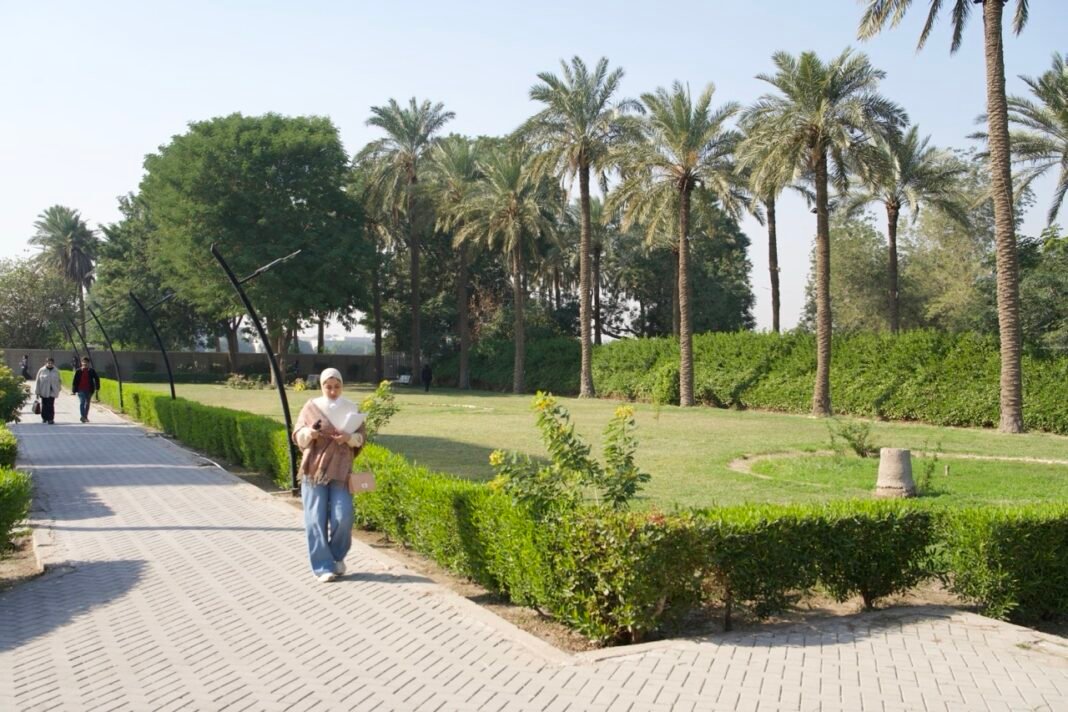
Iraq is placing green belt projects in Iraq at the center of its efforts to address desertification and environmental degradation. The Ministry of Environment announced that these projects form a key part of the country’s long-term strategy to protect land resources, improve air quality, and strengthen resilience against climate challenges.
Environmental officials said the government views green belt development as one of the most effective tools for limiting the spread of desertification. The initiative also supports broader efforts to preserve vegetation cover and create healthier living conditions in urban and rural areas.
Najla Al-Waeli, Director General of the Technical Department at the Ministry of Environment, stated that the program operates under Iraq’s National Strategy to Combat Land Degradation and Desertification. She explained that authorities have integrated the initiative into the country’s environmental planning framework to address growing ecological pressures.
According to Al-Waeli, local governments play a major role in implementing the projects. Each governorate has the flexibility to design and develop green belts based on its environmental conditions and geographic needs. This approach allows local authorities to respond more effectively to regional challenges while supporting national environmental goals.
The Ministry of Agriculture, governorate councils, and municipal administrations cooperate closely during project implementation. Officials believe this coordination will help accelerate planting efforts and ensure that green spaces receive proper management and maintenance.
Meanwhile, the Ministry of Environment continues to oversee and monitor environmental compliance. The ministry tracks changes in vegetation cover and evaluates the environmental impact of development projects across the country. Officials warn that the loss of green areas contributes to higher pollution levels and creates additional risks for public health.
The government also seeks to balance economic growth with environmental protection. Iraq continues to expand infrastructure, housing developments, and commercial projects. At the same time, authorities aim to preserve natural resources and maintain adequate green spaces within growing urban centers.
Experts say green belt projects in Iraq can provide several long-term benefits. Increased vegetation helps improve air quality, reduce dust storms, and lower temperatures in densely populated cities. Green areas also contribute to climate adaptation efforts by protecting fragile ecosystems and supporting biodiversity.
Additionally, environmental planners consider urban tree planting a practical measure against the urban heat island effect. Many Iraqi cities experience extreme summer temperatures, making additional green coverage increasingly important for public comfort and environmental sustainability.
Officials highlighted the current water season as an opportunity to expand planting campaigns across the country. Improved water availability creates favorable conditions for establishing new vegetation and strengthening existing green areas.
The Ministry of Environment believes these conditions can help advance national anti-desertification efforts. By increasing vegetation cover and investing in green belt projects in Iraq, authorities hope to create more resilient ecosystems and better prepare the country for future climate challenges.