

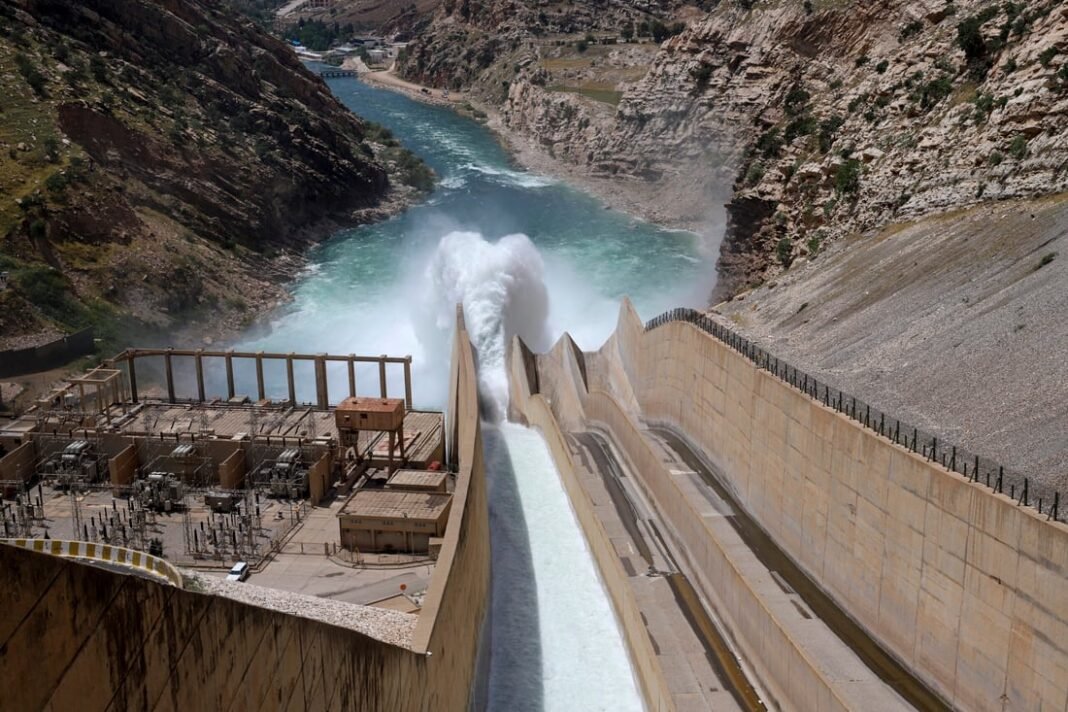
Darbandikhan water capacity surge drives major water milestone in Iraq after heavy rainfall across the region. The dam now holds its maximum storage level, and water inflows continue at strong rates. Authorities confirm stable conditions and ongoing monitoring across the site. Meanwhile, local officials highlight improved water availability across surrounding areas.
Heavy seasonal rainfall increased river inflows significantly. As a result, water levels rose quickly inside the reservoir. Engineers observed steady increases over several days. Additionally, runoff from upstream valleys accelerated the filling process. The Darbandikhan water capacity surge reflects these great hydrological changes across the basin.
The dam stores nearly 3 billion cubic meters of water. This scale makes it one of the largest water facilities in Iraq. Furthermore, the structure plays a critical role in regional water management. The Darbandikhan water capacity surge demonstrates the importance of seasonal rainfall in sustaining national water reserves.
Moreover, the dam supports irrigation networks across agricultural lands. Farmers depend on controlled water releases for crop production. At the same time, hydropower generation benefits from consistent water flow. Consequently, energy production improves during high storage periods. In addition, flood control systems reduce downstream risks during peak rainfall seasons.
Authorities confirm that the structure remains stable and secure. Engineers continue to monitor pressure levels and water movement. They also assess safety systems to ensure long-term operation. The Darbandikhan water capacity surge does not create structural concerns at this stage.
However, experts continue to evaluate water management strategies. They aim to balance storage, energy production, and agricultural demand. Furthermore, climate patterns influence future planning decisions. Therefore, water distribution policies remain under continuous review.
Local officials emphasize the strategic importance of the dam. It supports water security across northeastern Iraq. It also strengthens economic stability through agriculture and energy supply. As a result, the system remains essential for regional development.
In conclusion, the Darbandikhan water capacity surge highlights the impact of heavy rainfall on Iraq’s water infrastructure. It also shows the importance of sustainable water management for future needs.