

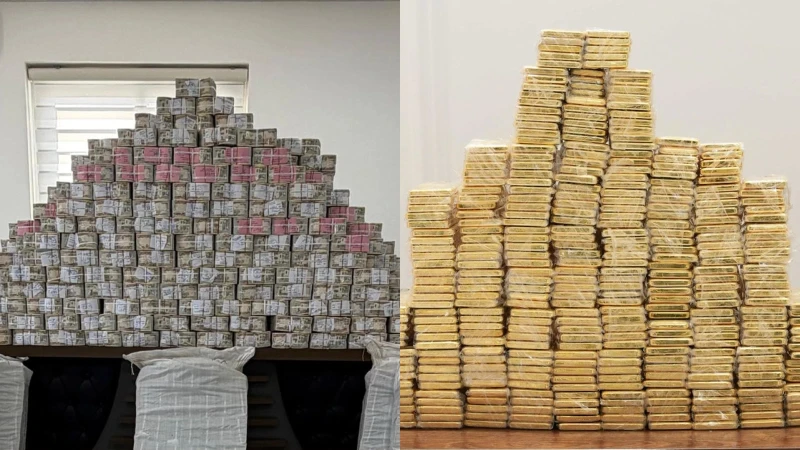
Iraq has seized $20.3 million, 60 kilograms of gold, and other valuable assets in a major corruption investigation. Authorities also recovered 200 million Iraqi dinars and seven luxury vehicles. The case involves Deputy Oil Minister for Refining Affairs Adnan al-Jumaili and several associates.
Investigating Judge Diaa Jaafar announced the latest asset recovery on Sunday. He serves on Iraq’s Central Anti-Corruption Criminal Court. Federal authorities carried out the operation in cooperation with the Kurdistan Regional Government.
The investigation focuses on allegations involving state funds, refinery projects, and disputed contracts. Authorities are working to identify assets connected to suspected financial misconduct. The latest seizures form part of a broader effort to recover public money.
The recovered cash alone amounts to approximately $20.3 million. Authorities also found 60 kilograms of gold with an additional 200 million Iraqi dinars. Seven luxury vehicles were also confiscated during the investigation.
The Iraq corruption investigation has expanded significantly since al-Jumaili’s arrest. Authorities arrested him in May 2026 during a wider anti-corruption campaign. Investigators have since continued examining his financial network and alleged business connections.
The case has attracted particular attention because of the unusual methods used to conceal assets. Investigators reportedly discovered large amounts of cash and gold in several hidden locations. Some assets allegedly remained concealed inside residential walls.
Other discoveries reportedly involved money and gold hidden in plastic water containers. Investigators also found assets in a rainwater collection basin. These findings have highlighted the scale and complexity of the investigation.
According to Iraq’s Supreme Judicial Council, investigators have recovered more than $125 million in cash linked to the case. Authorities have also collected hundreds of kilograms of gold. The investigation has identified dozens of luxury properties connected to the suspected network.
The scale of the recovered assets has made the case one of Iraq’s largest recent corruption investigations. Authorities are continuing to trace where the money came from and how the assets were acquired. They are also examining potential links between different individuals involved in the case.
The cooperation between federal authorities and the Kurdistan Regional Government has played an important role. Joint efforts can help investigators track assets across different parts of Iraq. Such cooperation can also make it harder for suspects to move or conceal financial assets.
The Iraq corruption investigation also raises broader concerns about the management of public resources. Allegations involving refinery projects and government contracts can have significant financial consequences. Mismanagement in major energy projects can affect both public finances and national development.
The oil sector remains particularly important to Iraq’s economy. It generates most of the country’s government revenue and supports major infrastructure projects. Any corruption involving oil-related contracts can therefore create serious economic losses.
Authorities have emphasized the importance of recovering state funds. Asset seizures can help return money and valuable property to government control. They can also provide evidence for ongoing judicial proceedings.
The investigation has also expanded beyond financial assets. Iraqi judicial authorities said al-Jumaili’s statements have raised questions about other officials. Dozens of lawmakers and senior government figures have reportedly come under scrutiny.
However, allegations against individuals remain subject to judicial proceedings. Investigators must establish the facts and determine legal responsibility through the courts. Asset seizures alone do not establish guilt before a final judicial ruling.
The latest recovery demonstrates the scale of Iraq’s ongoing anti-corruption efforts. Authorities are increasingly focusing on tracing assets rather than relying only on arrests. Following financial trails can help uncover wider networks involved in suspected corruption.
The Iraq corruption investigation could therefore have consequences beyond the current defendants. Further investigations may reveal additional assets, transactions, or individuals connected to the case. Authorities are expected to continue examining the network as the legal process develops.
For Iraq, recovering stolen public funds could provide a significant financial benefit. It could also strengthen public confidence in efforts to tackle corruption. Effective investigations and transparent court proceedings will remain essential to achieving that goal.
The latest seizures add another major development to the case. With more than $125 million in cash and substantial quantities of gold reportedly recovered, investigators are dealing with an unusually large asset trail. The coming stages of the investigation could reveal further details about the alleged financial network.