

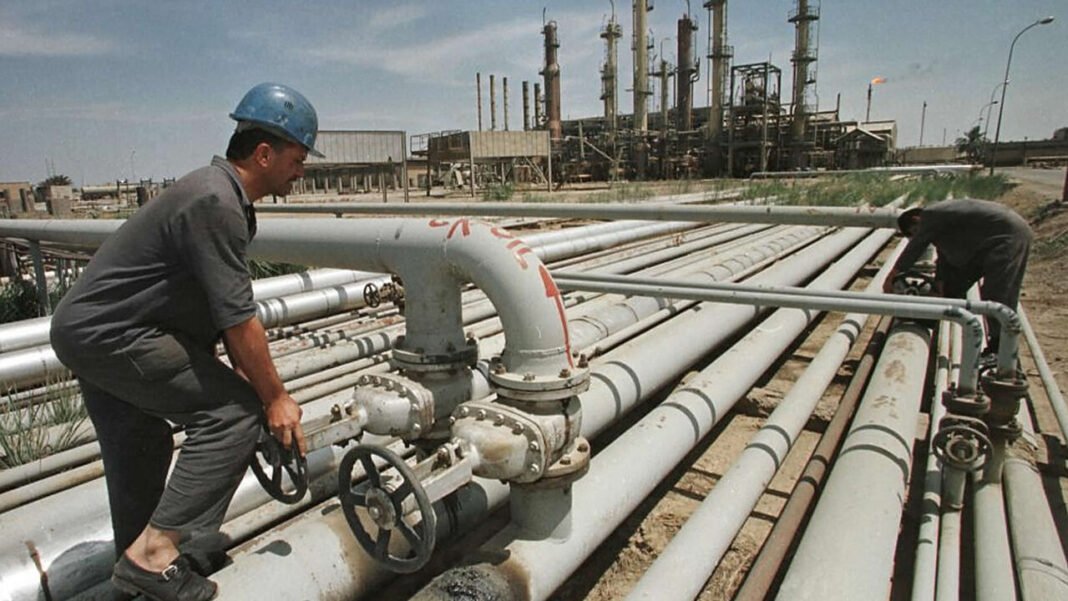
Iraq and Turkey have reached a new agreement that strengthens Iraq oil exports and supports regional energy cooperation. The one-year arrangement will keep crude oil flowing through the Iraq-Turkey pipeline to the Turkish port of Ceyhan. The decision offers greater certainty for Iraq oil exports while both governments prepare a broader long-term partnership.
Officials signed the agreement in Ankara after meetings between Iraqi Oil Minister Basim Khudair and Turkish Energy Minister Alparslan Bayraktar. The new deal allows the transportation of at least 750,000 barrels of Iraqi crude oil each day through the pipeline. Both countries aim to maintain stable energy trade while they negotiate a permanent legal framework.
The agreement brings together Iraq’s State Organization for Marketing of Oil (SOMO), the North Oil Company (NOC), and Turkey’s state pipeline operator. The arrangement will remain in effect for 12 months. During that period, both sides will continue discussions on a comprehensive agreement that addresses future energy cooperation.
The previous pipeline agreement had remained in place for decades before reaching its expiration. Rather than allowing uncertainty to affect energy shipments, Iraq and Turkey chose to introduce a temporary solution. This move ensures that oil transportation continues without major disruptions.
The pipeline remains one of Iraq’s most important export routes. It connects northern Iraqi oil fields with the Turkish Mediterranean port of Ceyhan. From there, crude oil reaches international markets more efficiently.
Iraq also wants to strengthen export flexibility as regional tensions continue to affect global energy markets. Officials believe additional export routes can reduce risks linked to shipping through the Strait of Hormuz. As a result, the Ceyhan route has gained greater strategic importance for the country’s energy sector.
Prime Minister Ali al-Zaidi welcomed the agreement and described it as another step toward stronger cooperation with Turkey. He said both governments are working on wider projects that extend beyond oil. Future discussions may include electricity, water management, and other infrastructure initiatives that benefit both countries.
The Iraq-Turkey pipeline can transport up to 1.5 million barrels of oil each day. However, current operating levels remain well below that capacity. Ongoing legal and administrative issues involving Baghdad, Erbil, and Ankara continue to limit the amount of crude moving through the system.
Even so, the latest agreement creates a stable foundation for future growth. If outstanding issues are resolved, pipeline volumes could increase significantly over time. Higher export levels would strengthen Iraq’s energy sector and improve national revenues.
Energy cooperation between Iraq and Turkey has become increasingly important in recent years. Both countries recognize the economic value of maintaining reliable infrastructure and uninterrupted oil flows. The new agreement also demonstrates their shared interest in expanding regional partnerships.
As negotiations continue over a permanent framework, officials hope the temporary arrangement will support market confidence and encourage greater investment in cross-border energy projects. For now, the agreement provides stability for Iraq oil exports while laying the groundwork for deeper economic cooperation.