

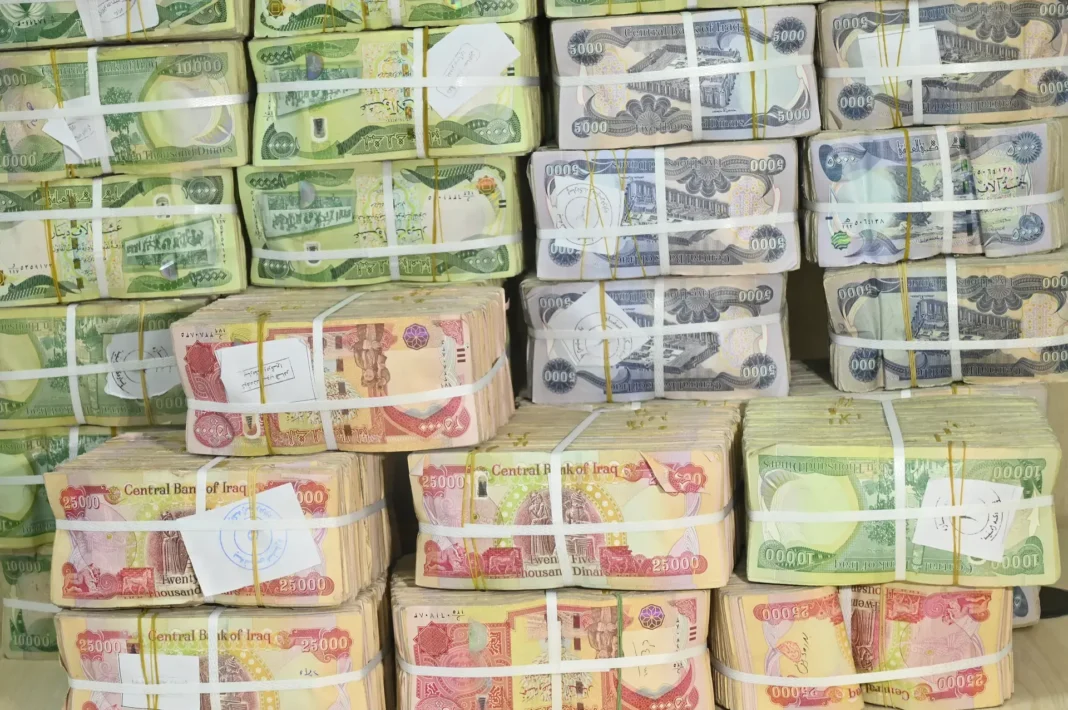
Iraq public debt remains at a manageable level despite ongoing economic challenges, according to the country’s financial leadership. Financial advisor Mazhar Saleh said public debt currently equals around 47 percent of Iraq’s gross domestic product. While officials believe the debt remains under control, they continue to stress the importance of reducing dependence on oil revenues. The government also plans to strengthen other sectors to improve long-term economic stability.
Saleh explained that Iraq has the financial capacity to manage its current debt obligations. However, the economy remains highly sensitive to changes in global oil markets. Since oil exports provide most government revenue, fluctuations in prices can directly affect public finances. This dependence continues to pose one of the country’s biggest economic risks.
Officials identified several structural challenges that require continued reform. Alongside heavy reliance on oil income, Iraq faces weak performance in many productive industries. Rising administrative spending also places additional pressure on government finances. These factors highlight the need for broader economic development.
To address these concerns, the government continues efforts to diversify national income. Authorities aim to strengthen industrial production, expand agricultural activity, and support growth in the service sector. At the same time, officials are pursuing reforms in taxation, customs procedures, and the banking system. These measures seek to create a more balanced and resilient economy.
Recent figures from the Central Bank of Iraq show that domestic debt increased during the first months of 2026. By the end of April, domestic debt reached approximately 95.7 trillion Iraqi dinars, compared with 90.51 trillion dinars at the end of 2025. The increase reflects additional government borrowing within the local market. In 2024, domestic debt stood at around 83.05 trillion dinars.
While domestic borrowing increased, Iraq continued to reduce its external debt. Central Bank data shows external debt declined to about $54.1 billion in 2025. The figure stood at $54.6 billion in 2024 and more than $56.2 billion in 2023. This downward trend indicates steady progress in lowering foreign debt obligations over recent years.
Financial experts continue to encourage careful planning for future borrowing. Officials and international financial specialists recommend medium-term debt strategies that consider Iraq’s credit profile and global economic conditions. They also support preparing government budgets based on realistic revenue expectations and practical spending capacity. Such planning could improve financial sustainability and reduce future risks.
Looking ahead, Iraq public debt will remain an important indicator of the country’s economic health. Continued reforms and diversified revenue sources could strengthen Iraq’s resilience against external shocks. Managing both domestic and external debt responsibly will support future economic growth. As reform efforts continue, Iraq public debt will remain central to national financial policy.