

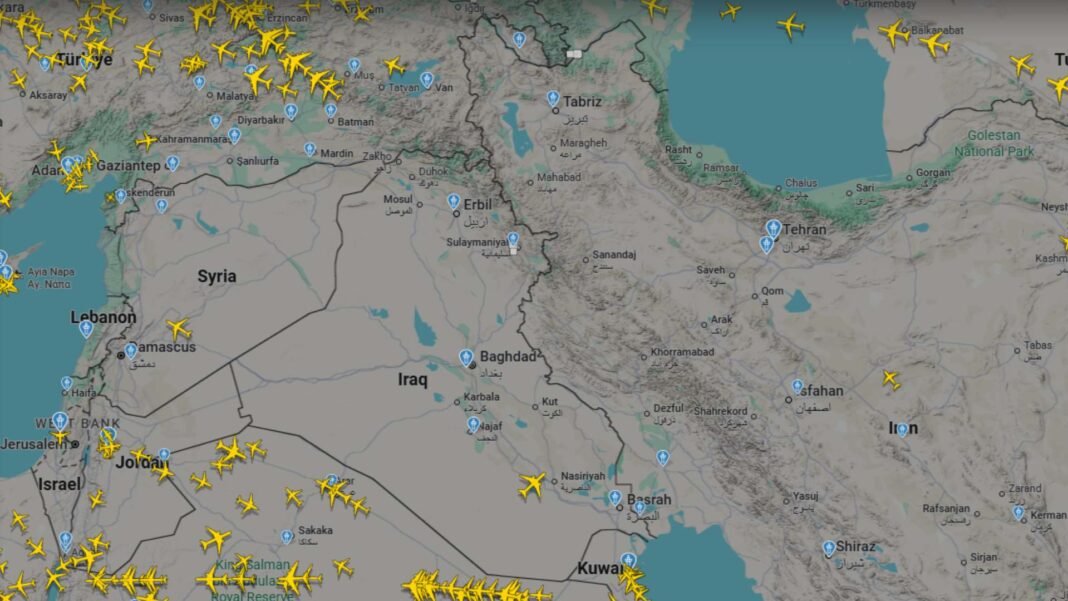
Baghdad – Iraq has closed its airspace for 72 hours amid rising regional tensions, halting all incoming and outgoing flights and creating new challenges for travelers, businesses, and the national economy.
The Iraq airspace closure comes as instability spreads across the region following a new wave of military escalation. As a result, Iraqi authorities moved to suspend air traffic in an effort to protect civilian aviation and manage potential security risks.
The decision follows Israeli strikes on southern Beirut’s Dahieh district on Sunday. According to Lebanese officials, the attacks killed two people and injured at least 20 others. Meanwhile, the developments triggered fresh concerns about a broader regional confrontation.
Tensions increased further after Iran warned that additional attacks would prompt a response. Later that day, Iranian officials issued strong statements signaling possible retaliation. Consequently, neighboring countries began taking precautionary measures. Syria, for example, temporarily suspended activity in parts of its southern air corridors.
For Iraq, the latest developments revive memories of earlier disruptions that followed the outbreak of regional conflict in late February. The country previously suspended air traffic for extended periods as security concerns intensified. Therefore, many Iraqis now view the latest restrictions as part of a recurring cycle tied to events beyond the country’s borders.
The Iraq airspace closure has immediate consequences for thousands of travelers. Airports have suspended operations, leaving passengers stranded both inside and outside the country. In addition, many Iraqis traveling for medical treatment, education, or business now face uncertainty regarding their return plans.
The economic impact could also prove significant. Cargo operations often rely on stable aviation networks to move goods quickly and efficiently. Consequently, delays may affect supply chains, including shipments of medicine and other essential products. If disruptions continue, businesses could face additional costs and logistical challenges.
Iraq’s economy remains particularly sensitive to regional instability. Although oil exports primarily move through other channels, heightened tensions can influence transportation costs and investor confidence. Moreover, uncertainty surrounding regional security often affects broader economic activity.
The Iraq airspace closure arrives at a difficult time for the country. Iraq continues to face economic pressures, energy challenges, and concerns over currency stability. As a result, any prolonged disruption could place additional strain on both public services and private businesses.
Many observers note that Iraq frequently bears the consequences of conflicts unfolding beyond its borders. While regional powers shape developments, Iraq often faces the practical effects through disrupted transportation, economic uncertainty, and security concerns.
Officials have not yet announced whether the closure will extend beyond the initial 72-hour period. Meanwhile, airlines, businesses, and travelers continue to monitor developments closely.
The Iraq airspace closure highlights how rapidly regional tensions can affect daily life and economic activity. Therefore, attention will remain focused on diplomatic efforts and security developments that could determine when normal air traffic resumes.