

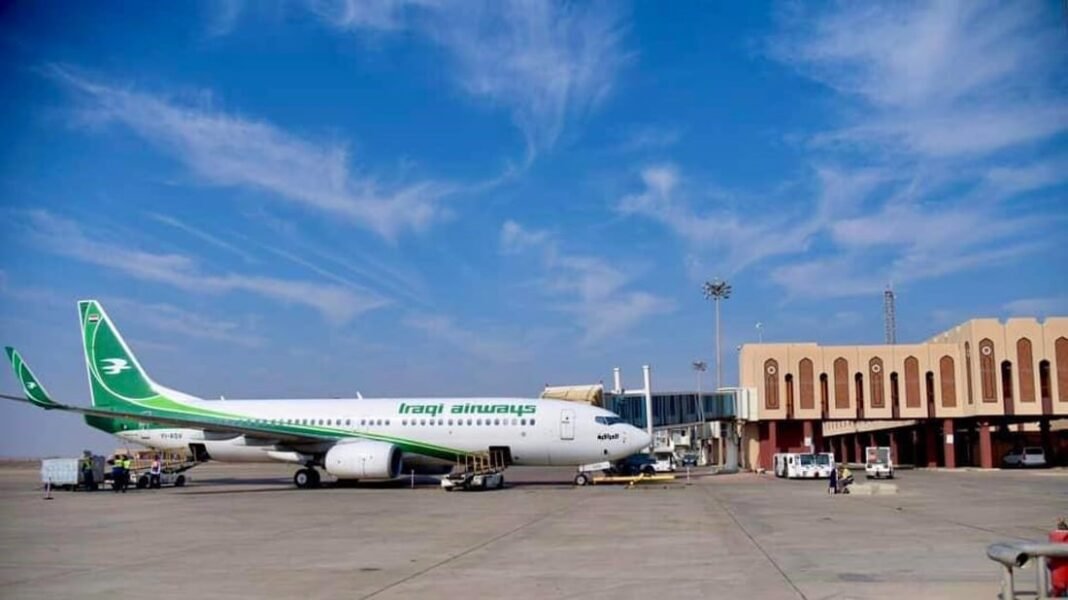
Baghdad – Iraq has extended its nationwide flight suspension for another 72 hours as security concerns continue across the region. The Iraq airspace closure extended decision affects all incoming, outgoing, and transit flights.
The Iraqi Civil Aviation Authority confirmed that the restriction took effect at midday and will continue until the same time after three days. Officials stressed that safety remains the top priority as regional tensions persist.
This measure blocks all commercial and transit aircraft from using Iraqi skies. As a result, airlines must reroute flights, which increases travel time and operational costs. The Iraq airspace closure extension has already disrupted regional aviation networks.
Authorities first imposed the airspace ban following the escalation of the regional conflict. Since then, officials have extended the restrictions several times due to ongoing risks. Security experts highlight that military activity in nearby areas continues to threaten safe air travel.
Moreover, the Iraq airspace closure policy has created major challenges for passengers and airlines. Many travelers now face delays, cancellations, and higher ticket prices. Airlines must adjust routes frequently, which adds pressure to already busy air corridors.
Officials have not yet confirmed when normal air traffic will resume. Future decisions will depend on security developments in the region. Authorities continue to monitor the situation closely before taking further steps.
Meanwhile, travelers seeking to leave Iraq are turning to alternative routes. Many choose land crossings into Jordan before flying internationally. From there, passengers often depart through Queen Alia International Airport, which remains fully operational and connected to global destinations.
The extended closure has also affected trade and business travel. Companies that rely on fast international connections now face delays in operations. Experts warn that prolonged restrictions could impact economic activity if the situation continues.
Despite these challenges, authorities emphasize that public safety comes first. They continue coordinating with regional partners to ensure secure airspace conditions. The Iraq airspace closure extension decision reflects ongoing caution amid uncertain conditions.