

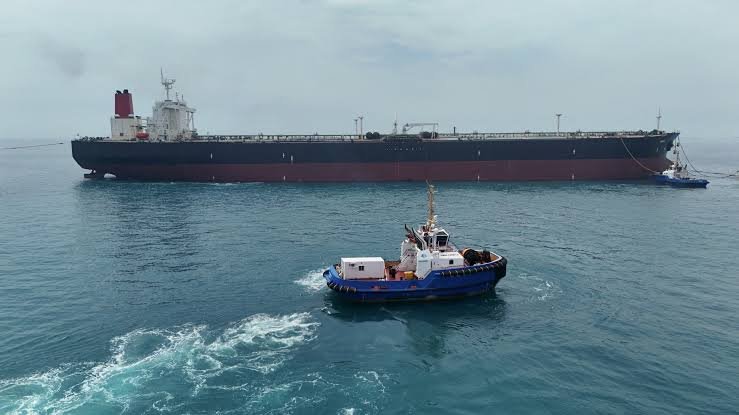
Oil prices rise again as fresh attacks on vessels near the Strait of Hormuz raise fears of wider supply disruptions. Markets remain focused on the growing risks facing crude shipments from the Middle East. Traders now expect heightened volatility if tanker traffic through the strategic waterway falls further.
Brent crude gained 79 cents, or 0.82%, to reach $97.07 per barrel. The increase came by 5:12 GMT on Monday. U.S. West Texas Intermediate crude also advanced 80 cents, or 0.87%, to $92.28 per barrel. Both benchmarks posted strong gains during the previous trading week.
Brent crude jumped 7.8% last week, while WTI gained almost 10%. The increases followed renewed attacks involving the United States and Iran. Those strikes have disrupted oil movements through the Strait of Hormuz. The waterway previously carried about one-fifth of global oil supplies.
The maritime conflict has also raised concerns about the safety of commercial tankers. U.S. forces struck three Iranian oil tankers on Saturday, according to U.S. Central Command. One vessel came under attack near Kharg Island, a major Iranian oil export center.
Iran’s Islamic Revolutionary Guard Corps navy reported separate attacks on Saturday. Iranian forces said they targeted three oil tankers using unauthorized routes through Hormuz. They also reported strikes against three additional U.S. vessels elsewhere. The developments marked a significant expansion of maritime tensions.
Maritime intelligence company Marisks described the attacks as a major escalation. The company said commercial tankers increasingly face deliberate pressure during the conflict. That development could further blur the line between military operations and commercial shipping.
Meanwhile, tanker traffic through the Strait of Hormuz has fallen sharply. Analytics firm Kpler reported an average of only 10 commodity ships crossing daily over the past 10 days. That figure represents the lowest level recorded since May. A further decline could create additional pressure across global oil markets.
Market analysts warn that slower tanker traffic could trigger a larger supply shock. Priyanka Sachdeva of Phillip Nova said markets already show signs of such pressure. Investors could therefore push prices higher if shipping activity deteriorates further.
Iran also plans to announce a restricted zone near the Strait of Hormuz. Mohsen Rezaei, secretary of Iran’s Supreme National Security Council, announced the plan Sunday. Iranian state media reported his comments. The move could add another obstacle for commercial shipping in the region.
OPEC+ meanwhile maintained its oil output policy for October. The producer group confirmed the decision after its Sunday meeting. Members still need to agree on new production quotas. That process will shape future supply decisions as geopolitical risks continue.
Analysts at ANZ expect tensions to remain elevated for an extended period. They see continued military pressure between Washington and Tehran as the most likely outcome. Such a scenario could delay the recovery of Middle Eastern oil supplies.
ANZ expects exports to remain restricted through the end of 2026. The analysts forecast a gradual reopening toward the final quarter. However, they do not expect oil flows to return to pre-war levels quickly. Full recovery could instead wait until late March or early April 2027.
For now, oil prices rise as traders weigh military risks against fragile shipping routes. The Strait of Hormuz remains central to the global energy market. Any sustained disruption could affect crude prices, shipping costs, and broader inflation pressures worldwide.