

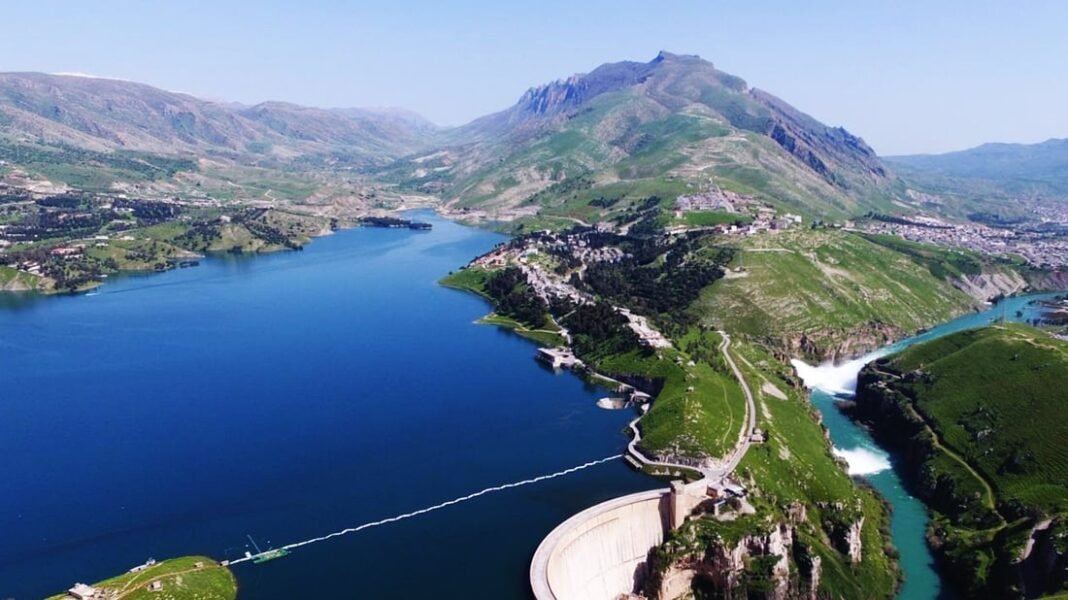
The KRG water infrastructure projects continue to expand as the Kurdistan Regional Government increases investments in dams, ponds, and water management systems. Officials say the new projects aim to strengthen water security, support agriculture, and improve environmental sustainability across the Kurdistan Region.
The Kurdistan Regional Government confirmed that 36 dams currently exist throughout the region. Authorities completed 25 of those dams, while construction continues on 11 additional projects. The government also built 178 ponds to improve water storage capacity and strengthen local water supplies.
Over the past five years, the Kurdistan Region completed nine major dams with a combined storage capacity exceeding 252 million cubic meters. During the same period, authorities finished 23 ponds and launched construction on 58 more water reservoirs in different areas.
Officials described water management as one of the government’s highest strategic priorities. The KRG aims to build a stronger infrastructure network capable of addressing climate pressures, seasonal droughts, and growing water demand from urban and rural communities.
KRG water infrastructure projects also focus on protecting underground water reserves. Authorities believe expanded storage systems can help recharge groundwater resources while reducing pressure on natural water supplies. Officials added that the projects also lower flood risks in cities and nearby residential areas during heavy rainfall seasons.
Agriculture remains another major beneficiary of the expanding water infrastructure network. Farmers across the Kurdistan Region depend heavily on reliable irrigation systems to maintain crop production and livestock activities. Government officials say improved water access could strengthen food production and support rural economic growth.
The projects also provide clean water for thousands of residents across the region. Authorities expect the new dams and ponds to improve water distribution systems and increase supply stability during dry seasons. Environmental experts additionally believe the projects may help expand green spaces and improve ecological sustainability.
Tourism development represents another important goal behind the government’s investment strategy. Lakes and reservoirs created by dams often attract visitors and encourage tourism projects in nearby areas. Officials hope these developments will support local businesses and create additional economic opportunities.
KRG water infrastructure expansion also contributes to electricity production in the region. Authorities confirmed that hydroelectric facilities connected to regional dams currently generate around 166 megawatts of electricity this year. Officials expect energy production capacity to improve further as construction projects move closer to completion.
According to government figures, total water storage capacity in the Kurdistan Region has now reached nearly 8.5 billion cubic meters. Officials believe continued investment in water infrastructure will play a critical role in supporting long-term economic development, environmental protection, and public services throughout the region.