

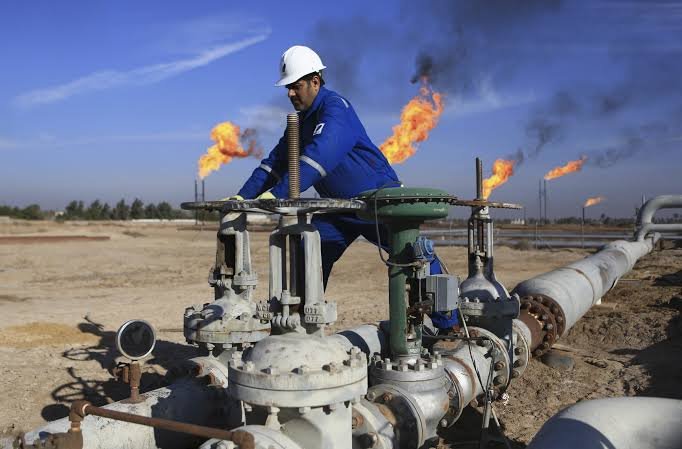
Iraq faces growing Iraq energy security concerns after the regional crisis exposed major weaknesses. The country still relies heavily on oil exports to finance public spending. At the same time, its electricity system struggles with fuel shortages, network losses, and weak management.
A new analysis from the American University of Iraq, Sulaimani examines these risks in its August Iraq Energy Outlook. The report focuses on oil exports, government finances, natural gas, and electricity supplies. It warns that another regional disruption could quickly create financial and energy pressures across Iraq.
The Strait of Hormuz remains a major concern for Baghdad. Iraq sends much of its crude through the Gulf, leaving exports exposed when regional tensions disrupt shipping. During the 2026 crisis, shipping restrictions forced Iraq to reduce southern production and declare force majeure at some foreign-operated oil projects.
The report urges Iraq to expand its export options before another crisis strikes. It points to the Basra-Haditha pipeline as an important project that requires faster progress. It also highlights possible routes through Turkey, Jordan, Syria, and Egypt as longer-term alternatives.
Baghdad also needs to settle longstanding energy disputes with the Kurdistan Region. Better cooperation could strengthen domestic infrastructure and improve access to additional export routes. A Mediterranean corridor could eventually give Iraqi crude another path to international markets.
Electricity presents an equally serious challenge. Peak demand could exceed 55 gigawatts in 2026, while available generation remains below 20 gigawatts. That gap could leave the country facing a power shortage of more than 35 gigawatts.
However, the report argues that Iraq cannot solve the crisis simply by building more power plants. Fuel availability, system efficiency, maintenance, and governance remain major obstacles. Large distribution losses further reduce the value of the electricity Iraq already generates.
Iraq produced roughly 166 terawatt-hours of electricity in 2024. Customers received only about 67 terawatt-hours, according to the analysis. Distribution losses consumed roughly 82 terawatt-hours, leaving a huge portion of generated power unpaid.
Gas shortages add another layer of pressure. Iranian gas has supplied more than 40 percent of the fuel used for Iraqi power generation. Regional instability, sanctions, and Iran’s domestic demand have made those supplies less predictable.
Iraq also continues to burn or waste large quantities of associated gas from oil production. Meanwhile, power plants still depend on imported gas to operate. Expanding domestic gas processing could reduce imports and capture more value from Iraq’s own resources.
Government finances face similar structural problems. Baghdad has relied on domestic borrowing, treasury instruments, budget adjustments, and delayed payments to manage fiscal pressure. These measures can provide short-term relief, but they do not reduce the economy’s dependence on oil revenue.
Energy subsidies create another significant burden for public finances. Fossil-fuel subsidies exceeded $8 billion in 2025, according to the report. Although that figure fell from the 2022 peak, it remains substantially higher than the level recorded a decade earlier.
China has also become increasingly important to Iraq’s energy sector. Chinese companies now have a stronger presence in oil production, infrastructure, electricity, and trade. The report warns that Baghdad should avoid a relationship that leaves Iraq more dependent on China than China depends on Iraq.
Security remains central to the country’s energy challenges. The analysis calls for stronger state control over armed groups operating outside official command structures. It also urges authorities to target oil-smuggling networks that undermine state revenues and energy governance.
These problems show why Iraq energy security extends beyond oil production and electricity generation. Iraq needs reliable export routes, stronger domestic gas processing, efficient power networks, and sounder fiscal management. Without those reforms, regional shocks could continue to move quickly from energy markets into government finances.
For Baghdad, the 2026 crisis should serve as a warning rather than a temporary setback. Iraq holds enormous energy resources, but those resources cannot guarantee stability without stronger infrastructure and institutions. The country’s next challenge will be building an energy system that can withstand regional disruption while supporting long-term economic growth.