

Syrian exports to Iraq continue to face major challenges despite recent efforts to revive trade between the two neighboring countries. Exporters claim that rising production expenses and intense foreign competition have diminished Syria’s ability to regain its previous market position in Iraq.
Before the 2011 conflict, Syrian exports to Iraq generated billions of dollars annually and held a strong share of Iraqi imports. Syrian products have gained popularity in various sectors, including the food industry, textiles, and pharmaceuticals. However, years of war and economic instability sharply weakened trade activity between the two countries.
Mohammad Orfali, head of the Investment and Real Estate Development Committee at the Damascus Chamber of Commerce, said high operational costs now represent the biggest obstacle for Syrian businesses. He explained that manufacturers struggle with expensive energy supplies, shipping fees, and production costs inside Syria.
Orfali stressed that the Iraqi market remains essential for Syrian exporters. He noted that Iraqi consumers continue to trust many Syrian products because of their quality and long-standing presence in local markets. At the same time, cheaper imported goods from other countries increasingly dominate Iraqi commercial sectors.
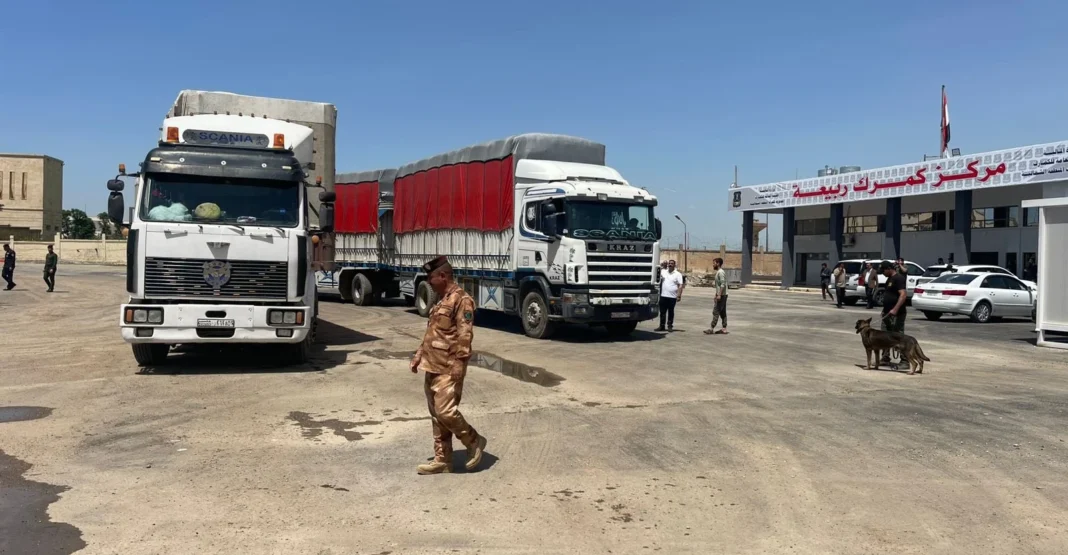
The reopening of border crossings between Iraq and Syria helped restore part of the trade movement in recent years. Transport activity and commercial exchange improved compared with previous years when security conditions disrupted regional trade routes. Even so, exporters believe recovery remains slower than expected.
Syrian exports to Iraq could improve further if both governments increase economic cooperation and simplify commercial procedures. Orfali called for stronger coordination between Baghdad and Damascus through trade missions and business organizations. He also encouraged closer cooperation between chambers of commerce, agriculture, and industry in both countries.
Business leaders believe infrastructure development could also support stronger trade growth. Improved transportation networks, faster customs procedures, and easier financial transfers may reduce delays and lower overall business expenses for exporters and importers alike.
Orfali additionally urged Syrian authorities to remove customs duties on industrial raw materials. He argued that lowering manufacturing expenses would help Syrian companies compete more effectively in foreign markets, especially Iraq. Exporters hope such measures could increase product affordability and strengthen Syria’s regional trade presence.
Economic ties between Iraq and Syria remain historically strong because of geographic proximity and shared consumer preferences. Baghdad continues to offer an attractive destination for Syrian businesses due to lower transportation costs compared with distant export markets.
According to Iraq’s Ministry of Finance, trade exchange between Iraq and Syria reached nearly $5 billion before the 2011 conflict. Trade later dropped below $1 billion during the war years because of border closures and security problems. Recent estimates suggest bilateral trade recovered to nearly $2 billion during 2024 and 2025, signaling a gradual improvement despite ongoing economic difficulties.