

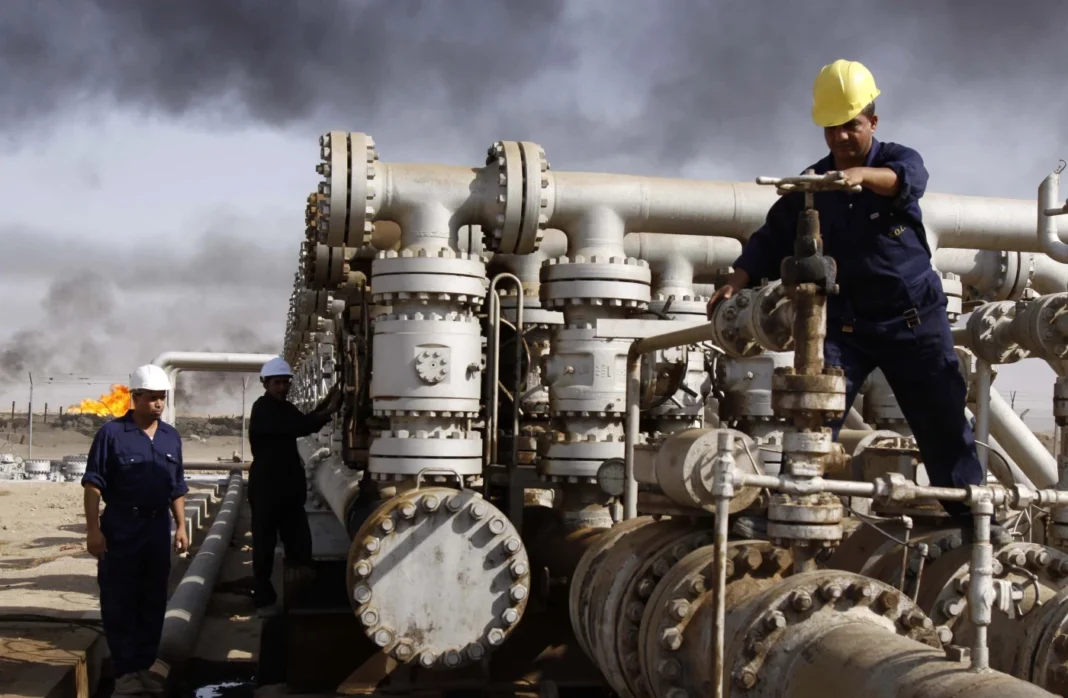
Iraq oil losses from war disruptions became a major economic concern in 2026, as conflict between the United States and Iran affected energy operations and export routes. Iraq reportedly lost more than 300 million barrels of potential oil production during the first half of the year. The disruption created new pressure on a country that depends heavily on oil revenues.
The Eco Iraq Observatory estimated that Iraq missed around 302.8 million barrels of production between January and June. The organization reported that Iraq produced nearly 440.3 million barrels during that period. However, regional instability limited operations and reduced the country’s ability to maintain previous output levels.
Iraq’s oil production remained above 4.1 million barrels per day during the first two months of 2026. The situation changed after fighting intensified in the region. Production dropped significantly in March, reaching about 1.906 million barrels per day.
The decline continued through the following months as companies faced operational challenges. Output fell to around 1.633 million barrels per day in April. Production reached its lowest level in May, when daily output dropped to approximately 1.406 million barrels.
Iraq oil losses from war disruptions also reflected the wider risks facing energy markets across the region. The Strait of Hormuz became a key concern because it handles a large share of global oil shipments. Security threats and transport difficulties affected export activity and increased uncertainty for producers.
By June, Iraq saw a small recovery in production, with output rising to about 1.525 million barrels per day. The improvement showed signs of stabilization, but production remained far below earlier levels. Officials and industry observers continued monitoring the situation closely.
The economic impact could extend beyond lost barrels. Reduced production may affect government income, investment plans, and public spending. Iraq’s economy relies heavily on oil exports, making energy disruptions especially damaging.
Iraq oil losses from war disruptions highlight the vulnerability of major producers during regional conflicts. The country continues working to protect its energy infrastructure and maintain export flows. Future production levels will depend on security conditions and the stability of regional trade routes.
The oil sector remains central to Iraq’s financial future. Any prolonged disruption could create additional challenges for economic planning. Markets are watching developments closely as the region faces continued uncertainty