

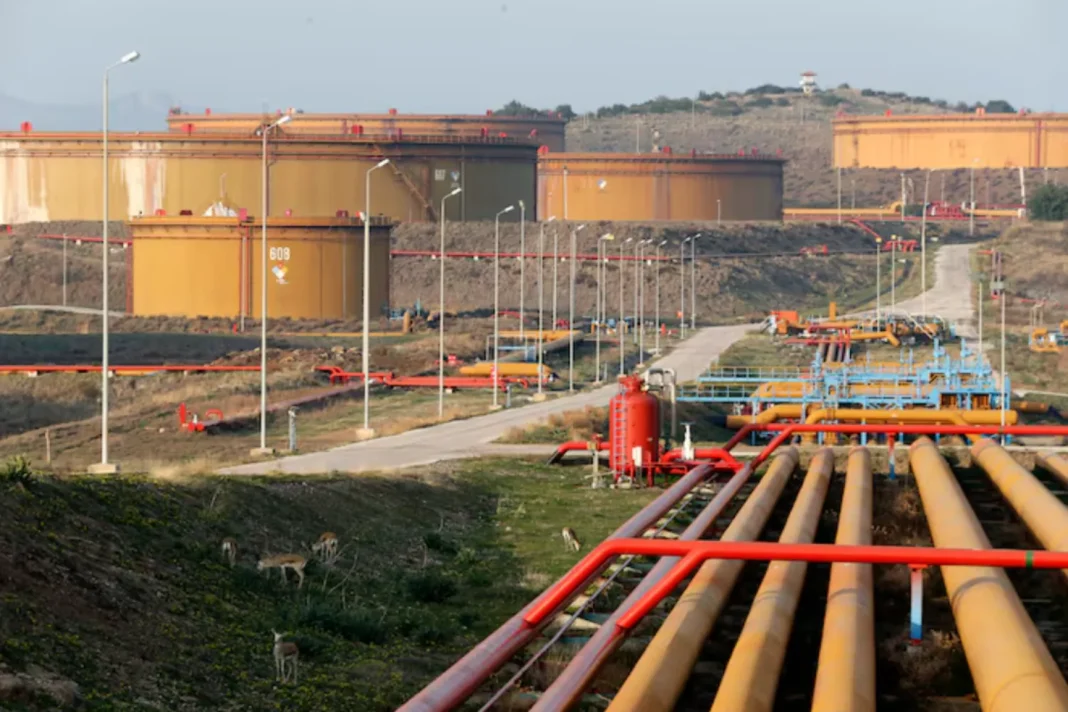
Iraq plans to expand its crude shipments through Turkey as officials push to restore energy revenues during a difficult period. The government hopes to increase exports from the Turkish port of Ceyhan to 500,000 barrels per day. Iraq’s oil exports through Ceyhan remain a major focus for Baghdad as regional instability continues to affect production and transportation.
Newly appointed Oil Minister Basim Khudair announced the target during his first press conference in Baghdad. He said Iraq currently exports around 200,000 barrels daily from Kirkuk to the Ceyhan terminal. Officials believe the route could support larger volumes once conditions improve across the region.
Khudair explained that several obstacles still prevent immediate expansion plans. Oil companies operating in the Kurdistan Region suspended activities after rising tensions and security concerns. Those disruptions reduced output and slowed transportation operations in northern Iraq.
The minister stressed that Iraq’s oil exports through Ceyhan depend heavily on stability in nearby areas. Without improved security, companies may delay restarting production and export operations. Baghdad continues discussions with energy firms to encourage a gradual return to normal activity.
Before recent unrest spread across the Middle East, Iraq exported nearly 93 million barrels of crude every month. However, export volumes dropped sharply during April. The Oil Ministry managed to export only around 10 million barrels during that month due to ongoing regional tensions.
Khudair warned that exports may stay below previous levels if conflicts continue across neighboring countries. Energy markets across the region remain under pressure because of supply concerns and shipping risks. Iraq now faces growing financial pressure as lower exports reduce state revenues.
The Iraqi government relies heavily on oil income to fund public services and infrastructure projects. Officials also need stable revenues to cover salaries and operational expenses. For that reason, Baghdad wants international energy organizations to consider Iraq’s economic challenges carefully.
Khudair said Iraq’s current oil production stands at roughly 1.4 million barrels per day. He argued that Iraq needs permission to raise production levels to support national development plans. According to the minister, increased output would help finance road projects, public services, and infrastructure repairs across the country.
Meanwhile, Iraq continues to coordinate with OPEC regarding future production targets. Iraqi officials believe the country deserves greater flexibility because of its economic needs and reconstruction efforts. The government also hopes stronger exports will attract more investment into the energy sector.
Despite current difficulties, officials remain optimistic about future recovery. Iraq’s oil exports through Ceyhan could play a major role in restoring the country’s oil trade if regional conditions improve. Baghdad now views the Turkish export route as one of its most important energy corridors for the coming years.