

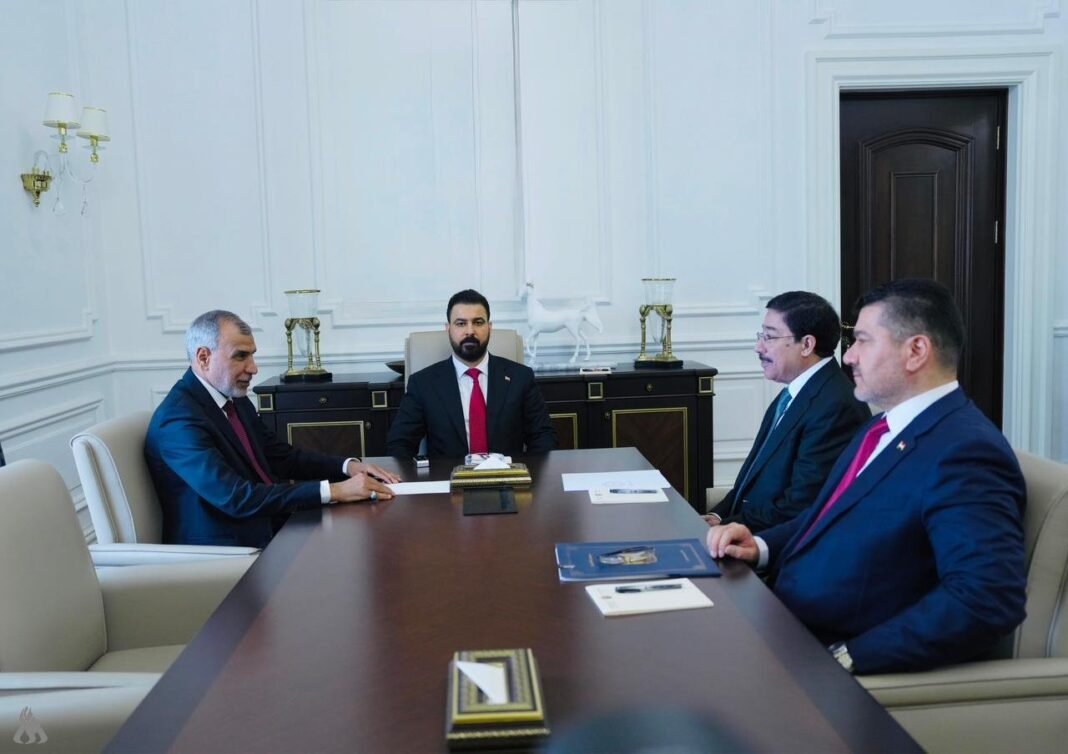
Iraqi Prime Minister Ali al-Zaidi chaired the first meeting of the country’s newly formed Financial Stability Council only hours after announcing its creation. The move signals the government’s intention to strengthen economic coordination and address Iraq’s ongoing financial challenges. Iraq Financial Stability Council plans now stand at the center of the new administration’s economic strategy.
The first meeting brought together senior economic officials, including Finance Minister Falih al-Sari and Central Bank Governor Ali al-Alaq. Officials discussed ways to improve cooperation between fiscal and monetary institutions while supporting economic stability across the country.
During the meeting, Al-Zaidi stressed the importance of maintaining financial balance to support Iraq’s development goals. He called for stronger coordination between the Finance Ministry and the Central Bank of Iraq to ensure more effective financial decision-making. The prime minister also emphasized that stable financial policies remain essential for economic growth, public services, and infrastructure projects.
Iraq Financial Stability Council plans form part of Al-Zaidi’s broader ministerial program, which focuses heavily on economic reform. The program includes the establishment of a Supreme Council for Financial Stability to coordinate national fiscal and monetary policies under a unified framework.
According to the government’s economic agenda, the council will oversee several key reform priorities. Officials aim to strengthen financial discipline, restructure public spending, and increase non-oil revenues. The government also plans to modernize revenue collection systems through digital technology and cooperation with international institutions.
Banking reform also represents a major component of the new program. Iraqi authorities want to align financial regulations with international standards while improving compliance with anti-money laundering requirements. Officials believe stronger coordination between the Central Bank and fiscal authorities can improve transparency and strengthen confidence in Iraq’s financial system.
The newly formed council marks one of three major economic institutions introduced under Al-Zaidi’s government program. The administration also plans to establish a Supreme Investment Council designed to attract foreign direct investment into Iraq’s economy.
In addition, the government intends to launch a Generations Fund to preserve a share of Iraq’s oil and natural resource revenues for future citizens. Officials say the fund could help support long-term financial sustainability and reduce economic dependence on fluctuating oil prices.
Iraq Financial Stability Council plans arrive during a period of economic pressure linked to regional instability and oil market uncertainty. Iraq continues to rely heavily on crude exports for state revenues, making financial reforms increasingly important for long-term stability.
Economic experts believe closer cooperation between Iraq’s fiscal and monetary institutions could improve budget management and investor confidence. Many analysts also view the council as an attempt to create a more organized framework for economic decision-making.
The government now faces the challenge of turning reform promises into practical policies that deliver measurable results. Officials insist the council will play a central role in shaping Iraq’s future economic direction and strengthening financial stability across the country.