

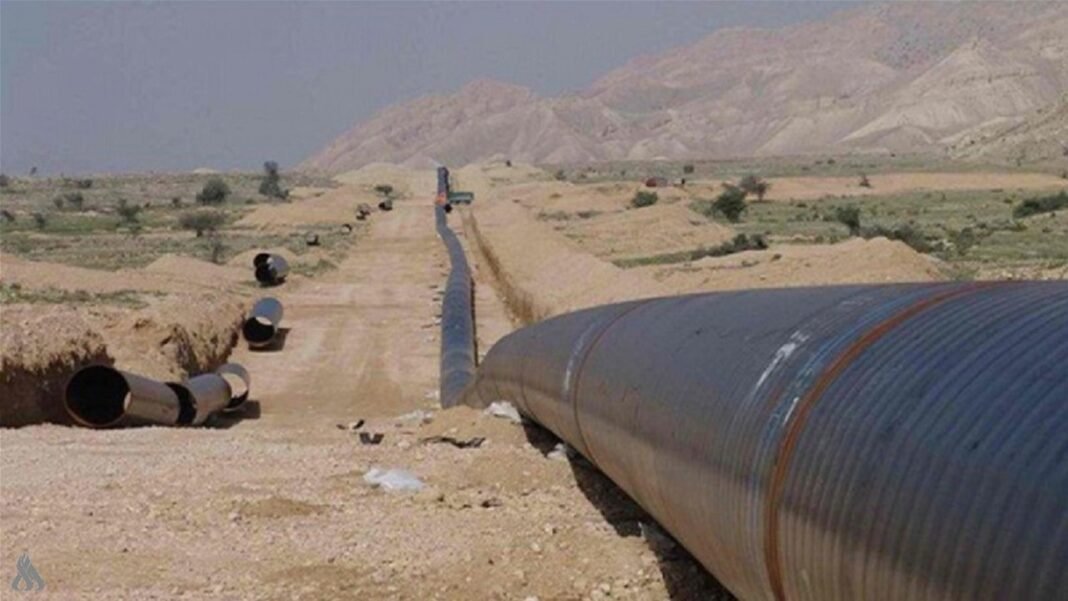
Baghdad is taking another step toward expanding Iraq’s options for exporting crude oil. Baniyas pipeline feasibility studies now sit at the center of a preliminary deal. The Oil Ministry has entered discussions with a U.S.-Qatari consortium. Officials say the arrangement focuses only on technical preparation.
The ministry wants more flexibility for Iraqi crude shipments. Current export routes face geographic and operational limits. A route toward Baniyas could offer Iraq another outlet to international markets. However, the proposal remains in an early planning stage.
Ministry spokesperson Salim Al-Rikabi said the project forms part of a broader export strategy. Iraq aims to reduce dependence on limited shipping corridors. The government also wants to strengthen its ability to respond to market changes. New infrastructure could support those goals over time.
The Council of Ministers approved the next procedural step during its latest meeting. It authorized an agreement of principles with the consortium. Officials also approved a confidentiality agreement covering preliminary project information. Those documents allow technical discussions to move forward.
The consortium will prepare engineering concepts and technical assessments for the proposed route. Its work may examine capacity, construction requirements, and possible operational challenges. It will also help officials understand the project’s commercial potential. Baniyas pipeline feasibility studies will guide later government decisions.
Al-Rikabi emphasized that Iraq has not committed public funds through this arrangement. The ministry has not awarded a construction contract. It has not accepted financial obligations from the consortium either. The agreement remains limited to research, design, and early-stage planning.
That distinction matters because major pipeline projects require extensive review. Decision-makers must consider costs, security, environmental factors, and regional cooperation. They also need clear estimates for construction schedules and long-term maintenance. Technical work can reveal whether the project meets those standards.
The proposed route could revive interest in Iraq’s western export possibilities. Baniyas, on Syria’s Mediterranean coast, has historical links to Iraqi oil transport. Still, modern conditions differ sharply from earlier decades. Any future plan will require careful regional coordination.
Iraq’s oil sector remains essential to national revenue and public spending. Stronger export infrastructure could help protect income during disruptions elsewhere. Yet officials will need evidence before committing to a large development project. Baniyas pipeline feasibility studies represent the first formal step toward that evidence.
The ministry has not announced a timetable for completing the technical work. It also has not released expected pipeline capacity or estimated costs. Further announcements may follow after engineers finish their assessments. For now, Baghdad has signaled interest without making a final investment decision.