

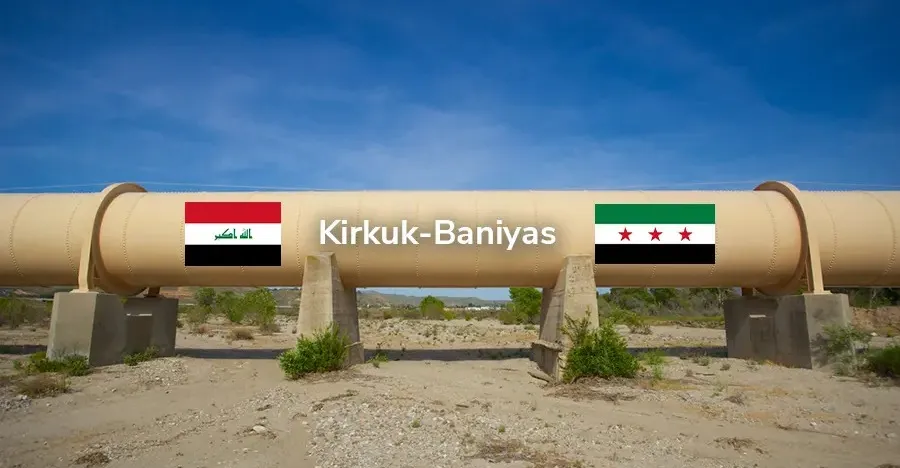
The Kirkuk-Baniyas oil pipeline could return to the regional energy map as Iraq, Syria, and the United States prepare for a major announcement next week. Officials expect the project to create a new export route for Iraqi crude while reducing pressure on existing shipping channels. The proposed revival reflects growing regional cooperation and renewed interest in strengthening energy infrastructure. It also comes as Iraq seeks greater flexibility for its oil exports.
According to reports citing senior Iraqi and regional officials, the announcement may coincide with Iraqi Prime Minister Ali Al-Zaidi’s planned visit to Washington in mid-July. During the visit, Al-Zaidi is expected to meet US President Donald Trump for discussions on several strategic issues. Energy cooperation will likely rank among the top priorities. Officials believe the pipeline project could become one of the meeting’s most significant outcomes.
The proposed project aims to restore the historic Kirkuk-Baniyas oil pipeline, which stretches roughly 500 milesbetween northern Iraq and Syria’s Mediterranean coast. The pipeline originally transported crude oil from the Kirkuk oil fields to the port of Baniyas. However, operations stopped during the 1980s. Later, the 2003 Iraq war caused additional damage to the infrastructure.
Experts estimate reconstruction will require between two and three years because much of the pipeline needs extensive repairs or replacement. Engineering teams must inspect damaged sections before large-scale construction begins. Officials expect modern equipment and updated safety standards to guide the rebuilding process. Once completed, the pipeline could provide Iraq with another strategic export option.
US envoy Tom Barrack has reportedly coordinated discussions among the participating governments. American companies and regional partners have already secured preliminary work on sections linking Kirkuk with Haditha and extending toward the Syrian port of Baniyas. Early planning aims to speed up future construction once governments finalize the agreement. Syrian Foreign Minister Asaad Al-Shibani is also expected to attend the signing ceremony.
The project gained new momentum after disruptions affected shipping through the Strait of Hormuz. Iraq currently exports about 95% of its crude oil through that narrow waterway. Recent regional tensions exposed the risks of relying on a single export route. Government officials now view additional pipelines as an important step toward protecting the country’s energy exports.
Independent Iraqi analyst Sarhang Hamasaeed believes Iraq’s approach toward Syria has changed in recent years. He said regional developments have encouraged closer cooperation between the neighboring countries. Stronger economic ties could benefit both governments while supporting long-term stability. Energy projects may also open new opportunities for trade and investment.
The revived pipeline could improve Iraq’s export flexibility by providing direct access to the Mediterranean Sea. That alternative would reduce dependence on Gulf shipping routes while expanding options for international energy markets. It may also strengthen cooperation among Iraq, Syria, and international partners interested in regional infrastructure development.
Although major construction has not yet started, officials expect next week’s announcement to mark an important milestone. Final agreements could launch one of the region’s largest energy infrastructure projects in decades. If reconstruction moves forward as planned, the Kirkuk-Baniyas oil pipeline could reshape Iraq’s export network and improve long-term energy security.