

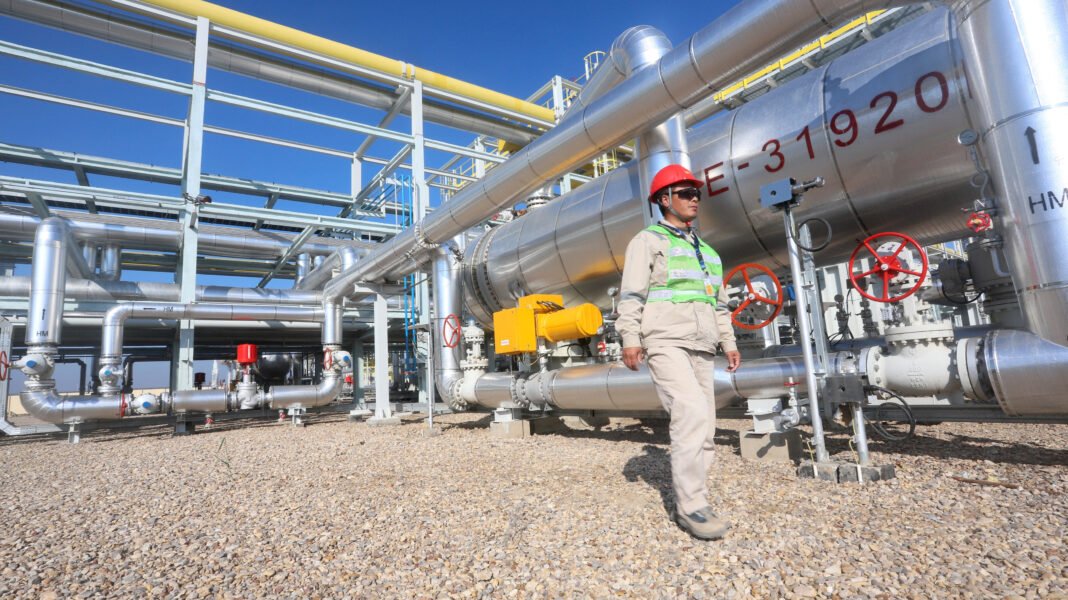
Halfaya gas processing is becoming an important part of Iraq’s efforts to strengthen electricity supplies and reduce gas flaring.
The Halfaya oilfield in Maysan province now handles around 190 million standard cubic feet of associated gas each day. Deputy Oil Minister for Extraction Affairs Naseer Aziz announced the figure on Monday. The project reached this production level during early 2026, according to the ministry.
The facility has a designed processing capacity of 300 million standard cubic feet per day. Current output therefore remains below the project’s full potential. The ministry continues to support efforts that could raise processing volumes and capture more gas from oil production.
The processed gas supplies several power stations across Maysan province. These include the state-operated Al-Amarah power plant, along with the Maysan Investment and Al-Kahlaa plants. Those supplies help support electricity generation and contribute to the wider national power network.
Halfaya remains one of Iraq’s major oilfields and produces about 400,000 barrels of crude oil each day. Oil production also generates large quantities of associated gas during extraction. Capturing that gas allows Iraq to use a valuable energy resource instead of burning it at production sites.
Halfaya gas processing also fits into Baghdad’s broader strategy for improving domestic energy security. Iraq has struggled for years with gas shortages despite holding significant hydrocarbon resources. The country imports gas to support several power plants, while large volumes of domestic associated gas have historically faced flaring.
The Oil Ministry has increased its focus on gas recovery projects in major oil-producing regions. These projects aim to reduce wasted resources and provide more fuel for power generation. They could also help lower Iraq’s reliance on imported energy over time.
Iraq has set a national target to end routine gas flaring by 2029. Reaching that goal will require major investment in gathering systems, processing plants and related infrastructure. Large oilfields such as Halfaya could play a central role in achieving that objective.
The country also holds around 125 trillion cubic feet of proven natural gas reserves. The Energy Institute ranked Iraq 11th worldwide for proven gas reserves in 2025. Despite that resource base, Iraq still faces challenges in developing sufficient processing and transportation capacity.
The latest development comes as Iraq seeks greater investment across its oil and gas sector. In July 2026, the country secured several major energy agreements focused on production and infrastructure. The deals reflect Baghdad’s push to expand output while improving the systems needed to utilize associated gas.
Halfaya gas processing could therefore become more significant as Iraq expands its gas infrastructure. Higher processing volumes would give power producers another domestic fuel source. They could also support efforts to curb flaring and make better use of Iraq’s extensive hydrocarbon resources.
For Maysan, the project carries particular importance because local power stations receive direct supplies from the field. More reliable gas availability can help power plants maintain generation capacity. At the national level, greater gas recovery could strengthen Iraq’s electricity system and reduce pressure on imported supplies.