

Oil prices climbed again on Wednesday as tensions between Iran and the United States intensified. Hormuz oil market risk pushed traders to reassess possible supply disruptions. New military developments also increased uncertainty across global energy markets.
Brent crude rose 99 cents, or 1.2%, to $85.72 a barrel. West Texas Intermediate gained 64 cents, or 0.8%, to $79.98. Both benchmarks followed Tuesday’s two-percent advance and reached their highest levels in about a month.
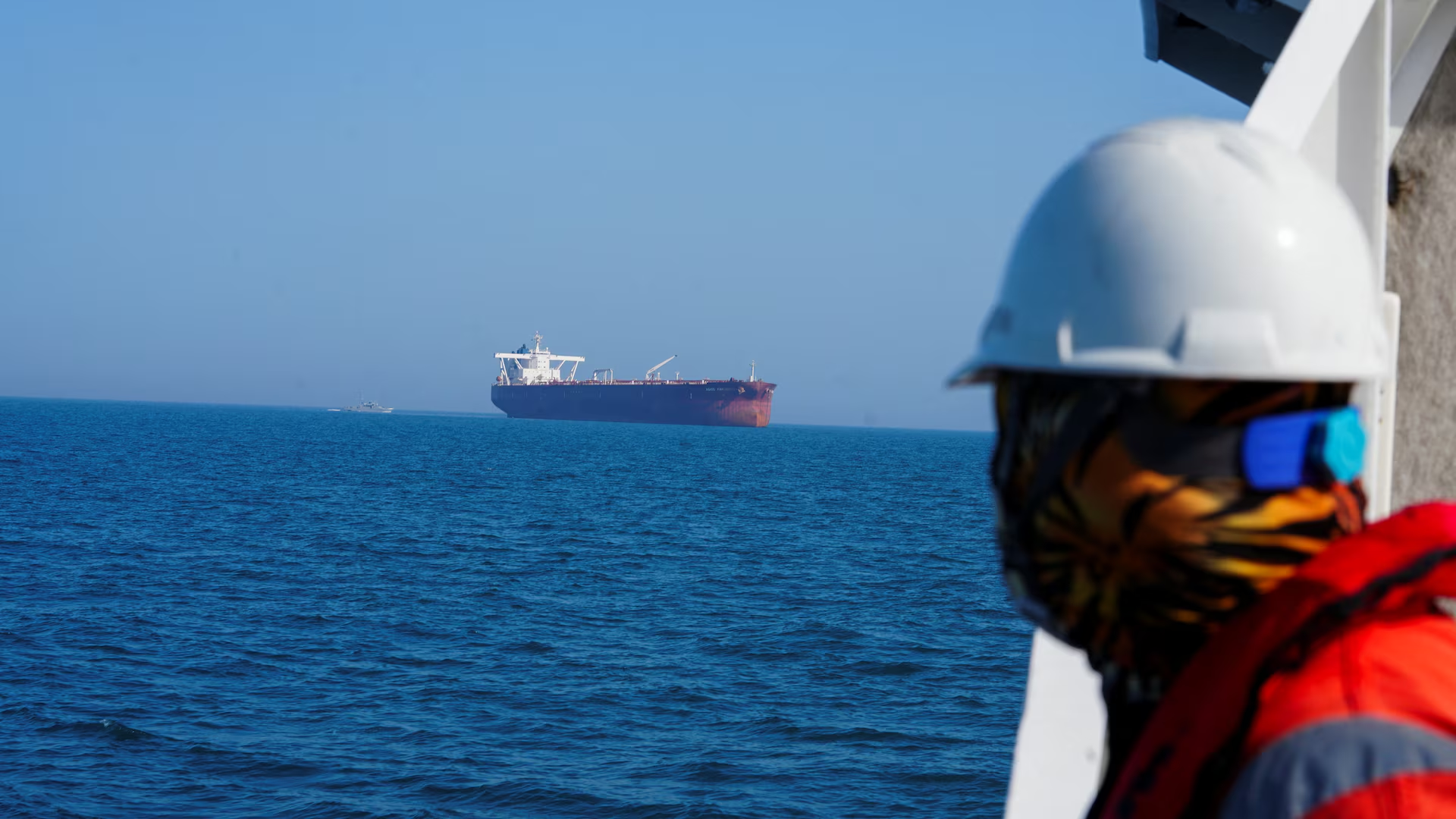
Traders watched developments around the Strait of Hormuz closely. Before the conflict, the route carried roughly one-fifth of global oil and liquefied natural gas. Any prolonged closure could delay shipments and tighten supplies for major importing nations.
President Donald Trump announced a renewed naval blockade targeting Iranian ports. He also said the United States could eventually strike Iranian energy facilities. The US military later reported fresh operations against Iranian capabilities near the strait.
Washington said the strikes targeted systems linked to attacks on commercial vessels. Iran said it had again closed the waterway after fighting resumed last week. The renewed conflict has strained a fragile truce reached in June.
Iran’s army said it launched drones toward US positions at Jordan’s Azraq base. The Islamic Revolutionary Guard Corps also claimed attacks against weapons and storage sites in Bahrain and Kuwait. US officials had not immediately confirmed those reports.
Market analysts said physical supplies remain sufficient for now. However, they warned that further escalation could change sentiment quickly. Hormuz oil market risk may add a larger premium if sanctions expand or shipping disruptions worsen.
Priyanka Sachdeva of Phillip Nova said new restrictions on Iranian exports could unsettle traders. She added that developments around the strait could rapidly tighten market expectations. Investors now weigh military risks against the possibility of diplomatic progress.
Tim Waterer of KCM Trade said Brent could approach $100 if fighting damages Gulf energy infrastructure. He said prices might instead settle near $75 to $80 if diplomacy reopens the strait. That outcome depends on both sides finding incentives to reduce hostilities.
The latest rise shows how quickly energy markets react to regional conflict. Hormuz oil market risk remains the central concern for buyers, producers, and shipping companies. Further developments could determine whether the rally continues or loses momentum.