

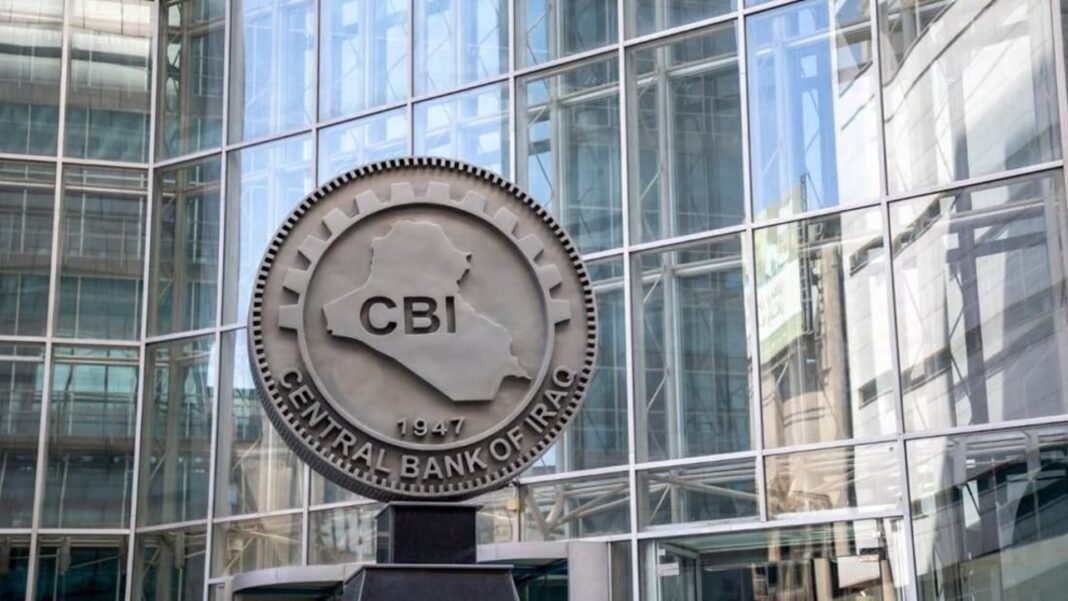
Iraq bank deposits remain largely protected, according to Central Bank of Iraq Governor Nizar Nasser. He reassured depositors during a meeting on Sunday. Nasser said the central bank could intervene if financial disruptions or shortages arise.
Nasser said most deposits across Iraq’s banking sector are guaranteed. He stressed that the central bank would act within its legal powers when necessary. His comments seek to strengthen public confidence in the country’s financial institutions. Many Iraqis still prefer keeping cash outside the banking system.
The governor also highlighted stronger oversight across Iraq’s financial sector. He said international confidence in the Central Bank of Iraq remains high. The bank has introduced preventive measures for financial and banking institutions. Nasser also described the institution as capable of managing potential crises.
Iraq has one of the largest banking sectors in the Arab world. The country has 81 banking institutions, according to financial sector data cited in July. However, banking services still face criticism and remain below public expectations. Limited public trust has also restricted deposit growth across the sector.
Corruption remains a major challenge for Iraq’s banking industry. Many citizens remain cautious about placing their savings with financial institutions. Some households instead continue to keep large amounts of cash at home. Authorities have pushed reforms to improve confidence and modernize banking services.
Iraq’s banking sector includes several categories of financial institutions. The country has 24 local commercial banks and 31 local Islamic banks. Eight government banks also operate across the country. The sector further includes 16 foreign banks and two foreign bank representative offices.
Despite its size, Iraq still lacks a fully integrated banking system. Policymakers have pursued financial reforms to address this weakness. These efforts aim to improve services and expand access to formal financial products. Greater confidence could encourage more citizens to deposit their savings.
Nasser said roughly 107 trillion Iraqi dinars currently circulate in the economy. He connected the figure to discussions surrounding potential currency reform. Iraq has considered removing three zeros from its currency. Officials say the move could help determine the actual amount of money circulating in markets.
The proposed currency reform has attracted significant public attention. Parliamentary finance committee member Jamal Kocher said the prime minister requested removing zeros from banknotes. Communications Minister Mustafa Sanad also said the government had approved the change. However, the Central Bank later denied reports that it had begun printing redesigned currency.
The central bank said removing zeros would require lengthy legal procedures. Therefore, no immediate currency replacement has occurred. Meanwhile, authorities continue efforts to strengthen Iraq’s financial system. For depositors, Iraq bank deposits remain central to those efforts.
The latest assurances could help support broader banking reforms. However, rebuilding public trust will require sustained improvements across the sector. Stronger oversight and better services could encourage wider use of banks. Iraq bank deposits could then play a larger role in Iraq’s financial system.