

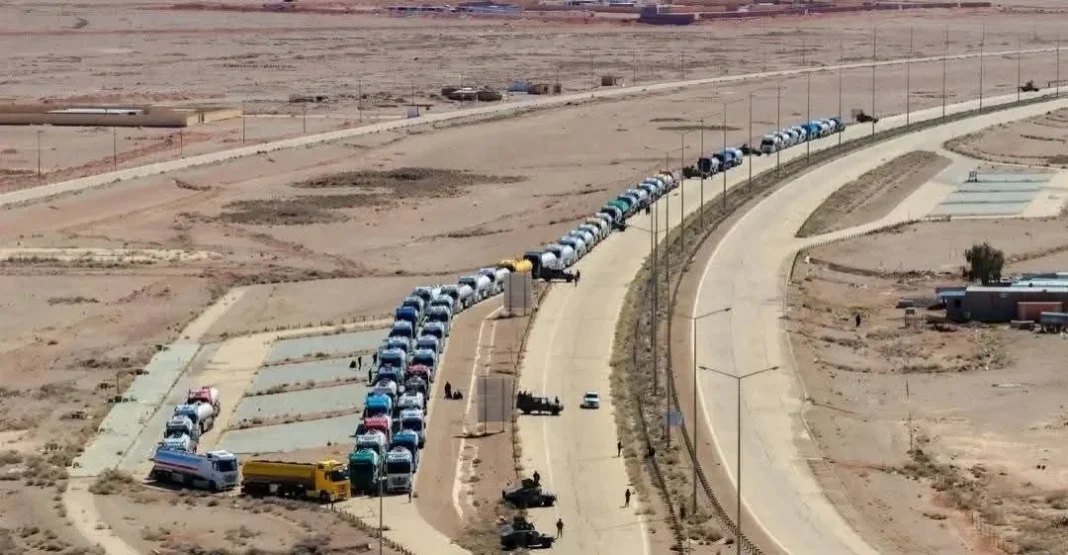
Iraq has sharply increased fuel oil shipments through Syria since the regional conflict disrupted the Strait of Hormuz. Iraq fuel oil exports through Syrian territory reached 21.4 million barrels between March and August 2026. The shipments provide Baghdad with another pathway to international markets.
The surge followed the outbreak of the US-Israeli war against Iran on February 28. The conflict disrupted maritime traffic through Hormuz, Iraq’s main route for oil exports. Baghdad consequently began relying more heavily on alternative land-based channels.
Iraq’s state-owned oil marketing company, SOMO, arranged agreements to move fuel oil through Syria. Under those arrangements, shipments can reach roughly 650,000 tons each month. That volume equals about 4.7 million barrels based on the figures provided.
The fuel oil travels across Syrian territory before reaching Baniyas port. Iraqi shipments are stored at the Mediterranean facility before heading toward international buyers. The arrangement gives Iraq access to a major export point outside the Gulf shipping route.
Monthly volumes increased substantially as the alternative corridor became more active. Iraq shipped 254,000 barrels through Syria in March. Exports then rose to 686,000 barrels in April as the route gained momentum.
The increase became much more pronounced in May. Shipments reached 3.86 million barrels during that month. June volumes climbed further, reaching approximately five million barrels.
The upward trend continued through the summer. Iraq exported about 5.65 million barrels through Syria in July. August shipments reached approximately 5.91 million barrels, marking the highest monthly figure in the period.
Together, those monthly shipments brought the total to 21.4 million barrels. The figures show how quickly Iraq expanded its use of the Syrian corridor. Iraq fuel oil exports through Syria have therefore become an important part of Baghdad’s response to shipping disruptions.
The route also highlights Iraq’s vulnerability to interruptions around Hormuz. The strategic waterway has traditionally carried a large share of Iraq’s petroleum shipments. Any prolonged disruption can therefore affect export revenues and pressure the country’s oil industry.
Baghdad has increasingly focused on alternative export infrastructure as a result. Pipeline projects and overland transportation links could reduce dependence on maritime routes. The Syrian corridor offers an immediate option while larger infrastructure projects remain under development.
Baniyas plays a central role in the current arrangement. Its location on Syria’s Mediterranean coast gives Iraqi fuel oil access to shipping routes toward international markets. The facility also provides storage capacity before cargoes move onward.
The growing volumes suggest that Iraq is testing the viability of routes outside the Gulf. However, the corridor depends on transport agreements and stable conditions across Syrian territory. Continued operations will also depend on demand and available storage and shipping capacity.
The development forms part of Baghdad’s wider effort to protect oil exports during regional instability. Iraq needs reliable channels because petroleum sales remain vital to its economy. Expanding alternatives could help reduce the impact of future disruptions.
The rapid increase since March demonstrates the importance of flexible export arrangements. Iraq has moved from relatively small shipments to millions of barrels each month. Iraq fuel oil exports through Syria could remain significant if pressure on Hormuz continues.
For Baghdad, the Syrian route offers more than a temporary shipping workaround. It provides an additional connection between Iraqi oil supplies and Mediterranean markets. The growing flow could also encourage further investment in alternative export corridors.