

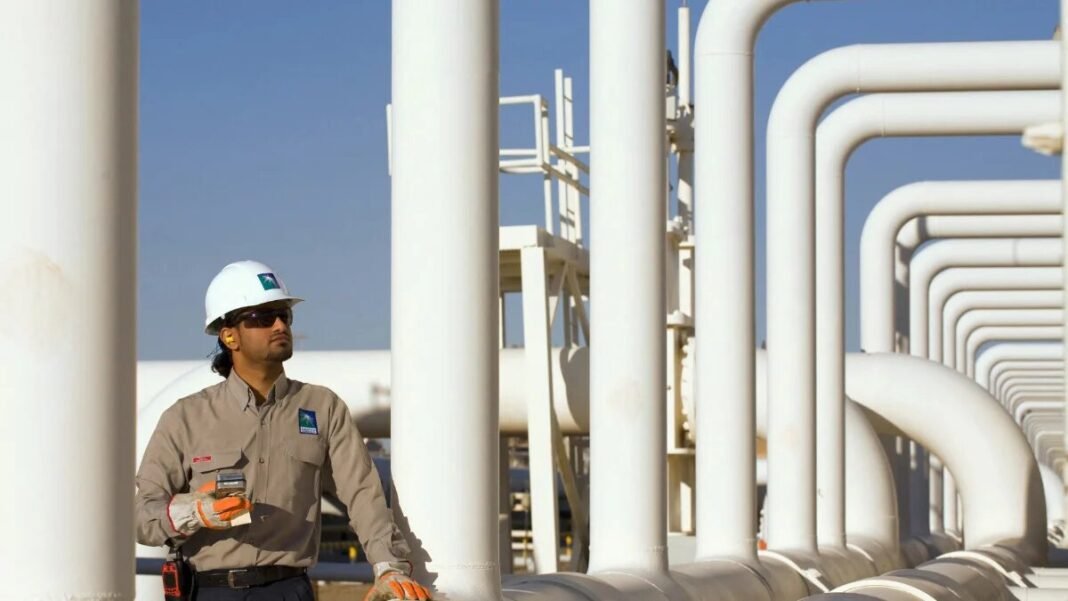
Arab oil producers are expanding alternative export routes as disruptions continue to threaten the Strait of Hormuz. Arab oil routes now include three operating pipelines and three projects under development or consideration. The alternatives could help producers maintain crude shipments when traffic through Hormuz faces serious disruption.
A report from the Washington-based Attaqa Research Unit identified six key routes. They include Saudi Arabia’s East-West pipeline and the UAE’s Habshan-Fujairah system. Iraq’s Kirkuk-Ceyhan pipeline also provides an existing route outside the strategic waterway.
Three additional projects could further expand regional export options. Iraq is examining the revival of its Kirkuk-Baniyas corridor through Syria. The UAE is planning another pipeline toward Fujairah, while Oman is developing a route toward Ras Markaz.
The need for alternatives has grown since fighting involving Iran and the United States disrupted traffic through Hormuz. The waterway normally carries about one-fifth of global oil flows. Kpler recorded only 10 commodity vessels crossing on August 26, compared with a recent 10-day average of about 15.
Saudi Arabia has the largest potential capacity among the six routes. The UAE and Iraq follow, although capacity figures do not always reflect actual emergency output. Some pipelines operate mainly as backup systems and may face operational limits during major disruptions.
Saudi Arabia’s East-West pipeline, known as Petroline, has become particularly important. The 1,200-kilometer system connects eastern oil facilities near Abqaiq with Yanbu on the Red Sea. The pipeline can transport as much as seven million barrels per day.
Shipments through Yanbu increased rapidly after Hormuz traffic came under pressure. Bloomberg tracking data showed exports reaching about 700,000 barrels per day on March 5. Volumes then climbed to 3.4 million barrels on March 17 and 4.1 million by March 20.
The UAE already operates another major bypass route. Its 370-kilometer Habshan-Fujairah pipeline connects Abu Dhabi’s oil fields with the Gulf of Oman. The system can transport between 1.5 million and 1.8 million barrels per day.
Fujairah has also supported regional shipping during the disruption. Tankers associated with Gulf producers have carried out ship-to-ship transfers near Fujairah and Oman’s Sohar. Those operations have helped maintain energy movements despite pressure on the main maritime route.
Iraq’s Kirkuk-Ceyhan pipeline provides another outlet. The 970-kilometer system moves northern Iraqi crude toward Turkiye’s Mediterranean port of Ceyhan. However, its importance remains limited because northern fields produce only a small share of Iraq’s overall exports.
The pipeline system was designed for roughly 1.5 million barrels per day. Flows stood near 500,000 barrels before exports stopped in 2023. Shipments resumed in March 2026 at about 250,000 barrels per day, giving Baghdad another northern export option.
Iraq remains especially vulnerable because most crude normally leaves through Basra. About 95% of Iraqi crude exports used Hormuz before the conflict. Basra shipments later plunged sharply before recovering to roughly two million barrels per day in August.
Baghdad is therefore pursuing larger alternatives through western Iraq. The proposed Kirkuk-Baniyas project would restore a pipeline connection to Syria’s Mediterranean coast. Iraq and Syria signed a memorandum in July to study the corridor’s possible revival.
The broader Iraqi plan could eventually handle up to 2.25 million barrels per day. One proposed corridor would connect Basra, Haditha, and Fishkhabur. Another would run from Haditha toward Baniyas.
The project could cost at least $15 billion and require around four years to build. Chevron, TI Capital, and Qatar’s UCC are involved in the wider plans. For Iraq, the project represents a long-term strategy rather than an immediate solution.
The UAE is also preparing another route to Fujairah. Its proposed West-East pipeline could carry up to 1.5 million barrels per day. ADNOC aims to accelerate construction, with operations targeted for 2027.
Oman has its own plans outside Hormuz. A proposed pipeline would connect inland oil fields with Ras Markaz and Duqm’s storage and export facilities. The route could transport as much as 700,000 barrels per day.
The Omani project could stretch between 400 and 440 kilometers. Investment estimates range from $800 million to $1.4 billion. Officials also see Ras Markaz becoming a regional crude storage and trading center.
Together, these projects show how Gulf producers are preparing for prolonged shipping risks. Arab oil routes could reduce exposure to Hormuz while expanding access to the Red Sea, Mediterranean, Gulf of Oman, and Arabian Sea. Arab oil routes may become increasingly important as producers seek stronger protection against future regional disruptions.