

Global energy markets opened the week with strong gains as oil prices surge following renewed military exchanges between the United States and Iran. Investors reacted quickly to rising geopolitical risks, pushing benchmark crude prices to their highest levels in weeks.
Brent crude climbed above $93 per barrel, while US West Texas Intermediate also posted significant gains during early trading. Market participants closely monitored developments in the Middle East, where escalating tensions raised concerns about future energy supplies and shipping routes.
Brent crude futures increased by more than 2 percent to reach $93.17 per barrel. At the same time, US crude futures rose to $89.65 per barrel. The sharp increase reversed some of the losses recorded at the end of the previous week.
Analysts linked the market rally to growing uncertainty surrounding the security situation in the region. The latest escalation reduced expectations that Washington and Tehran would quickly extend a temporary ceasefire arrangement that had previously eased pressure on oil markets.
Over the weekend, the United States announced strikes against Iranian radar and drone control facilities. American officials described the operation as a defensive response to what they called aggressive actions by Tehran. The move added another layer of uncertainty to an already fragile regional environment.
Iran responded by stating that its aerospace forces targeted a military air base linked to recent American operations. The exchange intensified fears of a broader confrontation that could affect vital energy infrastructure and transportation corridors.
Meanwhile, concerns expanded beyond direct military actions. Israel’s decision to deepen military operations involving Hezbollah increased worries about wider instability across the Middle East. Traders fear that a prolonged conflict could threaten oil production and distribution networks throughout the region.
The latest developments also affected expectations regarding diplomatic efforts. Recent discussions aimed at reducing tensions had raised hopes for a longer ceasefire period. However, the renewed exchange of strikes weakened confidence in a near-term breakthrough.
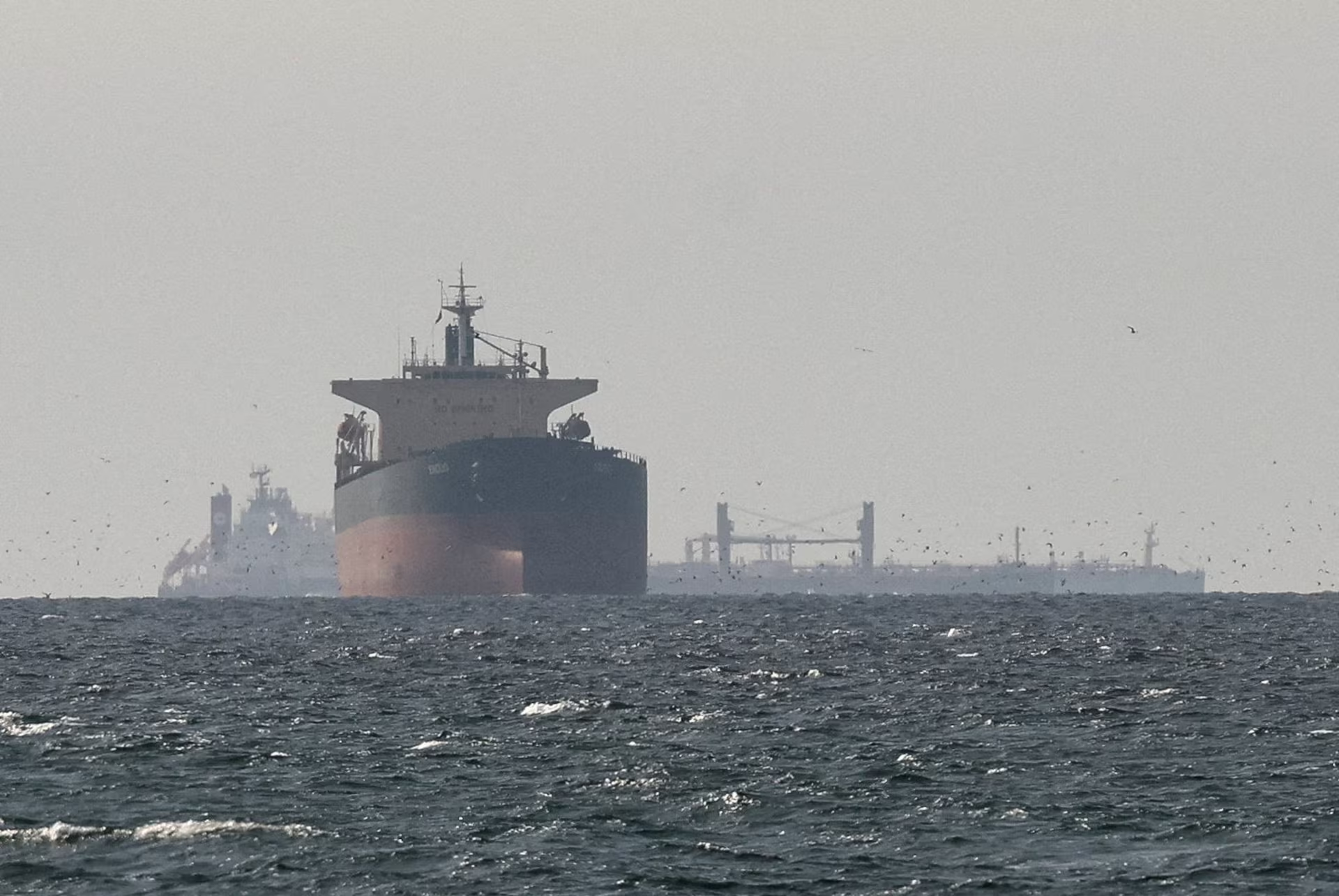
One of the biggest concerns remains the Strait of Hormuz, a strategic waterway that handles a large share of global oil exports. Energy markets remain highly sensitive to any threat affecting traffic through the route.
Industry analysts warn that disruptions in the strait could slow the movement of crude shipments and create additional pressure on global supplies. As a result, oil prices surge whenever investors perceive increased risks to maritime security in the area.
Reports suggesting the presence of additional naval mines have further heightened market anxiety. Even if diplomatic progress resumes, traders believe supply concerns may persist for some time. Market observers note that restoring confidence and ensuring safe shipping operations could require significant international coordination.
Despite ongoing diplomatic efforts, uncertainty continues to dominate investor sentiment. Energy companies, governments, and financial markets are closely watching developments for signs of either escalation or de-escalation.
For now, the combination of military tensions, shipping concerns, and supply risks continues to support higher crude prices. As geopolitical uncertainty remains elevated, oil prices surge on fears that disruptions in one of the world’s most important energy regions could affect global markets for months ahead.