

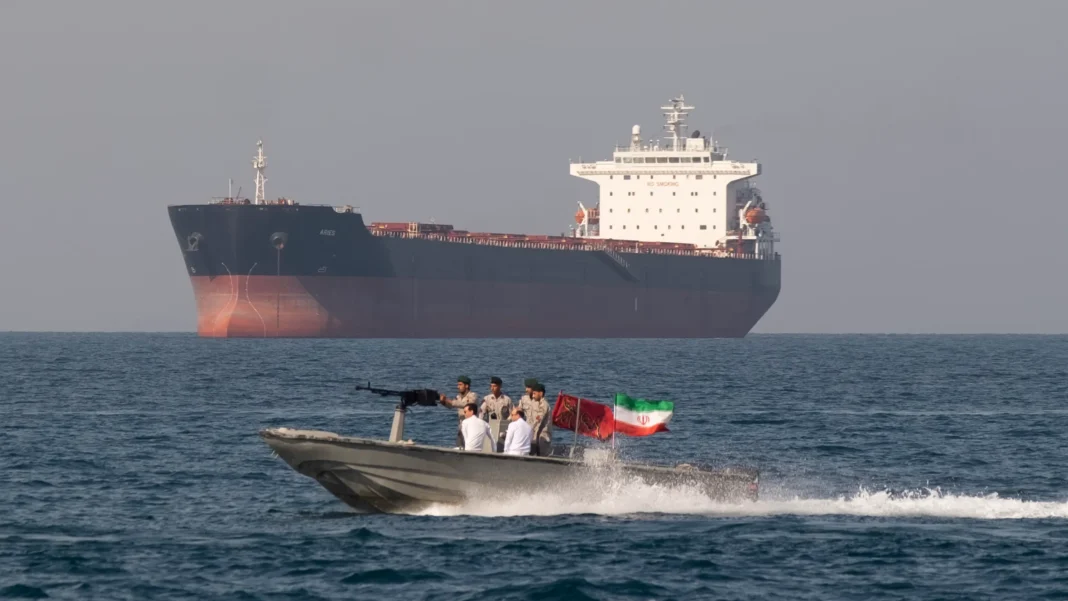
The oil price surge continues across global markets as tensions rise in the Gulf region. Global markets now face the worst energy crisis in Iran. The International Energy Agency issued a strong warning. Officials urged immediate action to reduce energy demand. Moreover, they stressed the need for rapid coordination among countries.
The oil price surge continues as traders react quickly to new military actions. Also, the oil price surge continues after the United States launched a naval blockade near the Strait of Hormuz.
Oil prices increased by about 4% during the latest trading session. Traders responded immediately to supply risks and geopolitical uncertainty. Brent Crude rose by $4.16, reaching $99.36 per barrel. Meanwhile, West Texas Intermediate climbed $2.51, reaching $99.08 per barrel. Earlier in the day, both benchmarks recorded gains of over $8 and $9, respectively.
However, markets showed strong volatility throughout the session. Investors reacted cautiously as political signals shifted rapidly. Statements from Donald Trump created uncertainty among traders. He moved between threats and optimism about ending the conflict. As a result, futures markets remained unstable despite strong physical demand.
Moreover, the conflict disrupted global energy supply chains significantly. The Strait of Hormuz handles nearly 20% of global oil and gas shipments. Current disruptions have reduced daily vessel traffic sharply. Reports indicated that only 34 ships crossed the strait in one day. Normally, over 100 vessels pass through daily routes.
The oil price surge continues to impact economies worldwide. Consumers now face rising fuel costs and increasing financial pressure. In the United States, fuel prices reached their highest levels since 2022. Drivers reduced spending as gasoline and diesel costs increased sharply.
At the same time, global energy demand expectations shifted. The Organization of the Petroleum Exporting Countries lowered its demand forecast by 500,000 barrels per day. Additionally, European countries reported a €22 billion rise in fossil fuel expenses. Ursula von der Leyen urged coordinated action to stabilize prices.
Furthermore, Saudi Arabia is prepared to reduce oil exports to China. Governments worldwide introduced emergency measures to support consumers. Meanwhile, Fatih Birol confirmed that countries could release oil reserves if needed.
In physical markets, prices surged even higher. Spot crude prices in Europe reached around $150 per barrel. Analysts expect further alignment between futures and physical markets soon. Some experts believe military enforcement of the blockade will push prices higher.
Meanwhile, NATO countries refused to join the blockade. They prefer diplomatic involvement after the conflict ends. Despite tensions, negotiations between the sides continue. Analysts see little possibility for de-escalation in the near term.
In conclusion, the oil price surge continues to shape global markets. Energy supply disruptions and political uncertainty drive strong price movements. Markets remain sensitive to every new development in the region.