

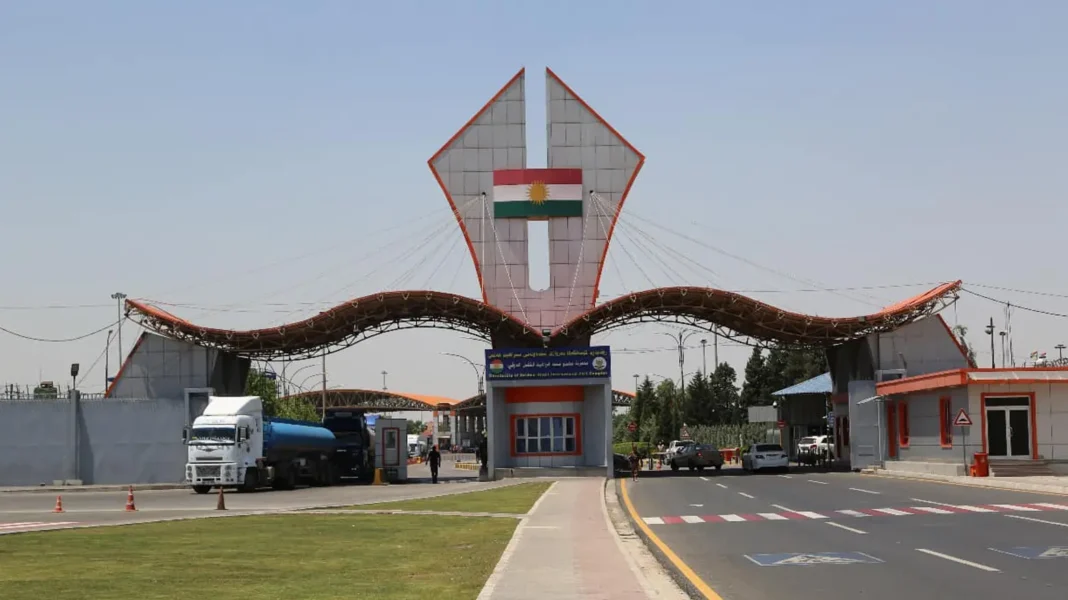
Erbil – Kurdistan Region trade surpassed $173 billion between 2019 and 2025, according to a report from the Kurdistan Region’s Ministry of Finance. The figures also show that customs authorities generated about $6.8 billion in revenue during the seven-year period, highlighting the Region’s growing role in regional commerce.
The report, obtained by Rudaw, covers trade activity across the Kurdistan Region’s 12 land and air border crossings. Combined trade reached more than 227 trillion Iraqi dinars, equivalent to over $173 billion. During the same period, customs revenue totaled approximately 9.5 trillion dinars, or around $6.8 billion.
Duhok province recorded the largest share of customs revenue over the seven years. Border crossings in the province collected nearly five trillion dinars, making Duhok the Region’s leading customs contributor.
Sulaimani ranked second, generating almost three trillion dinars in customs income. Erbil followed with more than 1.6 trillion dinars in collected revenue. Together, the three provinces accounted for all customs income generated through the Kurdistan Region’s border crossings.
The report also identified the busiest customs gateways. The Ibrahim Khalil border crossing with Türkiye in Duhok generated the largest share of customs revenue. Haji Omaran, located on the Iran border in Erbil province, ranked second. Bashmakh, on the Iran border in Sulaimani province, also contributed significantly to overall customs collections.
Annual trade volumes fluctuated throughout the reporting period. The highest level came in 2024, when border crossings processed trade worth 41.2 trillion dinars. In contrast, 2020 recorded the lowest annual trade value at 28 trillion dinars.
The Kurdistan Region trade report comes as the Kurdistan Regional Government (KRG) moves ahead with customs modernization efforts. Officials recently approved an agreement with Iraq’s federal government to implement the Automated System for Customs Data (ASYCUDA) across the Region.
The electronic platform aims to unify customs procedures throughout Iraq while replacing manual processes with a digital system. According to the Kurdish cabinet, the initiative will improve transparency, simplify customs administration, and strengthen oversight of border revenues.
Officials also expect the system to increase public revenue, reduce bureaucracy, and facilitate commercial activity at border crossings. The government believes digital customs procedures will improve efficiency for traders while supporting faster processing of imports and exports.
ASYCUDA, developed by the United Nations Conference on Trade and Development (UNCTAD), already operates at all 22 federal border crossings in Iraq. To prepare for implementation in the Kurdistan Region, officials from the KRG and Iraq’s General Commission of Customs signed a 16-point agreement in Baghdad after months of negotiations.
A high-level KRG delegation is expected to visit Baghdad to discuss the next phase of implementation. Regional officials describe the project as an important step toward modernizing customs administration and increasing transparency. However, some Kurdish officials have expressed concerns that the new system could expand Baghdad’s oversight of imports entering through the Kurdistan Region.
The latest figures demonstrate the growing importance of Kurdistan Region trade to Iraq’s economy. As customs reforms continue, authorities hope stronger coordination and digital systems will support higher revenues, more efficient border management, and greater confidence among businesses engaged in regional and international trade.