

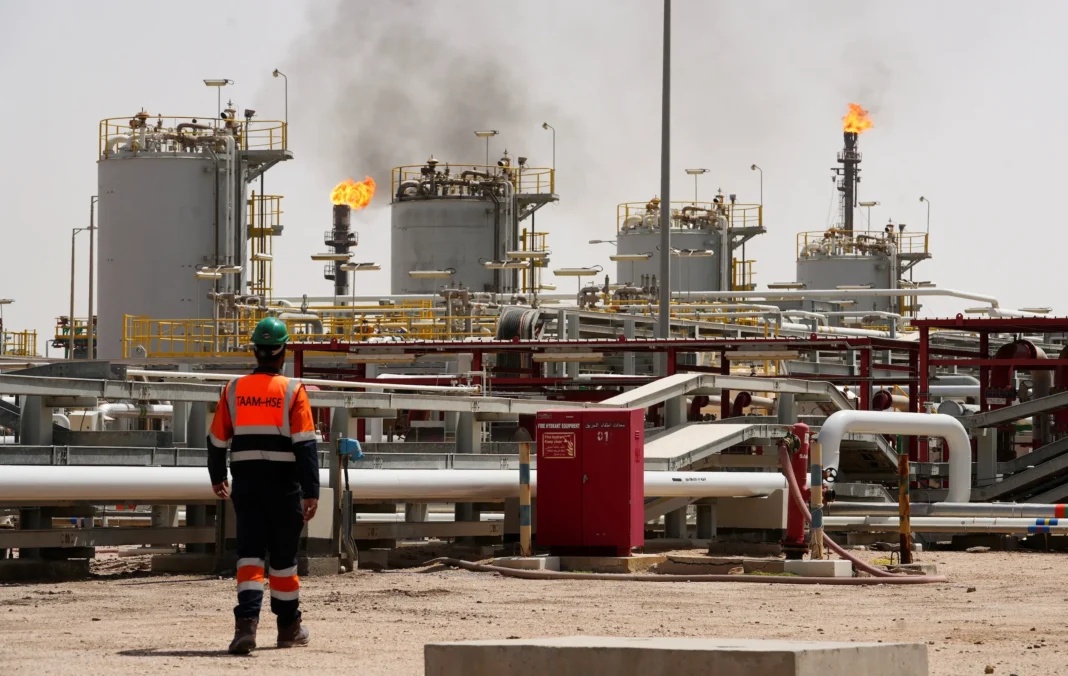
Iraq oil production could rise sharply under a new government plan targeting 10 million barrels per day by 2030. Prime Minister Ali al-Zaidi called for the increase during a meeting on Tuesday. Officials discussed a strategic plan focused on expanding production and strengthening the country’s energy sector.
Al-Zaidi said Iraq should align oil production with its large reserves and available production capabilities. He also pointed to population growth and rising domestic development needs. The government wants higher output to support local demand and future economic projects.
The prime minister stressed the need for stronger oil infrastructure and export capacity. Higher production would require Iraq to expand its ability to process and transport crude. Export facilities would also need to handle larger volumes reaching international markets.
Iraq produced about 4.5 million barrels of oil per day by the end of 2025. The new target would therefore require production to more than double within five years. Achieving that goal would require major investment across existing fields and new exploration projects.
Al-Zaidi also called for higher production from oil fields in the Kurdistan region. He ordered officials to expand exploration activities as part of the broader strategy. The measures aim to increase national production capacity and move the country toward the 2030 target.
The government also wants Iraq to capture all associated gas produced alongside crude oil. Al-Zaidi said full gas recovery could help meet domestic energy requirements. It could also reduce waste and eventually help Iraq end its dependence on imported gas.
Foreign investment will form another major part of the strategy. The Oil Ministry plans to invite major international energy companies to a dedicated investment conference. Officials hope to attract capital, technical expertise, and advanced production technologies.
The ministry is expected to pursue agreements covering exploration and oilfield development. Potential projects could also involve production and exports. Such deals could provide Iraq with additional resources needed to expand its energy industry.
The government sees stronger production as a way to improve Iraq’s position in global energy markets. However, reaching the ambitious target will depend on infrastructure, investment, technology, and export capacity. Iraq oil production will therefore remain central to the country’s economic strategy through the end of the decade.
If achieved, the plan would represent a major expansion of Iraq’s role in global oil markets. It could also generate additional revenues for national development. For now, Iraq oil production faces a demanding path toward the government’s 2030 goal.