

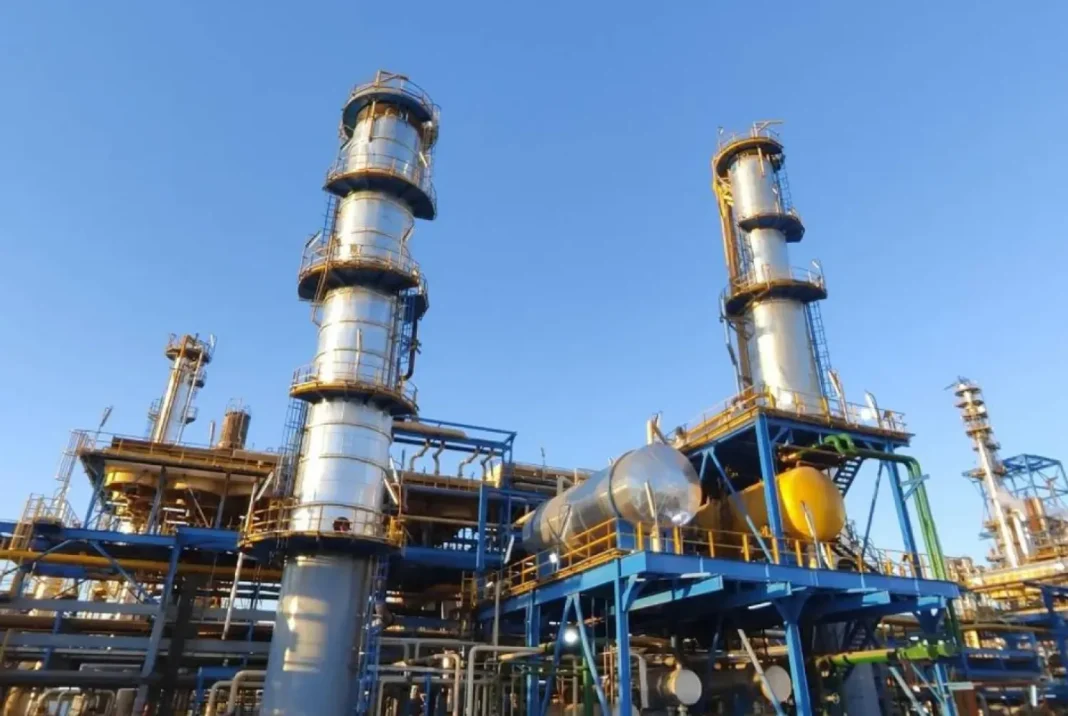
Iraq has launched a major energy project in Basra. The new Al-Faihaa Gas Facility can process up to 130 million standard cubic feet of gas daily. This project is part of Iraq’s broader plan to reduce gas flaring and protect the environment.
In addition, Prime Minister Mohammed Shia Al-Sudani led the opening ceremony by video link. He praised the engineers and technical teams for their role in this achievement. Standing beside him, Deputy Prime Minister for Energy and Oil Minister Hayan Abdul Ghani reaffirmed the government’s energy goals.
Abdul Ghani stressed that using gas from oil fields will help Iraq’s economy grow. He said gas investments like the Al-Faihaa Gas Facility will support industrial growth. These efforts also ensure a steady fuel supply for power generation across the country.
Senior officials joined the event. Among them were Oil Ministry Undersecretaries Basim Mohammed Khudair and Izzat Saber Ismail. Leaders from the South Gas Company and Basra’s local government were also present.
The Al-Faihaa Gas Facility sits in what is also known as Block 9. This field stretches into Iran’s Yadavaran field, showing the area’s rich energy potential.
Years of planning led to this milestone. In earlier phases, KE Basra, a unit of United Energy Group from Hong Kong, signed a contract to build the facility. The contract included systems to treat oil and other support systems.
Moreover, A Chinese consortium, made up of China CAMC Engineering and CNOOC Petrochemical Engineering, handled the construction. They worked under an EPCC contract that covered engineering, procurement, construction, and commissioning.
Now, Iraq moves forward with confidence. The country sees gas as a key part of its energy future. By capturing and using associated gas, Iraq will cut waste and increase fuel supplies. This approach also reduces environmental harm and opens new revenue streams.
This project fits Iraq’s long-term strategy. It supports energy security, creates jobs, and attracts investment. More importantly, it proves that Iraq can develop its own resources and boost its economy at the same time.