

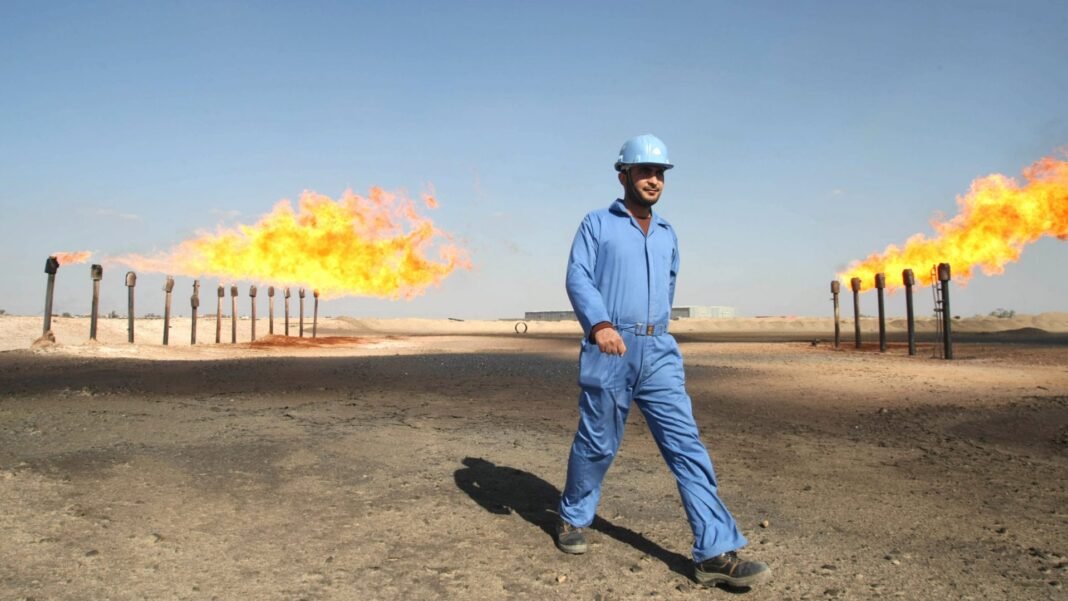
Iraq faces a sharp decline in production as Iraq’s oil output drops under regional pressure. Current output now stands at 1.3 million barrels per day. This level indicates a significant decline from earlier production capacity.
The Iraq oil output drops as disruptions hit key export routes. Tensions in the Strait of Hormuz continue to block shipments. This route carries a large share of the global oil supply. Therefore, any closure directly impacts Iraq’s export ability.
Moreover, Iraq once produced about 4.3 million barrels per day before the crisis. Production later fell to nearly 1.2 million barrels per day. Now, output shows a slight recovery to 1.3 million barrels per day. However, the level remains far below normal capacity.
In addition, storage facilities across Iraq have reached their limits. Oil cannot move easily due to blocked export channels. As a result, producers must reduce output to avoid oversupply. This situation places strong pressure on the national energy sector.
Furthermore, export data shows a dramatic decline. Iraq exported only 600,000 barrels per day in March. This figure dropped sharply from 3.56 million barrels per day in the previous month. The numbers highlight the scale of disruption affecting the country.
Iraq’s oil output is also reflected in total export volumes. Iraq shipped about 18.6 million barrels in March. In comparison, exports reached 99.8 million barrels in February. Earlier, January exports stood near 107.6 million barrels. These figures show a rapid and severe contraction.
At the same time, oil revenues have fallen significantly. Iraq earned around 1.95 billion dollars from exports in March. In contrast, revenues reached 6.81 billion dollars in February. January revenues stood close to 6.48 billion dollars. This drop affects public finances and economic stability.
Additionally, the crisis impacts global trade flows. Asian markets rely heavily on Iraqi crude supplies. Disruptions have reduced shipments to these key buyers. Consequently, Iraq faces both financial and logistical challenges.
Overall, Iraq continues to navigate a difficult energy landscape. The government seeks alternative routes and solutions to restore exports. Until stability returns, production levels may remain under pressure.