

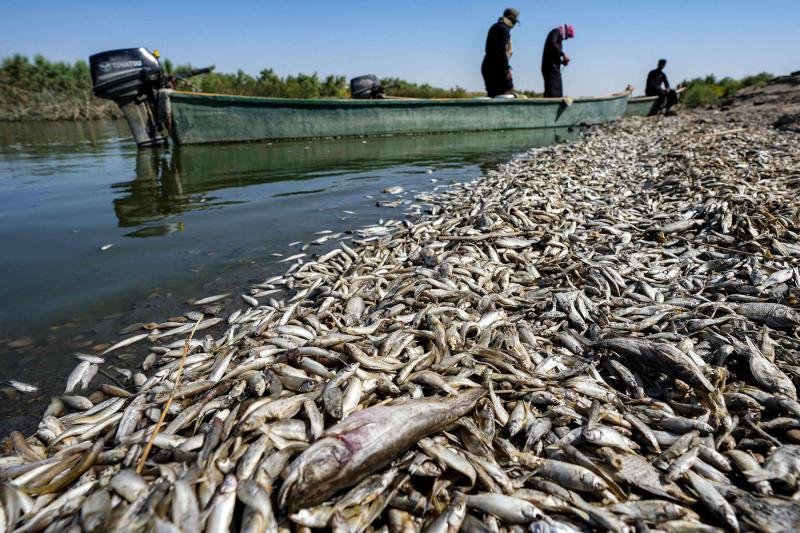
Baghdad — Iraq faces a growing environmental disaster as a toxic flood crisis spreads across the Tigris River. The toxic flood crisis has already destroyed more than 1,000 tons of fish and devastated local livelihoods.
First, fish farmer Haidar Kazem described heavy losses along the Tigris banks. He said polluted water wiped out 300 tons of fish in hours. He had raised those fish for over a year. However, the sudden flood destroyed everything quickly. As a result, he now struggles to recover his income.
Meanwhile, Iraq continues to face serious water shortages. The United Nations ranks Iraq among the most climate-affected countries. Therefore, low rainfall and rising heat worsen water conditions every year. In addition, rivers now carry less clean water than before.
Earlier, a short rainfall followed a long dry period. Authorities then opened the Hamrin Dam gates to release water. Consequently, polluted water from the Diyala River flowed into the Tigris. The Diyala River already suffers from untreated sewage discharge. Thus, the flood carried heavy pollution downstream.
Satellite images from Copernicus Sentinel confirmed the pollution spread clearly. Dark water streams moved from Diyala into the Tigris for several days. Therefore, the contamination reached fish farms and nearby communities quickly.
In Wasit province, local officials reported major losses. Arkan Al-Shimari confirmed that over 1,000 tons of fish died. At the same time, authorities recorded 20 poisoning cases among residents. As a result, officials reduced the water supply in several areas to limit health risks.
Furthermore, environmental expert Wim Zwijnenburg explained the situation. He said low water levels made the pollution more concentrated. Normally, rivers dilute waste slowly. However, strong flood currents pushed untreated sewage directly into the Tigris.
In Al-Numaniyah, another farmer, Mazen Mansour, lost 38,000 fish overnight. He noticed the water turned black and smelled strongly. He tried to save his fish by adding oxygen. However, the effort failed due to severe contamination. Consequently, he lost his entire stock within hours.
The toxic flood crisis highlights deeper infrastructure problems. Years of conflict damaged Iraq’s water systems badly. Therefore, many treatment plants fail to process sewage properly. Officials now plan to open seven new treatment plants in Baghdad. Still, farmers demand urgent compensation and accountability.
In conclusion, the toxic flood crisis continues to threaten Iraq’s environment and economy. Without fast action, more communities may face similar losses.