

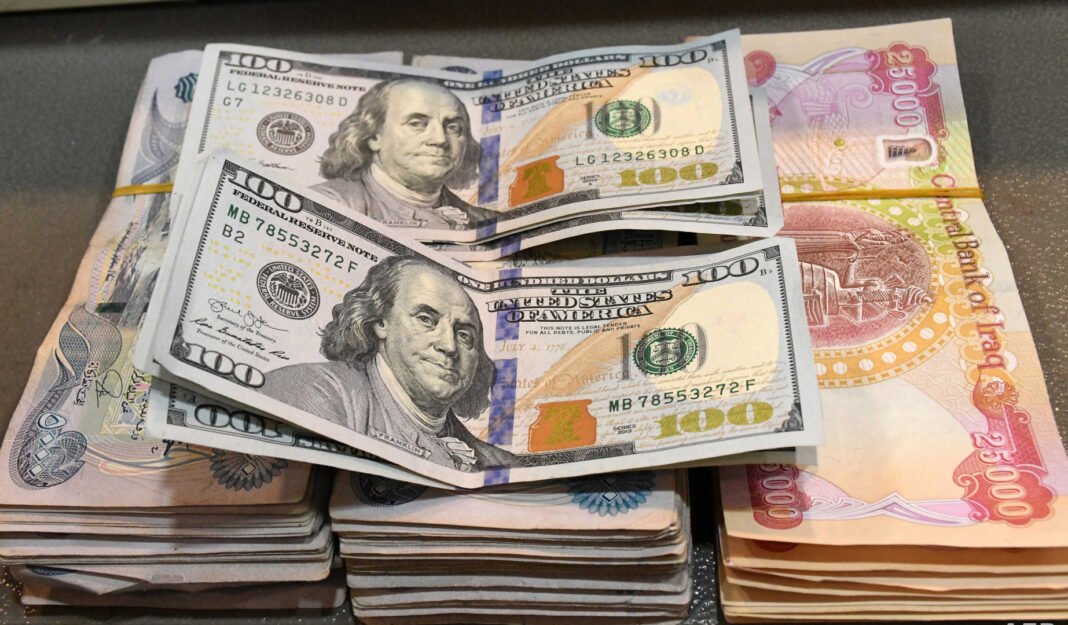
The US dollar opened Thursday trading lower across Iraq, moving just below 150,000 Iraqi dinars per 100 dollars. Currency analysts described the decline as a modest shift following recent fluctuations. Traders in Baghdad and Erbil closely monitored the movement to adjust their daily strategies.
In Baghdad, the dollar traded at 149,850 dinars in major exchanges, including Al-Kifah and Al-Harithiya. This represents a slight decrease from yesterday’s closing rate of 150,000 dinars. Exchange shops in the capital sold the dollar at 150,250 dinars and bought it at 149,250 dinars. Analysts noted that these variations reflect normal market adjustments and minor short-term demand changes.
Meanwhile, in Erbil, the dollar showed a similar downward trend. Selling prices stood at 149,650 dinars, while buying prices reached 149,500 dinars. Market observers explained that local demand and trading volume influenced the price changes. Consequently, the dinar strengthened slightly against the US currency, giving importers a brief relief.
Experts explained that minor fluctuations in the dollar often reflect broader regional economic conditions. Factors such as import demand, remittances, and oil revenue inflows continue shaping Iraq’s currency market. Traders also emphasized that political stability and local regulations affect market confidence. As a result, even small changes in the exchange rate can influence economic activity.
The lower dollar trend provides temporary relief for Iraqi businesses and importers. Companies that rely on foreign currency may benefit from slightly cheaper dollars for imports. At the same time, consumers could see modest improvements in the cost of imported goods. Analysts, however, cautioned that currency rates remain volatile and can shift quickly due to global market pressures.
Currency experts highlighted the role of international trends in Iraq’s dollar market. Dollar movements in Baghdad and Erbil often follow shifts in oil revenues and foreign trade balances. When oil income rises, the dinar usually strengthens slightly. Conversely, drops in international oil prices can weaken the local currency. Therefore, traders continue to watch both local and global indicators closely.
The trading activity in Baghdad and Erbil remained active despite the small decline in the dollar. Exchange shops reported steady customer traffic, with both buying and selling transactions occurring throughout the day. Financial analysts said that even minor changes in the USD/IQD rate could impact household budgets, import costs, and small businesses.
Overall, Baghdad Erbil dollar markets show that local dynamics can temporarily shield the dinar from global volatility. Traders continue monitoring political, economic, and oil-related news to anticipate changes. While the dollar fell slightly today, market participants remain cautious about potential fluctuations in the coming weeks.