

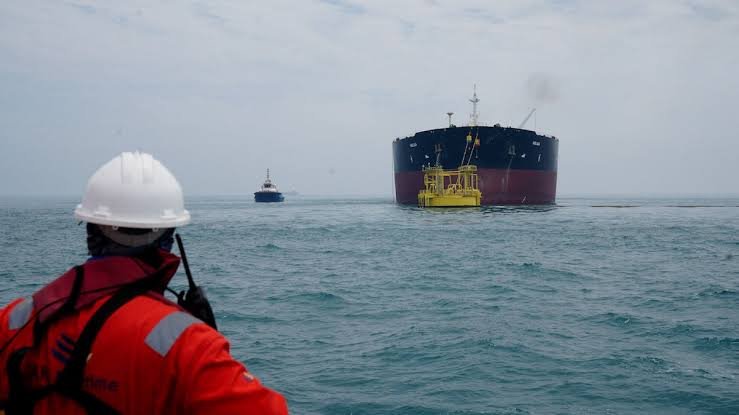
Iran has approved passage for some Iraqi oil tankers through the Strait of Hormuz. The move follows repeated requests from Baghdad during ongoing regional tensions. Iraqi oil tankers through Hormuz now have limited permission to cross the strategically vital waterway.
Iranian state media reported that Baghdad raised the issue through several diplomatic channels. The request also featured prominently during Iranian Parliament Speaker Mohammad Bagher Ghalibaf’s visit to Iraq. Tehran granted special permission for a number of Iraqi vessels after those discussions.
Iraqi President Nizar Amidi confirmed that some ships carrying Iraqi crude had crossed the strait. He said Baghdad had discussed oil exports with Iranian officials in recent days. The president also stressed that Iraq wants to avoid deeper involvement in the regional conflict.
Speaking at the Baghdad Dialogue policy conference, Amidi addressed Iraq’s broader security concerns. He said Iraqi territory must not become a launchpad for attacks against another country. He also rejected attacks originating inside Iraq against states across the region.
Amidi said the conflict has already created serious consequences for Iraq. He warned that the Strait of Hormuz affects international markets, not Iraq alone. Baghdad remains engaged with Tehran while officials seek solutions to the strait’s complicated situation.
The waterway remains under severe pressure as regional military tensions continue. Shipping activity has fallen well below normal levels, while vessels still face security threats. The situation has created significant challenges for countries that depend on Hormuz for energy exports.
Iraq has particular reasons to seek alternative export routes. Before the conflict began, the country produced roughly four million barrels of oil daily. Baghdad now seeks greater use of Turkey’s Ceyhan port and other regional routes.
Iraqi officials are also exploring exports through Syria’s Baniyas port. Jordan’s Aqaba port represents another potential outlet for Iraqi crude. These alternatives could reduce Iraq’s dependence on a single vulnerable maritime route.
Iran’s decision appears limited rather than a full reopening of the strait. Officials have discussed arrangements with Oman, but no comprehensive reopening agreement has emerged. The United States also remains central to the wider dispute surrounding maritime access.
Iran has linked the strait’s closure to the continuing naval pressure from Washington. Tehran says the waterway will remain restricted while that pressure continues. The United States, meanwhile, remains a major factor in the region’s military calculations.
The special permission for Iraqi oil tankers through Hormuz could provide temporary relief for Baghdad. However, it does not resolve the larger uncertainty surrounding regional shipping. Iraq will likely continue developing alternative export routes while diplomatic efforts continue.
For global energy markets, developments around Hormuz remain closely watched. The strait carries a substantial share of international energy shipments. Any prolonged disruption could therefore affect oil supplies, shipping costs, and prices worldwide.