

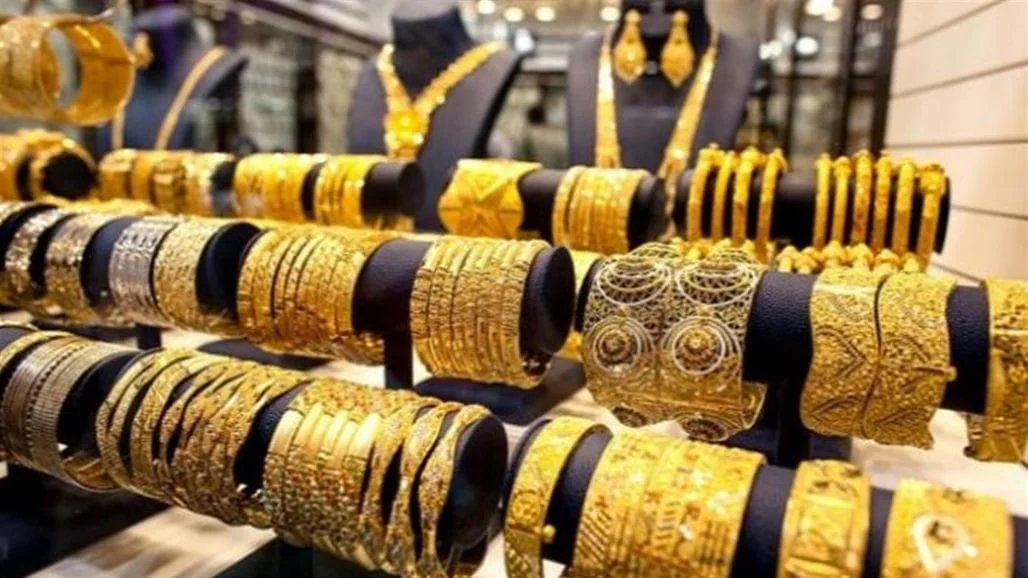
Gold prices in Iraq fell below the 960,000 IQD mark on Wednesday. Markets in Baghdad and Erbil recorded lower rates for several gold categories. The latest movement followed a modest decline from Tuesday’s prices.
In Baghdad, traders on Al-Nahr Street quoted 21-carat Gulf, Turkish, and European gold at 955,000 IQD per mithqal. The buying rate reached 951,000 IQD for the same quality. One mithqal equals five grams, according to the market survey.
Tuesday’s selling price for that gold stood at 960,000 IQD per mithqal. Wednesday’s figure therefore marked a noticeable move lower. Traders continued to monitor market activity as prices adjusted during the day.
Iraqi 21-carat gold remained cheaper than imported varieties in Baghdad. Sellers offered it at 925,000 IQD per mithqal. Buyers, meanwhile, paid around 921,000 IQD for the same gold.
Jewelry shops showed a broader range of prices across different products. Gulf 21-carat gold sold between 955,000 and 965,000 IQD per mithqal. Iraqi gold ranged between 925,000 and 935,000 IQD, depending on the shop.
The difference between market quotes and jewelry prices reflects retail conditions. Goldsmiths may also adjust prices based on workmanship and product type. Customers can therefore encounter varying rates across individual stores.
In Erbil, the market showed different prices across gold purities. The price for 22-carat gold reached 983,000 IQD per mithqal. Meanwhile, 21-carat gold traded at about 940,000 IQD.
Eighteen-carat gold in Erbil stood at approximately 805,000 IQD per mithqal. The figures highlight the impact of gold purity on retail values. Buyers generally pay more for gold with higher purity.
Gold prices in Iraq remain closely watched by traders and consumers. Changes in international gold values can influence local market rates. Currency movements and domestic trading conditions can also affect prices.
The latest Baghdad figures show a small retreat from Tuesday’s level. However, prices still vary between Iraqi and imported gold. Retailers continue to set rates according to purity, origin, and market demand.
Erbil also maintained a different pricing structure from Baghdad. Its 21-carat rate remained below the Baghdad retail range for imported gold. At the same time, its 22-carat rate stayed above the 21-carat category.
For consumers, comparing several jewelry shops remains important before making a purchase. Buyers should also confirm the gold purity and workmanship charges. Those costs can significantly change the final amount paid.
Gold prices in Iraq could continue to fluctuate as market conditions evolve. Traders will likely watch international prices and local currency movements closely. Consumers may also follow daily quotes before deciding when to buy.
For now, Wednesday’s figures show a softer gold market in Baghdad. Erbil prices also varied according to purity and product category. The market remains active as traders respond to changing economic conditions.