

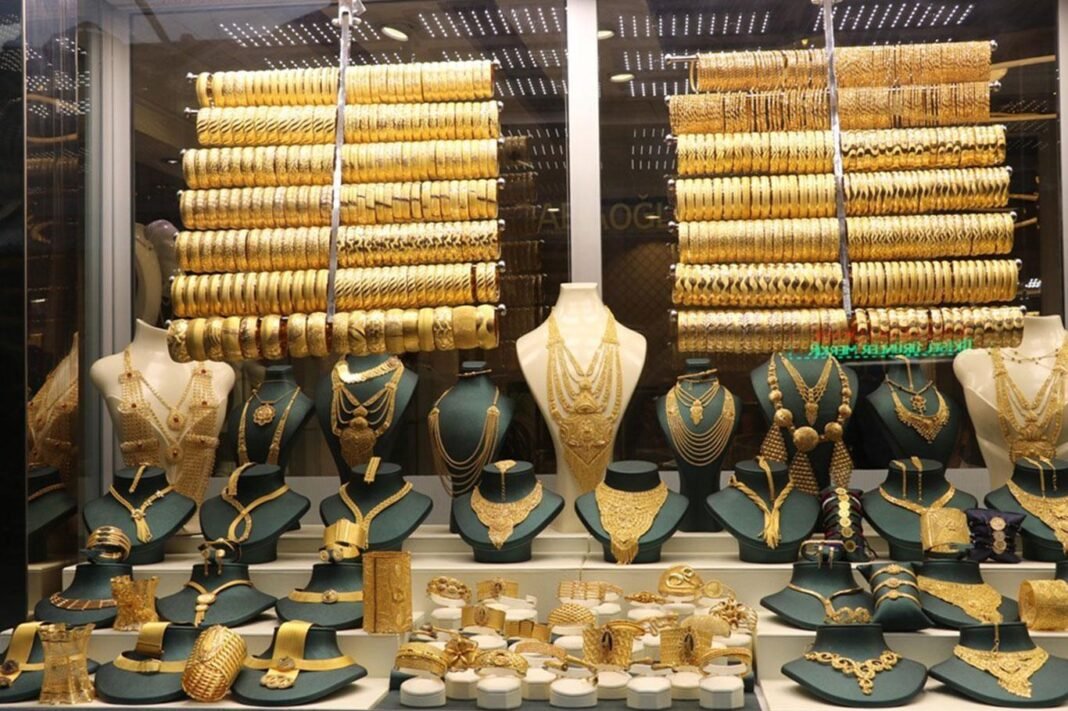
Gold prices in Iraq rose again on Tuesday, reflecting a mild but steady increase across major Iraqi cities. Traders in both Baghdad and Erbil reported stronger demand during early trading hours. Data from Shafaq News showed that prices hovered near recent highs. The market responded to global fluctuations and local buying activity.
Dealers noted that the upward trend followed a similar pattern from the previous day. Gold prices in Iraq continued to attract attention from both wholesalers and retail buyers. Confidence in the market improved slightly, although volatility remained present.In Baghdad’s Al-Nahr Street, wholesale trading recorded noticeable increases. Sellers offered 21-carat gold at 943,000 IQD per mithqal, which equals five grams. Buyers placed bids slightly lower at 939,000 IQD per mithqal. These figures marked an increase compared to Monday’s levels.
Traders also reported variations in product origins. Gulf, Turkish, and European gold maintained similar pricing ranges. Meanwhile, Iraqi-made 21-carat gold sold at 913,000 IQD per mithqal. Purchase offers for local gold stood at 909,000 IQD.
These movements reinforced the broader trend of rising gold prices in Iraq. Market participants watched closely for further signals from international bullion markets.Retail outlets across Baghdad showed wider pricing gaps. Gold prices in Iraq varied depending on craftsmanship and origin. 21-carat Gulf gold ranged between 945,000 and 955,000 IQD per mithqal in jewelry stores. Iraqi gold pieces sold between 915,000 and 925,000 IQD per mithqal.
Dealers attributed the differences to design costs and purity levels. Customers continued to compare prices before making purchases. Many buyers preferred smaller quantities due to ongoing price fluctuations.
Despite the variation, demand remained steady across key shopping districts. Retailers expect short-term stability if global prices hold steady.In Erbil, gold trading also showed firm momentum. 22-carat gold sold for about 995,000 IQD per mithqal. Meanwhile, 21-carat gold reached 950,000 IQD, while 18-carat gold stood at 814,000 IQD.
These figures aligned with broader gold prices in Iraq trends seen nationwide. Local traders in Erbil reported consistent customer interest throughout the day. Some buyers shifted toward lower-carat options to manage costs.
Market analysts suggest that regional demand continues to support pricing stability. However, international market shifts could quickly influence local rates.Overall, gold prices in Iraq maintained an upward direction across both wholesale and retail sectors. The market reacted quickly to international gold movements and currency shifts. Traders expect continued fluctuations in the coming days.
The repeated rise in gold prices in Iraq highlights ongoing uncertainty in regional commodity markets. Buyers and sellers remain cautious but active. Any changes in global pricing will likely shape the next market movement.